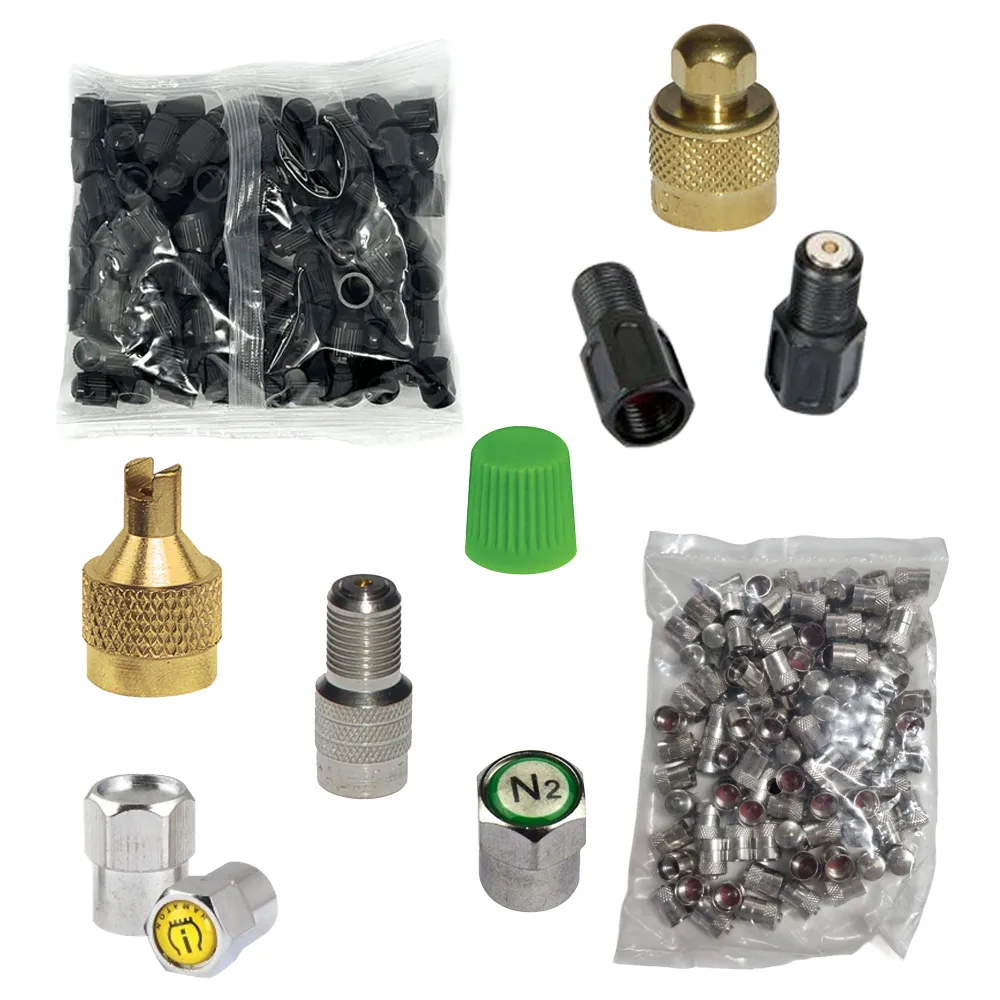

Valve caps aren't decorative. They're part of a tyre pressure management system, and a missing or poorly seated cap is a common cause of slow, hard-to-diagnose air loss. Many drivers only notice once the warning light comes on, and technicians often trace chronic underinflation back to a failed cap rather than the tyre.
The Core Engineering Truth: Primary vs Secondary Seals
A standard Schrader valve relies on a small, spring-loaded rubber seal inside the valve core to hold air in the tyre. At highway speed, centrifugal force pulls on the internal pin, letting minute amounts of high-pressure air escape past that primary seal. On a passenger tyre running 30 to 35 PSI, this is usually negligible; on commercial tyres above 80 PSI, the same small gap causes a much faster pressure drop.
This is where the cap earns its place. A properly fitted valve cap forms an airtight secondary seal, catching what the core alone can't hold, while blocking grit, road salt, mud, and water from reaching the core threads. Contaminated threads are one of the most common causes of a slow, permanent leak and one a driver rarely thinks to check.
Plastic Valve Caps in Everyday Use
Plastic valve caps are lightweight, don't conduct electricity, and resist galvanic reactions with brass valve stems. Galvanic corrosion happens when two dissimilar metals stay in contact with moisture present, and it's a common way caps end up fused permanently to a stem. Plastic removes that risk entirely.
Most tyre valve plastic caps are moulded from polycarbonate resin, which handles standard passenger vehicle pressures without issue and works well on vehicles fitted with TPMS, since metal caps can occasionally interfere with the sensor signal. The limitation shows up over time: extended cold can make plastic brittle enough to crack, and sustained UV exposure weakens the material, so the cap stays on but loses the flexibility that helps the gasket seal properly.
Metal Valve Caps and Perceived Durability
Metal valve caps, usually brass, nickel-plated brass, or aluminium, are common in industrial and fleet settings, partly because metal is widely assumed to mean better quality. That assumption doesn't always hold: quality varies between manufacturers, and some metal tyre valve caps use cheap alloys that corrode quickly while premium machined caps last for years. Added mass matters too, since a heavier cap under centrifugal force places more stress on the valve stem than a lighter plastic one.
Head to Head: Material Physics in Action
| Characteristic | Standard Plastic Caps | Premium Machined Metal Caps |
| Structural function | Keeps dust, mud, and water out of the core | True, airtight secondary seal |
| Sealing mechanism | Moulded plastic lip, limited compression | Heavy duty rubber O ring gasket |
| Galvanic corrosion risk | None | High, if metals are mismatched |
| Impact and heat resistance | Can crack in extreme cold or from debris | Durable under braking heat and rough use |
| Best use case | Daily driving, passenger vehicles | Commercial trucks, long haul, OTR fleets |
The Deployment Protocol: Selecting and Installing Your Caps
Choosing the wrong material combination can damage the valve stem. A short sequence keeps the install consistent:
- Identify the stem material. Standard rubber stems have a brass tip; TPMS wheels typically use a machined aluminium sleeve.
- Match metals. Never pair an unlined aluminium cap with a brass stem, or vice versa. Dissimilar metals in contact trigger galvanic corrosion, which can weld the cap on permanently.
- Isolate the threads in harsh conditions. In wet or coastal environments, a light smear of anti-seize on the stem threads stops a metal cap from seizing.
- Tighten to spec, not by feel. Spin on clockwise until flush; for caps with an O-ring, finger-tight is enough. Never use pliers, as over-tightening strips the threads.
The Specialist Solution: Flow Through Valve Caps
For commercial fleets and busy workshops, checking pressure across multi-axle trailers with standard twist-off caps eats into productivity. Flow-through valve caps solve this: these double-sealing metal components have an integrated internal pin that acts as a permanent secondary seal while still letting a technician slide a gauge probe straight through the centre. Pressure can be checked and adjusted instantly, without removing the cap or wearing down the threads.
Choosing the Right Cap, and Who to Trust With It
Passenger vehicles are well served by lightweight, nonconductive plastic valve caps, since lower mass means less stress on the stem. Commercial vehicles need caps rated for higher sealing performance, and fleet operators should confirm ratings before ordering in bulk. Either way, the internal rubber gasket does the real sealing work: a well-made plastic cap with a good gasket outperforms a cheap metal cap with a poor one. Material matters, but design and gasket quality matter more.
REMA TIP TOP supplies valve and valve accessory systems, including plastic valve caps, metal valve caps, and flow-through options, built to Australian standards for tyre repair. For workshops running a mixed fleet of passenger, commercial, and OTR vehicles, matching the right cap to the right stem prevents a common, avoidable cause of comebacks.



























Sign in to leave a comment.