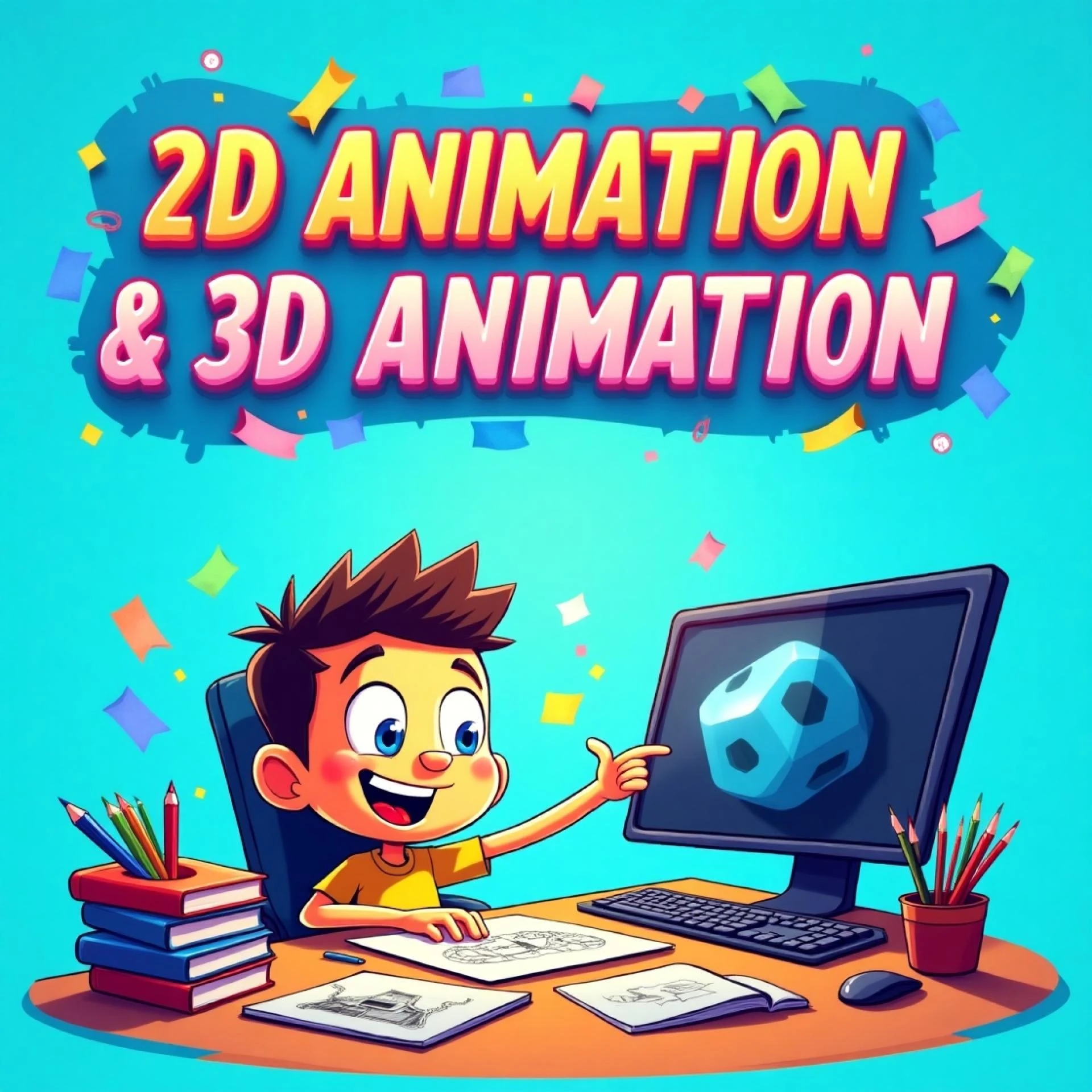

Polygonal modeling is one of the most widely used techniques in 3D modeling and serves as the backbone for creating objects and characters in 3D animation. This method uses polygons—flat, multi-sided shapes—such as squares, triangles, and more complex forms to construct 3D models. Understanding polygonal modeling techniques is essential for anyone looking to make a career in 3D animation, VFX, game development, or virtual reality.
For aspiring 3D artists, learning these techniques at 2D animation institutes in Thane can provide the perfect foundation. These institutes offer both theoretical knowledge and hands-on training in the best practices of polygonal modeling, ensuring you can create intricate models for any animation project.
What is Polygonal Modeling?
In polygonal modeling, 3D objects are created by manipulating polygons, which are flat, multi-sided geometric shapes. The simplest polygons are triangles and quadrilaterals, but more complex models may involve polygons with many more sides. When combined, these polygons form meshes, which define the shape and structure of the 3D object.
Polygonal modeling is an efficient and versatile technique, used in various fields such as gaming, animation, film production, and VR. It is particularly favored for hard surface models like buildings, vehicles, and machinery, but it can also be used for character modeling in both realistic and stylized forms.
Key Concepts of Polygonal Modeling
Before diving into advanced polygonal modeling techniques, it’s important to understand the fundamental building blocks. Here are some key concepts to keep in mind:
1. Vertices, Edges, and Faces
- Vertices are the points in 3D space where the edges meet. These are the corner points of a polygon.
- Edges are the straight lines that connect two vertices, forming the boundaries of a polygon.
- Faces are the flat surfaces enclosed by edges. When multiple faces are connected, they form a 3D shape or mesh.
2. Mesh
A mesh refers to the entire 3D object created from vertices, edges, and faces. Meshes can be simple or highly detailed, depending on the complexity of the model.
3. Topology
Topology refers to the structure and flow of polygons across a 3D model. Clean topology is crucial for ensuring that the model deforms correctly during animation, especially in characters. It helps to maintain the model’s detail while preventing issues such as distorted geometry.
4. Quads and N-gons
- Quads (quadrilaterals) are four-sided polygons that are typically preferred in polygonal modeling because they provide better deformation during animation and smoother surfaces.
- N-gons are polygons with more than four sides and should be avoided for animation, as they can create unwanted artifacts.
Basic Polygonal Modeling Techniques
There are several techniques that can help you get the most out of polygonal modeling. Here are some of the essential methods:
1. Box Modeling
Box modeling is one of the most common techniques for creating 3D models. It starts with a basic shape, usually a cube or a box, and then refines the shape by adding detail through subdivision. This technique allows for easy manipulation of the mesh while maintaining clean topology. It’s particularly useful for creating hard surface models like buildings, furniture, and other geometric objects.
- Step 1: Start with a basic box shape.
- Step 2: Subdivide the box into smaller faces to add more detail.
- Step 3: Use extrusions, beveling, and other operations to refine the model.
2. Edge Loop Modeling
Edge loop modeling is a technique that focuses on creating a smooth flow of polygons around an object, which is especially useful for organic modeling (e.g., characters, animals). By creating continuous loops of edges, artists ensure that the model has a natural flow and smooth deformation when animated.
- Step 1: Create edge loops that follow the contours of the model.
- Step 2: Continue adding more edge loops as needed for additional detail.
- Step 3: Move the vertices to adjust the form, maintaining the clean flow of the polygons.
3. Extrusion
Extrusion is a technique where a polygonal face is extended (or "extruded") in a specific direction, allowing for the creation of additional geometry. It is useful for adding depth to models or for creating continuous parts of the model without interrupting the topology.
- Step 1: Select the face or faces you want to extrude.
- Step 2: Pull the selected face outward or inward to form additional geometry.
4. Subdivision Surface Modeling
Subdivision surface modeling involves using low-polygon models (often created with box modeling or edge loops) and subdividing them to create smooth, high-poly surfaces. This technique is particularly useful for creating smooth, organic shapes such as characters, faces, and other curved surfaces.
- Step 1: Create a low-polygon base mesh.
- Step 2: Subdivide the mesh to smooth out the surfaces.
- Step 3: Continue adding detail and refining the model.
Why Learn Polygonal Modeling at 2D Animation Institutes in Thane?
For students eager to master polygonal modeling and develop their skills as 3D artists, enrolling in a 2D animation institute in Thane can offer essential guidance. These institutes provide both theoretical lessons and practical experience to help students learn how to build detailed 3D models from the ground up.
Benefits of Learning at 2D Animation Institutes in Thane:
- Hands-On Experience: Practical training using industry-standard tools like Blender and Autodesk Maya.
- Expert Mentorship: Learn from experienced instructors with real-world industry experience.
- Portfolio Development: Work on real projects and build a portfolio that showcases your modeling and animation skills.
- Comprehensive Courses: Learn both basic and advanced polygonal modeling techniques, with a focus on clean topology and real-world applications.
Whether you are interested in character modeling, environment design, or hard-surface modeling, 2D animation institutes in Thane provide a comprehensive education that will set you on the path to becoming a proficient 3D artist.
Conclusion
Polygonal modeling is a versatile and essential skill for anyone pursuing a career in 3D animation or VFX. With its application in both hard surface and organic models, polygonal modeling serves as the foundation for creating detailed and realistic 3D assets. By mastering techniques like box modeling, edge loop modeling, and subdivision surfaces, you can create impressive 3D models that are ready for animation and rendering.
For those looking to take their 3D modeling skills to the next level, enrolling in a course at 2D animation institutes in Thane is an excellent way to learn from industry professionals and gain hands-on experience with cutting-edge software and tools.
Start your journey into the world of polygonal modeling today, and unlock endless creative possibilities in the 3D animation industry!































Sign in to leave a comment.