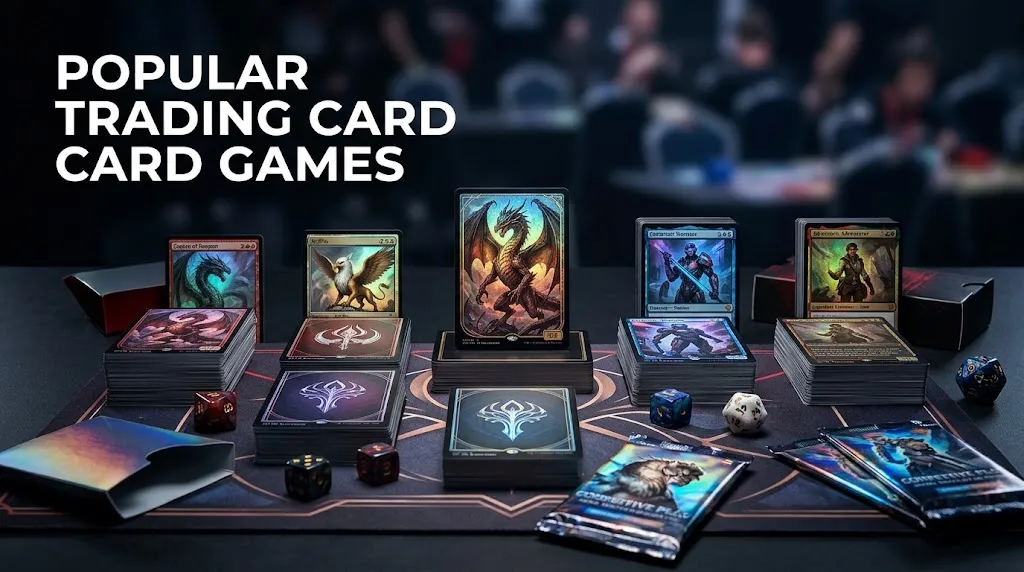

Trading card games have become far more than something to play casually with friends. The best-known titles now combine strategy, collecting, organised competition and constantly evolving card sets, giving players plenty of reasons to stay involved.
For anyone exploring popular trading card games, the choice can be surprisingly large. Pokémon, Magic: The Gathering, Yu-Gi Oh!, One Piece Card Game and Disney Lorcana all offer very different experiences. Recent 2026 marketplace data also shows strong demand across these major games, with Magic, Pokémon, One Piece and Yu-Gi-Oh! among the leading product lines.
Pokémon Trading Card Game
Pokémon remains one of the easiest TCGs for newcomers to recognise, thanks to its enormous character universe and straightforward core concept. Players build decks around Pokémon, Trainer cards and Energy, then use combinations of attacks and abilities to defeat their opponent.
It also works particularly well for people who enjoy collecting. There are plenty of different card rarities and artwork styles, while organised play gives competitive players another reason to keep improving.
The official Pokémon programme supports local leagues and tournaments, so the game can move naturally from casual kitchen-table games to structured competition.
Magic: The Gathering
Magic: The Gathering is one of the strongest choices for players who prioritise strategy and deck-building depth. Its huge card pool allows players to create very different styles of deck, from aggressive strategies designed to win quickly to slower builds focused on control and resource management.
One of Magic's biggest strengths is variety. Players can enjoy casual games with friends, digital play or organised competitive formats, while new sets regularly introduce mechanics and themes that change how decks are built.
That depth makes Magic particularly appealing if you enjoy learning a game's systems over time rather than simply picking up a starter deck and stopping there. Wizards of the Coast describes it as a strategic collectible card game with numerous ways to play.
Yu-Gi-Oh! Keeps Its Competitive Edge
Yu-Gi-Oh! has a distinctive appeal because games can become extremely fast and strategically complex. The franchise is familiar to several generations of players, but the physical card game has developed its own competitive identity far beyond the original anime.
For beginners, the number of cards and interactions can make the game feel intimidating. Once the fundamentals are understood, though, building a deck around a preferred strategy can be one of the most rewarding aspects.
Yu-Gi-Oh! also continues to have a strong marketplace presence. TCGplayer's Q2 2026 sales ranking placed it fourth among its leading product lines, behind Magic, Pokémon and One Piece.
One Piece Card Game Is a Major Modern Contender
The One Piece Card Game has established itself as one of the most successful newer entries in the TCG market. Its biggest advantage is obvious: it combines a globally recognised manga and anime universe with a dedicated card-game system.
The game is particularly attractive to One Piece fans who want more interaction with the characters and story outside the original series. At the same time, its competitive mechanics give serious players plenty to explore.
Its momentum is also reflected in marketplace activity. TCGplayer ranked One Piece third by product-line sales in Q2 2026, placing it ahead of Yu-Gi-Oh! for the quarter.
Disney Lorcana and the New Generation
Disney Lorcana offers something noticeably different. Rather than relying on an established competitive TCG audience alone, it brings familiar Disney characters into a card game designed to be approachable while still offering strategic choices.
That combination makes it an interesting option for families, Disney collectors and people who may be trying a trading card game for the first time. Its recent sales performance also suggests that it should not be dismissed as simply a casual alternative: TCGplayer ranked Disney Lorcana fifth in Q2 2026, up from eighth in the previous quarter.
There are also newer games worth watching, including Riftbound, Gundam Card Game and Dragon Ball Super Fusion World. The growing range means players can increasingly choose a TCG based on the type of world, gameplay and community they prefer rather than simply following the oldest names.
How to Choose Among Popular Trading Card Games
Popularity is useful, but it should not be the only deciding factor. A game that is perfect for one player may feel completely wrong for another.
Consider these points before buying your first cards:
- Gameplay: Do you prefer quick battles or deeper strategic games?
- Collecting: Are artwork, characters and rarity important to you?
- Budget: Check the cost of starter decks, booster packs and competitive cards.
- Community: Look for local shops, leagues and regular events.
- Learning curve: Some games are easier to understand initially than others.
- Franchise: A world you already enjoy can make learning the game much more rewarding.
It is also worth remembering that popularity can change. New releases, tournament formats and major franchise collaborations can quickly alter which games attract the most attention.
For readers who enjoy keeping up with gaming culture, entertainment and other hobby trends, MediaMagus offers a broader source of topics worth exploring alongside the latest trading card games.
Final Thoughts
The most popular trading card games succeed because they offer more than one reason to participate. Pokémon combines collecting with accessible competitive play, Magic delivers exceptional strategic depth, Yu-Gi-Oh! rewards players who enjoy complex interactions, One Piece brings a major anime universe into competitive card gaming, and Disney Lorcana provides an approachable alternative with strong character appeal.






















Sign in to leave a comment.