

When you need to authorise someone abroad to act on your behalf, a Power of Attorney (POA) can make the process smoother. Whether it’s managing property, handling financial matters, or completing legal transactions overseas, a properly notarised document is often required before foreign authorities will accept it.
If you’re based in London’s financial district or nearby, working with a Notary Canary Wharf service can simplify the process considerably. This guide walks you through each step—from preparing your document to completing notarisation and legalisation—while explaining modern options Notary services.
Understanding Power of Attorney for Overseas Use
A Power of Attorney is a legal document that allows another person (the attorney or agent) to act on your behalf. When the document is intended for use outside the UK, authorities in the receiving country usually require additional authentication steps to confirm that it is genuine.
This is where notarisation becomes important. A notary public verifies the identity of the person signing the document and confirms that the signature is authentic. After that, the document may need further verification through apostille or consular processes depending on the destination country.
In areas like Canary Wharf—where many international professionals and businesses operate—this requirement is common for cross-border property transactions, company formation abroad, and family or personal matters overseas.
Step 1: Prepare the Power of Attorney Document
Before visiting a notary, ensure your document is properly drafted. The wording should clearly describe:
- The person granting the authority (the donor)
- The person receiving the authority (the attorney)
- The powers being granted
- The country where the document will be used
In many cases, it’s advisable to have the document prepared or reviewed by a legal professional familiar with the laws of the destination country. Some notarial service providers also offer drafting assistance for documents that need to meet international requirements.
Preparation is important because once the notarisation is complete, changes usually require repeating the process.
Step 2: Contact a Notary in Canary Wharf
The next step is arranging an appointment with a notary public. If you work or live near London’s financial hub, choosing a Notary Canary Wharf service can be convenient—especially if your schedule is busy.
Many notaries in this area provide flexible appointment options and are accustomed to handling both personal and corporate documents. Some also offer:
- Same-day appointments
- Weekend availability
- Urgent notarisation for time-sensitive matters
These flexible arrangements are designed to accommodate professionals who may not be able to attend during typical office hours.
When booking, you’ll typically be asked to send a copy of your document in advance so the notary can review it and confirm any additional requirements.
Step 3: Verify Your Identity
Notaries must confirm the identity of everyone signing a document. This is a standard requirement under UK regulations and helps prevent fraud or misuse of legal documents.
You’ll usually need to provide:
- A valid passport or government-issued photo ID
- Proof of address (such as a utility bill or bank statement)
The notary keeps a record of these details as part of their compliance obligations.
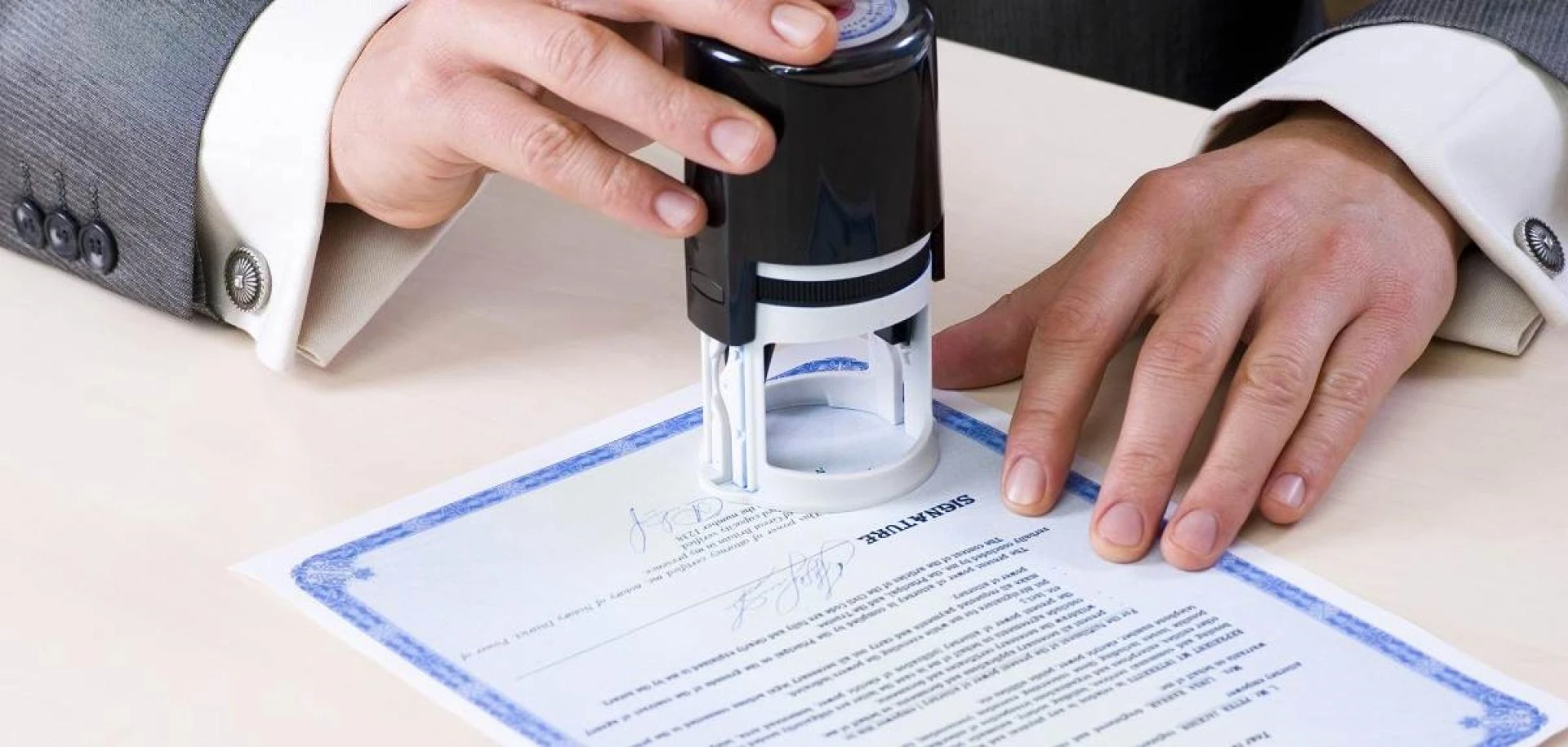
During the appointment, the notary will witness your signature and apply their official seal or certification to the document.
Step 4: Choose Between In-Person or Electronic Notarisation
Traditionally, notarisation required meeting a notary face-to-face. However, technology has changed how this process works. Many firms now offer Electronic Notarisation, allowing certain documents to be notarised remotely using secure digital signatures.
Electronic notarisation can be particularly helpful if:
- You are travelling or living abroad
- You need to process documents quickly
- You prefer a remote appointment
Modern systems can use qualified electronic signatures that carry the same legal effect as handwritten signatures under recognised regulations.
However, not every document is suitable for remote notarisation. Some legal acts—such as witnessing certain deeds or documents requiring a physical signature—still require in-person verification.
Step 5: Consider a Mobile Notary if You Cannot Travel
For individuals with demanding schedules or mobility challenges, a Mobile Notary can be extremely helpful. Instead of visiting an office, the notary travels to your location—whether it’s your workplace, home, or a meeting room.
This service is particularly useful for:
- Company directors signing corporate documents
- Families signing multiple documents together
- Elderly individuals who cannot travel easily
- Busy professionals working long hours
Mobile notarisation adds convenience while still ensuring the document is properly verified and executed.
In a business district like Canary Wharf, this option is widely used by organisations that need quick document authentication without disrupting daily operations.
Step 6: Document Legalisation for Overseas Authorities
After notarisation, many countries require an additional step known as legalisation. This confirms that the notary’s signature and seal are valid.
If the destination country is part of the Hague Apostille Convention, an apostille certificate is usually sufficient. For other countries, consular legalisation may be required, which can involve additional verification by the relevant embassy or consulate.
This is often referred to as Document Legalisation Canary Wharf services when handled by notaries operating in that area. Experienced notarial offices guide clients through the process and handle submissions to the relevant authorities, helping avoid delays or rejected documents.
Legalisation requirements vary depending on the country, so it’s important to confirm exactly what is needed before submitting your paperwork.
Step 7: Sending the Document Abroad
Once the notarisation and legalisation steps are completed, the document can be sent to the receiving country.
Common delivery methods include:
- International courier services
- Secure digital transmission (for electronically notarised documents)
- Collection by a representative
If you’re working with a professional notarial office, they may assist with arranging secure delivery to ensure the document arrives safely and promptly.
Why Notarisation Matters for International Transactions
In global legal and business environments, trust is essential. Notarisation provides that trust by confirming the authenticity of signatures and documents.
Authorities abroad rely on notarised documents because:
- They provide verified proof of identity
- They confirm the document was signed voluntarily
- They reduce the risk of fraud
- They ensure compliance with international legal standards
Without notarisation, many foreign institutions—including banks, courts, and government agencies—will refuse to accept a Power of Attorney.
Practical Tips Before Your Appointment
To make the process smooth, keep the following tips in mind:
- Check the destination country’s requirements
Each country may have slightly different rules for legalisation or apostille. - Bring original identification documents
Copies are usually not sufficient for identity verification. - Review the document carefully beforehand
Changes after notarisation may require repeating the process. - Ask about timelines
Some legalisation procedures can take a few days or longer depending on the country. - Consider digital options if time is limited
Electronic notarisation can sometimes speed up the process.
Preparation can make a significant difference, especially when documents are needed urgently for international use.
Final Thoughts
Handling legal documents for overseas use can feel complicated at first, but with the right guidance, the process becomes manageable. From preparing your Power of Attorney to completing notarisation and legalisation, each step ensures your document will be recognised internationally.
If you’re looking for professional support in London’s financial district, White Horse Notaries provides tailored notarial services for both individuals and businesses. Their experience includes notarising thousands of documents and offering flexible solutions such as mobile appointments and remote electronic notarisation.
Sign in to leave a comment.