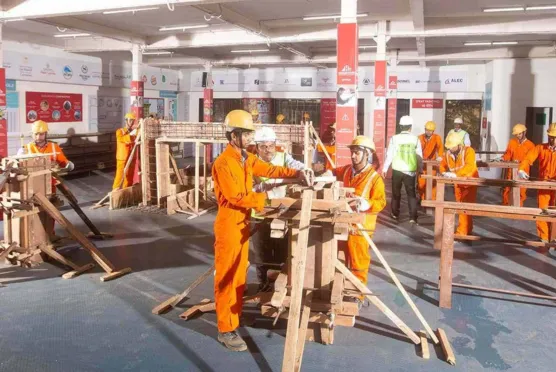

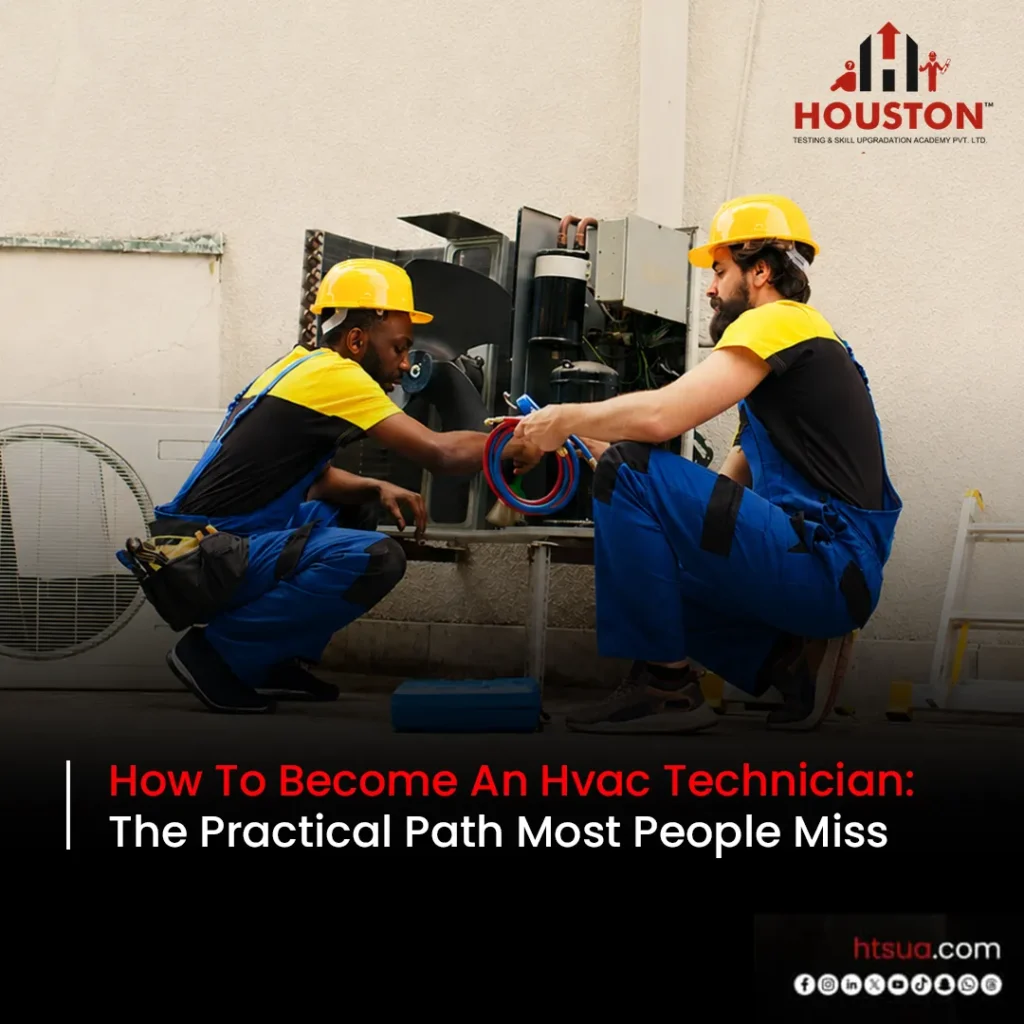
Becoming an HVAC technician requires more than knowing how an air-conditioning or refrigeration system works. Employers need technicians who can apply their knowledge safely, accurately, and efficiently in real working conditions. This is why a HVAC technician practical assessment plays an important role in verifying whether a candidate can actually perform the tasks expected on the job.
A practical assessment allows an assessor to observe how a technician approaches a task, selects tools, follows safety procedures, diagnoses problems, performs repairs, and checks the final result. In competency-based systems, assessment may include practical demonstrations, questioning, workplace evidence, and observation of safe working practices.
For technicians preparing for domestic, commercial, industrial, or overseas opportunities, understanding what assessors look for can make preparation much more focused.
What Is a Practical HVAC Assessment?
A practical HVAC assessment is a structured evaluation in which a technician demonstrates their technical skills by completing realistic HVAC-related tasks. Instead of depending only on written answers, the assessor observes the candidate while they work.
Depending on the assessment framework and job role, activities can include equipment inspection, installation-related tasks, electrical testing, refrigerant-system work, fault diagnosis, component replacement, maintenance, testing, and safe shutdown procedures.
The objective is not simply to determine whether a technician can complete a task. Assessors also consider how the task is completed.
For example, a technician may identify the correct fault but still lose marks if they ignore electrical safety, use inappropriate tools, skip required testing, or leave the work area unsafe.
1. Safety Is One of the First Things Assessors Observe
Safety is a fundamental part of HVAC work because technicians may work with electricity, refrigerants, rotating equipment, pressurised systems, tools, ladders, and potentially hazardous working environments.
During an assessment, the technician may be expected to:
- Select and use appropriate PPE.
- Follow safe isolation procedures.
- Handle tools correctly.
- Identify workplace hazards.
- Follow equipment and manufacturer instructions.
- Maintain a safe working area.
- Use appropriate procedures when working with electrical and refrigeration systems.
Safety should not be treated as something to demonstrate only when the assessor is watching. It should become part of every step of the job.
Competency standards for refrigeration and air-conditioning work specifically identify safe working practices and risk-control procedures as important evidence of competence.
2. Tool and Equipment Selection
An experienced HVAC technician should understand which tool is appropriate for a particular job and how to use it correctly.
Assessors can observe whether candidates can identify and operate common equipment such as:
- Multimeters
- Clamp meters
- Manifold gauges
- Vacuum pumps
- Pressure-testing equipment
- Pipe cutters
- Flaring tools
- Brazing equipment
- Temperature-measuring instruments
- Electrical testing equipment
Simply knowing the name of a tool is not enough. The technician should understand its purpose, limitations, and safe operating procedure.
Good preparation therefore involves practising with the same types of tools commonly used during actual HVAC service and maintenance work.
3. Installation and Technical Workmanship
Practical assessments may examine how well a candidate performs installation-related activities.
The assessor can look at the technician's ability to follow the correct sequence, measure accurately, connect components properly, and maintain good workmanship.
For example, when working with copper piping, the technician may need to demonstrate appropriate cutting, preparation, joining, routing, and testing procedures.
Assessors can also look for unnecessary bends, poor connections, improper finishing, incorrect measurements, or practices that could negatively affect system performance.
The quality of the finished work matters because a technically qualified technician should be able to produce work that is functional, safe, and suitable for continued operation.
4. Fault Finding and Troubleshooting
Troubleshooting is one of the most important skills evaluated during practical HVAC assessments.
An assessor may introduce a fault or provide a system with a known problem and ask the candidate to diagnose it.
The technician's approach is important.
A strong troubleshooting process normally involves:
- Understanding the reported problem.
- Conducting a visual inspection.
- Checking relevant electrical and mechanical components.
- Taking appropriate measurements.
- Comparing readings with expected values.
- Identifying the likely cause.
- Carrying out the appropriate corrective action.
- Testing the system again.
The goal is not to guess the faulty component. A competent technician should be able to explain why a particular component or condition is suspected.
Assessment standards for refrigeration and air-conditioning fault diagnosis emphasize practical evidence of diagnosing and rectifying faults while maintaining safe working practices.
5. Refrigerant Handling and System Testing
Refrigerant-related tasks require careful procedures because incorrect handling can affect both system performance and safety.
Depending on the assessment requirements, technicians may be evaluated on their ability to understand system pressures, perform appropriate testing, follow recovery or charging procedures, and identify possible leaks or abnormal operating conditions.
Candidates should understand that refrigerant work is not simply about adding refrigerant until the system appears to work. Correct procedures, measurements, manufacturer specifications, environmental requirements, and safe handling practices all matter.
Assessment resources may include industry-standard equipment, relevant documentation, specifications, regulations, and workplace procedures.
6. Electrical Testing and Diagnosis
Modern HVAC technicians need basic electrical competency because air-conditioning and refrigeration systems contain electrical circuits, motors, controls, sensors, contactors, capacitors, and other components.
During practical testing, an assessor may evaluate whether the candidate can safely perform electrical checks and interpret readings.
The technician may need to demonstrate knowledge of:
- Voltage measurement
- Continuity testing
- Resistance measurement
- Current measurement
- Electrical connections
- Motor and component checks
- Control circuits
- Safe isolation procedures
Accuracy is important, but safety comes first. A technician should never take an electrical measurement without following the appropriate safety procedure.
7. Testing the Final Result
Completing the repair or installation is not necessarily the final step.
Assessors may expect candidates to verify that the system is operating correctly after the task has been completed.
This can involve checking relevant temperatures, pressures, electrical readings, system operation, controls, airflow, or other performance indicators depending on the equipment and assessment task.
The principle is simple: do not assume the job is successful—verify it.
Formal competency guidance also recognizes testing and inspection as part of verifying that refrigeration and air-conditioning installations are safe, compliant, and functioning as intended.
8. Time Management and Work Sequence
Practical assessments are often completed within a defined period. Therefore, assessors may observe whether candidates can organise their work efficiently.
Technicians should avoid rushing through important safety steps, but they should also avoid wasting time because of poor preparation.
A logical work sequence can help:
Understand the task → Prepare tools → Assess hazards → Perform the work → Test → Rectify issues → Verify operation → Clean the workspace.
Practising this sequence before the assessment can make the actual evaluation more comfortable.
9. Communication and Technical Knowledge
Practical performance is often supported by technical questioning. An assessor may ask why a particular tool was selected, why a measurement was taken, what could cause a particular fault, or what safety procedure should be followed.
This means candidates should prepare for both doing and explaining.
A technician who understands the principles behind their actions can usually respond more confidently to technical questions.
10. What Assessors Ultimately Look For
While assessment criteria vary according to the qualification, trade, employer, and assessment framework, assessors generally need evidence that the candidate can perform the required work competently and safely.
Key areas commonly include:
- Technical knowledge
- Practical execution
- Safety awareness
- Correct tool selection
- Troubleshooting ability
- Quality of workmanship
- Testing and verification
- Following procedures
- Time management
- Professional behaviour
Competency-based assessment can use multiple forms of evidence rather than relying exclusively on one test or written examination.
How to Prepare for an HVAC Practical Assessment
Preparation should focus on hands-on practice rather than memorising answers.
Before an assessment, candidates should revise HVAC fundamentals, practise using relevant tools, strengthen troubleshooting skills, review electrical safety, understand refrigerant procedures, and practise completing tasks in a logical sequence.
It is also useful to practise explaining what you are doing while performing a task. This improves both technical confidence and communication.
For candidates targeting overseas opportunities, it is especially important to understand the specific assessment requirements and standards expected by the relevant employer or destination market.
Prepare for a practical trade assessment with the right technical knowledge, hands-on practice, and safety awareness. Connect with HTSUA today to explore HVAC skill testing and certification opportunities and take the next step toward your career goals.






















Sign in to leave a comment.