

Introduction to Prediction Markets and Modern Web3 Opportunities
The rise of blockchain technology has transformed the way digital communities trade information, speculate on future outcomes, and participate in decentralized finance ecosystems. One of the fastest-growing innovations in this space is the prediction market business model. These platforms allow users to forecast outcomes of real-world events — from elections and sports to cryptocurrency trends and global economics.
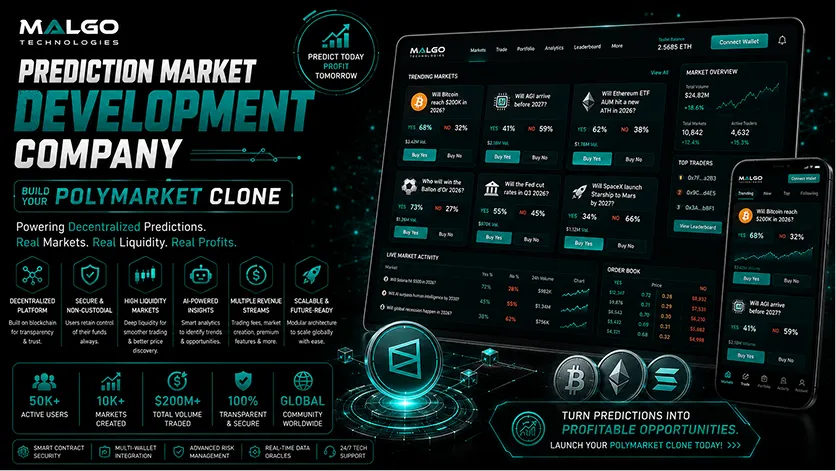
For startups entering the decentralized economy, launching a prediction market platform creates opportunities for recurring revenue, high user engagement, and scalable token-driven ecosystems. Many entrepreneurs today are exploring Polymarket Clone Platforms as a strategic way to enter this expanding market while reducing development complexity and accelerating time-to-market.
Unlike traditional betting systems, blockchain-based prediction markets operate with transparency, automation, and trustless execution powered by smart contracts. This makes them highly attractive for modern users who value decentralization, security, and global accessibility.
What Is a Prediction Market Business Model?
A prediction market business model is a decentralized ecosystem where users buy and sell shares representing the probability of future events. The market price reflects collective sentiment and crowd intelligence.
For example:
- “Will Bitcoin reach a new all-time high this year?”
- “Which team will win a championship?”
- “Will a specific political candidate win an election?”
Participants trade outcome shares, and the market dynamically adjusts probabilities based on demand and sentiment.
In Web3 ecosystems, prediction markets are usually built using:
- Smart contracts
- Blockchain wallets
- Decentralized liquidity pools
- Governance tokens
- Automated market makers (AMMs)
This structure removes intermediaries and allows transparent execution of all trades.
Core Components of a Prediction Market Platform
1. Smart Contract Infrastructure
Smart contracts automate the entire prediction process:
- Market creation
- User participation
- Fund locking
- Outcome settlement
- Reward distribution
Because smart contracts operate autonomously, startups can minimize operational overhead while improving trust.
2. Liquidity Mechanism
Liquidity is essential for maintaining active trading environments. Most prediction markets use:
- Automated Market Makers (AMMs)
- Liquidity pools
- Token incentives
Adequate liquidity ensures users can enter and exit markets efficiently.
3. Oracle Integration
Prediction markets rely on external data sources called oracles. These systems verify event outcomes and feed accurate information to the blockchain.
Reliable oracle systems are critical for:
- Fraud prevention
- Fair settlement
- User confidence
- Platform credibility
4. User Wallet Connectivity
Modern Web3 platforms integrate crypto wallets that allow users to:
- Store assets
- Participate in markets
- Claim rewards
- Trade tokens securely
Wallet integration improves decentralization while simplifying user onboarding.
5. Governance Layer
Many decentralized prediction platforms include governance mechanisms that allow token holders to vote on:
- Platform upgrades
- New features
- Market categories
- Community rules
This creates stronger user participation and long-term ecosystem sustainability.
How Prediction Market Platforms Generate Revenue
A successful prediction market startup depends on diversified revenue streams. Instead of relying on a single income source, platforms usually combine multiple monetization methods.
Trading Fees
Platforms can collect small transaction fees whenever users buy or sell prediction shares. This becomes highly scalable as trading volume grows.
Liquidity Provider Incentives
Some startups reserve ecosystem tokens to incentivize liquidity providers while maintaining treasury control through protocol mechanisms.
Market Creation Fees
Users or organizations that launch custom prediction events may pay fees to create markets on the platform.
Token Ecosystem Utility
Native tokens can support:
- Governance participation
- Staking rewards
- Fee discounts
- Community incentives
This strengthens platform retention and long-term engagement.
Enterprise Partnerships
Prediction markets can also collaborate with:
- Sports communities
- Crypto exchanges
- Media organizations
- DAO ecosystems
- Research firms
Strategic integrations create additional revenue opportunities and improve visibility.
Why Startups Are Investing in Prediction Markets
Rapid Growth of Decentralized Finance
The DeFi industry continues expanding globally, creating strong demand for decentralized applications with real-world utility.
Prediction markets combine:
- Financial incentives
- Social engagement
- Community intelligence
- Speculative trading
This makes them highly attractive for Web3-native audiences.
Community-Driven Engagement
Prediction platforms naturally encourage discussion, analysis, and participation. Users return frequently to track events and monitor outcomes.
This increases:
- Daily active users
- Session duration
- User retention
- Organic growth
Borderless Accessibility
Blockchain-based prediction markets are accessible globally without centralized restrictions. This enables startups to build international communities from the beginning.
Transparent Operations
Every transaction, settlement, and smart contract interaction is recorded on-chain. This level of transparency builds trust among users and investors.
Key Challenges in the Prediction Market Industry
Although the opportunity is significant, startups must understand the operational and regulatory challenges associated with prediction markets.
Regulatory Compliance
Different countries classify prediction markets differently. Some regions consider them:
- Financial instruments
- Speculative assets
- Gaming products
Startups should work with legal professionals to establish compliant operating structures.
Liquidity Acquisition
Low liquidity can reduce user confidence and create poor trading experiences. Early-stage platforms often solve this through:
- Token rewards
- Partnerships
- Community campaigns
- Liquidity mining
Market Manipulation Risks
Without proper safeguards, prediction markets can face coordinated manipulation attempts. Security-focused smart contract architecture and monitoring systems are essential.
Oracle Reliability
Incorrect data feeds can damage platform credibility. Startups should prioritize robust oracle networks with proven reliability.
Essential Features Every Prediction Market Startup Should Include
To compete effectively in the Web3 ecosystem, startups should focus on advanced platform functionality.
User-Friendly Interface
Complex blockchain experiences discourage adoption. A simplified interface helps onboard mainstream users.
Multi-Chain Compatibility
Supporting multiple blockchain networks improves scalability and reduces dependency on a single ecosystem.
Mobile Optimization
Many users access Web3 applications through smartphones. Responsive mobile experiences are critical for engagement.
Real-Time Analytics
Users expect live probability updates, trading charts, and market insights.
Security Infrastructure
Security should include:
- Smart contract audits
- Wallet protection
- Anti-bot systems
- Fraud prevention layers
The Future of Web3 Prediction Markets
Prediction markets are evolving beyond simple speculation platforms. Emerging trends include:
- AI-powered forecasting
- DAO-governed prediction ecosystems
- NFT-integrated prediction utilities
- Sports and esports expansion
- Real-world asset forecasting
- Enterprise intelligence platforms
As blockchain adoption grows, prediction markets may become mainstream tools for collective forecasting and decentralized decision-making.
Why Polymarket Inspired Models Are Gaining Attention
Platforms inspired by the success of decentralized forecasting ecosystems have demonstrated how powerful crowd intelligence can become when combined with blockchain transparency.
Startups entering this space often analyze proven frameworks to understand:
- User engagement mechanics
- Liquidity strategies
- Governance structures
- Market incentives
- Scalable token economies
This is one reason why demand for Polymarket Clone Platforms continues increasing among entrepreneurs looking to build scalable Web3 prediction ecosystems with modern decentralized architecture.
Final Thoughts
The prediction market business model represents one of the most innovative sectors in the blockchain industry. By combining decentralized finance, crowd intelligence, and smart contract automation, these platforms create engaging ecosystems with strong long-term potential.
For startups, the opportunity lies not only in launching a prediction platform but in building a sustainable community-driven ecosystem that rewards participation, transparency, and innovation.
As Web3 adoption accelerates globally, businesses exploring decentralized forecasting solutions and Polymarket Clone Platforms are positioning themselves at the forefront of the next generation of blockchain-powered applications.






















Sign in to leave a comment.