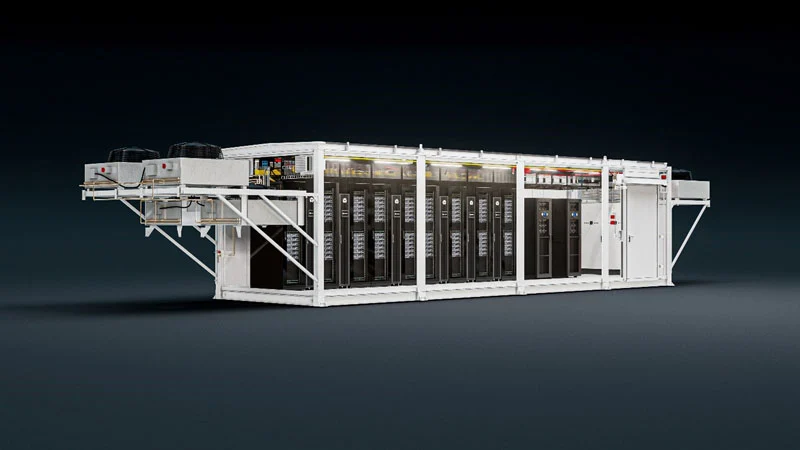

In an age where data demand doubles every few years and new AI workloads can render yesterday’s infrastructure obsolete overnight, the ability to deploy high-performance computing capacity in weeks instead of years has become a strategic necessity. The Prefabricated modular data center represents the most complete answer to this challenge, delivering fully integrated, factory-built facilities that arrive on site pre-wired, pre-cooled, pre-tested, and ready to power on within days of delivery. By moving the majority of construction, integration, and commissioning into controlled manufacturing environments, the prefabricated modular data center eliminates the chaos of traditional job-site building while preserving enterprise-grade density, redundancy, and efficiency.
From Construction Site to Production Line
The defining characteristic of a prefabricated modular data center is that it is manufactured rather than built. Every aspect of the facility, from structural steel and containment walls to power skids, cooling distribution, cabling, and IT racks, is engineered as a repeatable product on an assembly line. Modules are produced in climate-controlled factories using lean manufacturing principles, robotic welding, automated wire pulling, and continuous quality inspection. This industrial process delivers consistency and precision that simply cannot be replicated in the field. Before a module ever leaves the plant, it undergoes full integrated systems testing under simulated load, including heat-run validation, failover sequencing, and network connectivity checks. The result is a facility that achieves 99.999% of its final performance specification the moment utility power and fiber are connected.
Deployment Speed That Changes Competitive Dynamics
A large traditional data center routinely requires 36 to 60 months from concept to full operation. A comparable prefabricated modular data center can be delivering production workloads in 10 to 16 months, with many edge and mid-sized projects going live in under 26 weeks. This acceleration comes from overlapping timelines: while foundation pads and incoming utilities are prepared on site, dozens of modules are simultaneously progressing through assembly, integration, and testing in the factory. Shipping occurs the moment site readiness is confirmed, and final commissioning typically takes only days because every subsystem has already been proven in the factory environment. For cloud providers racing to secure GPU capacity, telecom operators densifying 5G networks, or enterprises launching sovereign cloud regions, this timeline compression is often the difference between leading the market and playing catch-up.
Financial Predictability in an Unpredictable World
Prefabricated modular data centers have brought an end to the era of massive budget overruns that once defined the industry. Because every component follows an identical design and bill of materials across global production runs, costs are known with near-perfect accuracy from the earliest planning stages. Material price volatility, labor shortages, and change-order surprises are largely eliminated. Owners receive firm, fixed pricing months or even years before delivery, enabling precise financial modeling and capital allocation. The phased nature of modular expansion further aligns expenditure with revenue: capacity is added only when utilization and cash flow justify it, transforming data center investment from a lumpy, high-risk bet into a smooth, predictable operating expense curve.
Density and Efficiency That Match Bespoke Designs
Modern prefabricated modular data centers have shattered the old stereotype of limited power density. Current-generation modules routinely support 40-70 kW per rack in air-cooled configurations and exceed 150 kW per rack with direct-to-chip or immersion liquid cooling, placing them among the highest-density facilities in the world. Factory-integrated close-coupled cooling, hot-aisle containment, and intelligent airflow management deliver power usage effectiveness ratios as low as 1.08 in favorable climates. Liquid-to-liquid heat exchange, rear-door heat exchangers, and immersive single-phase or two-phase systems are installed and leak-tested at the factory, eliminating the field coordination nightmares that plague traditional high-density retrofits. The outcome is performance that rivals the most advanced custom hyperscale builds while retaining all the advantages of standardization.
Sustainability Engineered at the Molecular Level
Environmental impact is addressed from the very first weld. Prefabricated construction generates up to 90% less waste than traditional methods because materials are ordered to exact length and scrap is recycled within the factory ecosystem. The compact footprint requires far less concrete and steel per kilowatt of IT load, slashing embodied carbon. Cooling systems are rightsized from day one, avoiding the chronic overprovisioning that wastes energy in conventionally built halls. Modules can be located directly beside renewable generation or district heat-recovery systems that would be impractical for sprawling campuses. When a module reaches end-of-life after 15-20 years, it can be disassembled, refurbished, and redeployed elsewhere or recycled with near-total material recovery, a stark contrast to the demolition waste of permanent concrete structures.
Universal Applicability Across the Computing Continuum
The prefabricated modular data center is equally at home in every layer of modern architecture. A single 20- or 40-foot module becomes a complete micro-edge facility inside a telecom central office or atop an urban rooftop. Clusters of modules form regional latency hubs supporting autonomous vehicles and smart cities. Hundreds of interconnected modules create exascale AI training campuses or sovereign national cloud platforms. Tactical versions serve disaster response, military theater operations, or major sporting events with the same underlying platform, simply reconfigured during the factory build phase for mobility, rapid deployment, or enhanced physical security. This single-platform versatility has made prefabricated modular design the default choice for any organization pursuing a distributed, resilient, future-proof topology.
Supply-Chain Resilience and Geopolitical Independence
Leading manufacturers now operate multiple geographically dispersed factories, enabling customers to source complete systems from facilities closest to the final deployment site or in jurisdictions that align with data-sovereignty requirements. This distributed production model dramatically reduces shipping times, carbon footprint, and exposure to regional disruptions. In an era of trade uncertainty and component shortages, the ability to secure an entire multi-megawatt facility from a single qualified vendor with proven global capacity has become a critical risk-mitigation factor.
The New Procurement Paradigm
The relationship between buyer and supplier has been permanently transformed. Instead of managing hundreds of subcontractors across years of construction, organizations now partner with a single integrated manufacturer that assumes full responsibility for design, production, testing, delivery, and often long-term service. Framework agreements and strategic alliances replace one-off tenders, driving continuous cost reduction and performance improvement with each successive generation. Customers gain early access to next-generation cooling, power distribution, and immersion technologies before they become broadly available, creating a virtuous cycle of innovation that mirrors the semiconductor industry’s roadmap discipline.
The prefabricated modular data center has evolved from an interesting alternative into the dominant paradigm for new capacity worldwide. It delivers hyperscale performance with startup speed, enterprise reliability with consumer-product cost discipline, and green credentials with industrial rigor. For any organization planning digital infrastructure beyond the next eighteen months, the question is no longer whether to adopt the prefabricated modular approach, but how aggressively to embrace it. The factories are running, the designs are proven, and the future of computing is being built one precision-engineered module at a time.





























Sign in to leave a comment.