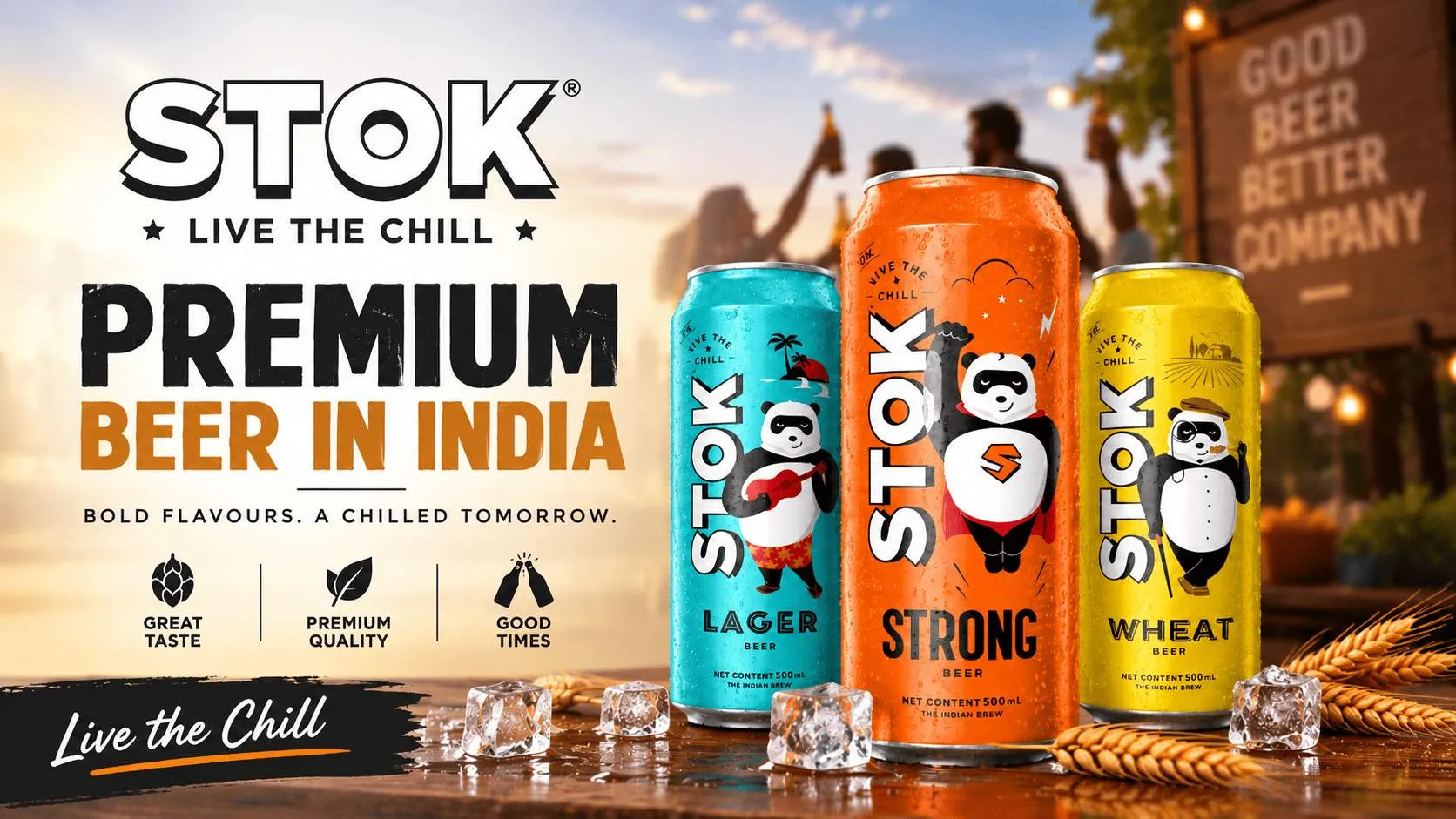

Premium beer usually differs from regular beer through ingredient choices, brewing methods, flavour and finish. Premium beer in India can use familiar beer styles, but brewers often focus more on taste, balance and drinking character.
India's beer market continues to grow as consumers explore different beer styles and flavour profiles. Beer consumption in India reached about 2.1 billion litres in 2022, showing the scale of the category.
Today, drinkers often look beyond alcohol strength and price when choosing beer. This guide explains what makes beer premium, how premium beer differs from regular beer, and what consumers should consider when comparing different options.
What Makes a Beer Premium?
A premium beer usually combines careful ingredient selection, controlled brewing, a clear flavour profile and consistent quality. Price alone does not make a beer premium, and higher alcohol content does not automatically indicate better quality.
The term "premium" can describe product positioning, recipe quality, ingredients or the overall drinking experience. Brewers can create premium beers across several styles, including lager and wheat beer.
Premium beer ingredients in India
Malt, hops, yeast and water shape a beer's final character. Brewers can adjust malt selection, hop varieties, yeast strains and fermentation conditions to create different aromas, bitterness, body and finish.
Malt provides fermentable sugars and influences colour and body. Hops contribute bitterness and aroma, while yeast converts sugars into alcohol and creates flavour compounds during fermentation.
How brewing affects beer quality
Brewing control affects the final character of beer. Mash conditions influence the wort, while fermentation determines how yeast converts sugars and develops flavour.
For example, STOK Beer India presents beer as part of India's growing premium beer segment, with its range available through its official website
Is Premium Beer Better Than Regular Beer?
Premium beer is not automatically better than regular beer. The difference often comes down to flavour goals, ingredients, brewing choices and the experience a drinker wants.
Regular beer often aims for consistency, broad appeal and easy drinking. Premium beer may place more focus on distinctive taste, aroma, texture or ingredient character.
Premium lager vs regular lager
Both beers can follow similar brewing principles. The difference can appear in the recipe, ingredient selection and production approach.
A regular lager may focus on a light and familiar profile. A premium lager can offer more noticeable malt notes, defined hop character or a longer finish.
What to compare when tasting beer
When comparing two beers, look at:
- Aroma
- Malt character
- Hop bitterness
- Carbonation
- Body
- Finish
- Balance between malt and hops
These factors can provide more useful information than price alone.
What Is the Difference Between Premium and Regular Beer?
The main difference lies in how the brewer develops the beer. Premium beer often places greater focus on ingredient selection, flavour definition and production consistency, while regular beer generally targets broad appeal and a familiar taste.
FSSAI regulates alcoholic beverages in India through standards covering product requirements, labelling and safety. Its regulations define alcohol by volume as the percentage of ethanol by total volume.
Does premium beer have higher alcohol content?
Not necessarily. Alcohol by Volume, or ABV, measures alcohol strength but does not measure overall beer quality.
A beer with moderate ABV can still offer a complex aroma, balanced bitterness and strong malt character. Likewise, a high-ABV beer may focus mainly on alcohol strength.
Why brewing ingredients matter
Ingredient selection can change the final beer significantly. Different malts can produce grainy, bready, caramel or toasted notes.
Different hops can create herbal, floral, citrus or resin-like aromas. Brewers also control fermentation temperature, yeast selection and conditioning to shape the final profile.
What Is Considered Premium Beer in India?
India does not have one simple national rule that defines every beer as premium. The term usually describes market positioning and perceived product quality rather than one fixed regulatory category.
FSSAI recognises different alcoholic beverage categories and sets standards for their composition, production and labelling.
Premium beer and craft beer are not the same
Craft beer and premium beer can overlap, but they describe different ideas. Craft beer generally relates to brewing approach and production identity, while premium beer often relates to market positioning and perceived quality.
A craft beer can sit within a premium segment, but not every premium beer qualifies as craft beer.
Premium beer taste and aroma
Taste provides one of the clearest ways to compare beers. A premium lager may offer a cleaner malt profile, balanced bitterness and a more defined finish.
Aroma also provides useful clues. Malt, hops and fermentation each contribute different sensory notes.
Why premium beer can cost more
Higher prices can reflect ingredient choices, production methods, packaging, distribution, taxes and market positioning. Price alone cannot prove that one beer tastes better than another.
As India's beer market develops, brands such as STOK Beer India are part of the wider movement toward differentiated beer products and premium positioning.
Conclusion
Premium beer in India differs from regular beer mainly through recipe choices, ingredient selection, brewing control and flavour definition. A higher price or ABV does not automatically make a beer premium.
The most useful comparison starts with the beer itself rather than the label. Aroma, malt character, bitterness, carbonation, body and finish can reveal more about beer quality than marketing terms. As Indian consumers explore more beer styles, premium beer will increasingly be judged by the qualities people can actually taste.























Sign in to leave a comment.