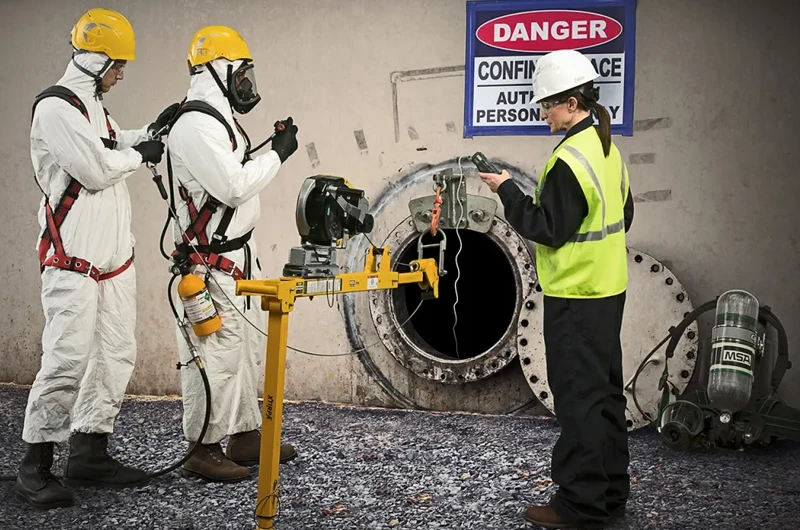
When things go wrong inside a confined space, there’s no time to think only time to act.
It could be a worker who suddenly loses consciousness, a gas leak that hits without warning, or oxygen levels dropping faster than anyone expected. In that moment, a rescue team’s quick action can mean the difference between a safe recovery and a tragedy.
Sadly, many workplaces don’t realize how critical this preparation is until something bad happens. They invest in safety gear, permits, and procedures, but forget one essential part training people to handle real emergencies.
This post isn’t about fancy safety jargon. It’s about real people, real teamwork, and the kind of training that makes rescuers confident and calm when everyone else is panicking.
Why Rescue Training Matters So Much
Anyone who’s ever stepped into a confined space knows it’s not like any other work area.
It’s cramped, dark, and full of invisible risks low oxygen, toxic fumes, tight exits, or slippery floors. If someone gets into trouble inside, getting them out safely is not easy.
That’s why Confined Space Entry Training is so important. It doesn’t just teach workers how to enter and exit safely it teaches them how to think safely. They learn how to check air quality, identify warning signs, use protective gear, and talk clearly when seconds count.
Think of it like this: a rescue team isn’t just there to pull someone out. They’re there to protect lives including their own. Without the right training, even rescuers can end up becoming victims.
Too many companies believe that if they do the paperwork right, accidents won’t happen. But safety isn’t a checklist. It’s a habit, a mindset, and something you have to keep practicing every single day.
How to Build a Rescue Team That’s Truly Ready
A great rescue team doesn’t just happen it’s built with patience, trust, and training.
Each member plays a unique role:
- The Entrant – the person who goes inside the space.
- The Attendant – the one who stays outside, watching, and ready to act.
- The Supervisor – who makes sure all permits and safety checks are in place.
- The Rescue Team – the heroes who go in when something goes wrong.
For things to run smoothly, everyone needs to know exactly what to do. That’s why Confined Space Entry Training should never be just a classroom session. It has to include real-life drills things like rescuing a fainted worker, untangling ropes, or reacting to gas alarms.
When people practice like it’s real, they learn to stay calm under pressure. Panic fades, and confidence grows.
Real Practice Builds Real Skill
Let’s be honest no one becomes a skilled rescuer by reading a manual. The real learning happens when people put on their gear, climb down into tight spaces, and actually do the drills.
These exercises should be as realistic as possible inside tanks, tunnels, or pipes, wherever your team actually works.
Use full protective gear, run air quality checks, and simulate emergencies just like they could happen on-site.
And here’s a tip that makes all the difference bring in some experience trainer who’s been there and done it. An experienced trainer knows what panic feels like, what mistakes people make, and how to teach calm, smart responses under pressure.
After every drill, take time to talk it through. Ask what went well, what needs fixing, and how communication can be clearer next time. Those simple discussions turn an average rescue team into a reliable one.
Smart Tools, Safer Rescues
Technology has changed how rescue teams train and respond.
Modern gas detectors, wearable trackers, and wireless communication tools can now monitor workers and air quality in real time. Some companies even use drones or small robots to inspect confined spaces before sending people in.
Including these tools in Confined Space Entry Training helps teams get comfortable using them before real emergencies happen. When people trust their equipment and understand how it works, rescues become faster, safer, and more effective.
The best results come when human skill and modern tools work together.
Keep Learning, Stay Prepared
Rescue training isn’t a one-and-done thing. Skills fade if you don’t practice them regularly.
That’s why teams need refreshers, updated drills, and awareness of the latest safety rules.
Different industries face different dangers what happens in an oil refinery isn’t the same as a wastewater plant or a construction site. Your team has to keep learning, adapting, and staying sharp.
And just as important build a culture where everyone looks out for each other. Safety shouldn’t just come from supervisors; it should come from every worker who takes pride in going home safe at the end of the day.
Final Thoughts
A rescue team isn’t just part of your safety checklist it’s your last line of defense. It’s the group of people who make sure that no one is left behind when things go wrong.
When your team trains together, trusts each other, and takes Confined Space Entry Training seriously, they stop being just employees they become protectors.
At the end of the day, safety isn’t about ticking boxes or passing inspections.
It’s about people making sure that everyone who goes into a confined space walks out again, safe, alive, and ready to go home to their families.









Sign in to leave a comment.