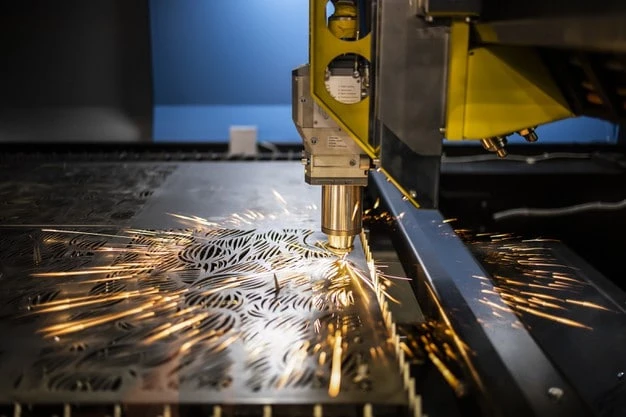

CNC machines have been a prevalent choice for most industries for many decades now. Today manufacturers leverage the accuracy of different CNC machines such as the Mori Seiki CNC machine to produce different types of other machinery components. CNC is an abbreviation for computer numerical controls.
These CNC machines are now being used to manufacture many different types of components that would be very challenging to produce using the conventional machining approaches. When one thinks of precision CNC machining, there are many questions that might flood your brain. So here in this post, we will answer two of the most prevalent questions associated with precision CNC machining. Hence let us get started!
What Is Precision Machining?
Precision machining is a technique used to create different accurate components required as standalone components of different types of machinery. Components produced using this approach require unmatched precision to match the system or machine they are designed for and serve their purpose. These days, numerous manufacturers are leveraging precision CNC machining to deliver highly complex yet accurately manufactured components of different machines that are further used in many different things, including cars, machines at manufacturing plants, and more.
Material Used In Precision Machining Process
Manufacturers use many different types of materials in precision CNC machining to create the final piece required in the shape of a specific component of any machinery. So here are some of the most prevalent materials used in precision CNC machining.
Brass: Widely known for its cost-effectiveness and easy-to-mold characteristics, brass is among the most commonly used materials in precision CNC machining. This type of material that manufacturers generally use, producing different intricate components that have to come with highly sophisticated and precisely cut features.
Qualities such as unmatched smoothness, spotless finishing, and easy machining make brass one of the most preferred materials used to manufacture consumer goods, fittings, medical equipment, electronic contact and hardware, commercial products, etc. Most of the intricate components of the Mori Seiki machine are also made using brass.
Stainless Steel: This is one of the most popular materials used for precision CNC machining. The resistance to corrosion and unmatched durability and strength offered by stainless steel can be accredited for its popularity. On top of that, the best thing about this material is that it can be seamlessly welded vacuum-tight.
However, it is worth mentioning that even stainless steel is available in many different types of variants, and the options for the treatment of this material are also never-ending. The properties of stainless steel can be altered based on the way it is machined. This makes stainless steel one of the most versatile materials.
Aluminum: This is a material that has always been known for its exotic relationship with the world of manufacturing. Most Mori Seiki CNC milling machines use aluminum to produce different components of varied shapes and sizes.
Aluminum is further known for being one of the most valuable precision CNC machining materials because it can be machined very quickly compared to other materials on the list. Common qualities of aluminum such as non-magnetism, affordability, lightweight, resistance to corrosion, and durability make it ideal for producing automotive components, aircraft components, and even food containers.
Titanium: Titanium is one of the most highly-priced yet useful metals used for many different machining purposes. This material is known for being highly resistant to both corrosion and heat. This gives titanium the most significant strength to weight ratio compared to most other types of metals.
Titanium is used for many different purposes, including producing medical and aviation machinery components. However, this material has certain drawbacks, including its high price and difficulty to machine the material. But considering the lightweight, biocompatibility, and inertness of titanium, it is worth the cost and effort.
Carbon Steel: Carbon steel is another prevalent material used for precision CNC machining. The safety, durability, affordability, long shelf life, and environment-friendly nature of carbon steel make it ideal for precision CNC machining. One can avail of carbon steel in many different formulations enabling one to choose from many variants based on their application requirements.
Basic Plastics: Plastics have been around for many decades now and are widely used for many different purposes. Different characteristics of this material, including non-conduciveness, affordability, and non-metal raw material, make plastic ideal for precision CNC machining.
Furthermore, plastic is very inert, making it perfect for modification to ensure that it fits a wide range of properties. The application spectrum of plastic is genuinely massive as it is used in different industries such as electronics, medical, scientific, and even industrial uses.
Inconel: This is one of the few nickel-based superalloy materials that has gained much traction over the past couple of years. This is because of the beneficial features of Inconel that make it ideal for being used for many different purposes.
Anyone who needs a durable material for an environment that might be subjected to oxidation or aqueous corrosion must use Inconel for machining the required component. Further, this can also work great for applications where the components might be subjected to extreme heat and pressure.
Copper: This is another highly prized material commonly used in precision CNC machining. Copper is one of those few materials that has been used by humankind for ages, and its applications are still very prevalent in the modern era.
This can mainly be accredited to this material's exceptional characteristics, including unmatched durability, resistance to natural corrosion, electrical conductivity, and versatility. However, it is worth mentioning that even though copper does not feature as much tolerance as other materials such as aluminum, it can certainly function as excellent electrical conduct when plated.
In Conclusion
The manufacturing industry has been heavily reliant on CNC machining for decades, and this reliance will not go away any time soon. Hence these are some of the most prevalent materials used for precision CNC machining. In addition, one can even use these materials to produce used metalworking equipment.










Sign in to leave a comment.