

Printed Plain T-Shirts Support Fashion, Branding, and Promotional Apparel Production
Printed plain t-shirts provide customizable apparel for businesses, fashion brands, schools, sports teams, and promotional campaigns. Garment manufacturers produce plain t-shirts using cotton, polyester, and blended fabrics compatible with screen printing, DTG, DTF, sublimation, and embroidery.
Commercial printed t-shirt production supports:
- Corporate uniforms, for example, retail workwear, restaurant uniforms, and warehouse apparel
- Promotional clothing, for example, event merchandise, marketing giveaways, and exhibition apparel
- Fashion retail, for example, oversized streetwear shirts, graphic tees, and branded collections
- Sportswear production, for example, gym shirts, football jerseys, and esports uniforms
The global printed apparel market surpassed USD 5.4 billion in 2025, driven by eCommerce expansion and demand for personalized garments.
Plain T-Shirts Use Cotton and Polyester Fabrics for Different Printing Processes
Printed plain t-shirts use fabric weights ranging from 140 GSM to 300 GSM, depending on the garment category and print application. Fabric composition affects print absorption, wash durability, and wearer comfort.
Cotton T-Shirts Improve Print Accuracy
100% cotton t-shirts absorb water-based and plastisol inks efficiently because natural fibers retain pigment consistently. Cotton garments maintain sharper graphic edges during DTG and screen printing production.
Common cotton t-shirt categories include:
| T-Shirt Category | Fabric Weight |
|---|---|
| Lightweight cotton t-shirt | 140–160 GSM |
| Standard retail t-shirt | 160–200 GSM |
| Heavyweight streetwear shirt | 220–300 GSM |
Ring-spun cotton garments provide smoother print surfaces because fine yarn construction reduces fabric texture irregularities.
Polyester T-Shirts Improve Moisture Management
Polyester t-shirts transfer moisture away from the body during athletic activity and outdoor use. Sportswear manufacturers use polyester fabrics for performance apparel and sublimation printing.
Common polyester products include:
- Sports jerseys, for example, football shirts and cricket uniforms
- Gym apparel, for example, training shirts and fitness wear
- Event merchandise, for example, marathon apparel and tournament clothing
- Corporate workwear, for example, logistics and delivery uniforms
Screen Printing Produces Durable Bulk Orders
Screen printing transfers plastisol or water-based ink through mesh screens onto t-shirt surfaces. Commercial apparel printers use screen printing for high-volume production because automated systems reduce per-unit costs.
Screen Printing Supports Large Production Volumes
Automatic screen printing presses produce 300 to 1,000 garments per hour, depending on print color quantity and garment size. Bulk manufacturing lowers setup expenses across larger production runs.
Screen printing specifications include:
| Printing Feature | Technical Capability |
|---|---|
| Print Colors | 1 to 8 spot colors |
| Minimum Quantity | 25 garments |
| Wash Durability | 40 to 60 washes |
| Ink Type | Plastisol or water-based |
Dark-colored shirts require white underbase ink because opaque layers increase graphic visibility.
Screen Printing Produces Long-Lasting Graphics
Plastisol ink maintains color opacity and abrasion resistance during repeated laundering cycles. Corporate apparel manufacturers use screen printing for uniforms and promotional products.
Common screen-printed products include:
- Staff uniforms
- Sports team apparel
- Event merchandise
- Promotional giveaways
- Retail fashion collections
DTG Printing Produces High-Resolution Artwork
Direct-to-Garment (DTG) printing applies water-based ink directly onto cotton garments using digital printheads. DTG technology supports photographic artwork and short-run production.
DTG Printing Handles Complex Graphics
Digital DTG printers reproduce gradients, shadows, and multi-color artwork without screen preparation. Fashion retailers and eCommerce brands use DTG printing for on-demand apparel production.
DTG printing benefits include:
- Full-color image reproduction
- No minimum order quantity
- Soft-hand print texture
- Fast digital setup
Combed cotton garments maintain sharper image detail because smooth fibers reduce ink spread.
DTG Ink Penetrates Fabric Fibers
Water-based DTG ink absorbs into garment fibers instead of forming thick surface layers. Soft print texture improves comfort during extended wear.
Popular DTG applications include:
| Product Type | Common Use |
|---|---|
| Fashion t-shirts | Streetwear collections |
| Artist merchandise | Music branding |
| Influencer apparel | Online retail |
| Promotional shirts | Marketing campaigns |
DTF Printing Supports Mixed Fabric Production
Direct-to-Film (DTF) printing transfers graphics onto garments through adhesive-coated transfer film and heat pressing. DTF technology supports cotton, polyester, fleece, and blended fabrics.
DTF Printing Produces Flexible Graphics
DTF transfers stretch with garment movement without rapid cracking or peeling. Sportswear manufacturers use DTF printing for athletic apparel and performance garments.
DTF production specifications include:
| DTF Feature | Technical Capability |
|---|---|
| Fabric Compatibility | Cotton, polyester, blends |
| Wash Durability | 30 to 50 washes |
| Production Quantity | 1 to 500 garments |
| Surface Texture | Slightly raised |
Synthetic fabrics maintain transfer adhesion because heat-resistant fibers stabilize adhesive bonding.
DTF Printing Reduces Setup Time
DTF workflows eliminate screen preparation and manual color separation stages. Local print shops complete short-run production within 24 to 72 hours.
Common DTF products include:
- Gym shirts
- Team uniforms
- Promotional apparel
- Fashion graphics
Sublimation Printing Produces Permanent Polyester Graphics
Sublimation printing embeds dye directly into polyester fibers through heat activation. Sublimated graphics become part of the fabric instead of remaining on the surface.
Sublimation Printing Supports All-Over Designs
Full-coverage sublimation printing produces edge-to-edge graphics without surface texture buildup. Sportswear manufacturers use sublimation for cycling jerseys and esports apparel.
Sublimation specifications include:
| Sublimation Feature | Technical Capability |
|---|---|
| Fabric Compatibility | Polyester only |
| Color Saturation | High vibrancy |
| Surface Texture | No raised texture |
| Fade Resistance | Long-term durability |
White polyester garments produce stronger color vibrancy because light surfaces improve dye visibility.
Embroidery Adds Premium Branding to Plain T-Shirts
Embroidery stitching applies thread-based logos onto t-shirts using computerized embroidery machines. Embroidered branding increases durability for uniforms and premium retail apparel.
Embroidery Creates Raised Logo Surfaces
Thread embroidery produces textured graphics with strong wash resistance and color stability. Left-chest embroidery remains common for corporate apparel and branded uniforms.
Embroidery specifications include:
| Embroidery Feature | Standard Measurement |
|---|---|
| Left chest logo size | 3 to 4 inches |
| Sleeve embroidery width | 2 to 3 inches |
| Thread durability | 50+ wash cycles |
| Machine speed | 400–1,200 stitches per minute |
Heavyweight cotton shirts stabilize embroidery backing because thicker fabrics reduce thread distortion.
Printed T-Shirt Pricing Depends on Fabric and Printing Method
Printed plain t-shirt pricing ranges from USD 8 to USD 45 per garment, depending on fabric quality, decoration method, and production volume.
Bulk Orders Reduce Unit Costs
High-volume production distributes setup expenses across larger garment quantities. Screen printing provides lower per-unit pricing during bulk manufacturing.
Average pricing structures include:
| Decoration Method | Price Range |
|---|---|
| Screen printing | USD 8–18 |
| DTG printing | USD 15–30 |
| DTF printing | USD 12–25 |
| Embroidery | USD 20–45 |
Heavyweight garments increase pricing because denser fabrics require additional material and ink coverage.
Additional Services Affect Total Pricing
Artwork preparation, Pantone matching, and rush production increase final apparel costs.
Additional production charges include:
- Screen setup fees
- Embroidery digitization
- Individual packaging
- Custom neck labels
- Same-day production
T-Shirt Fit and Construction Affect Fashion Demand
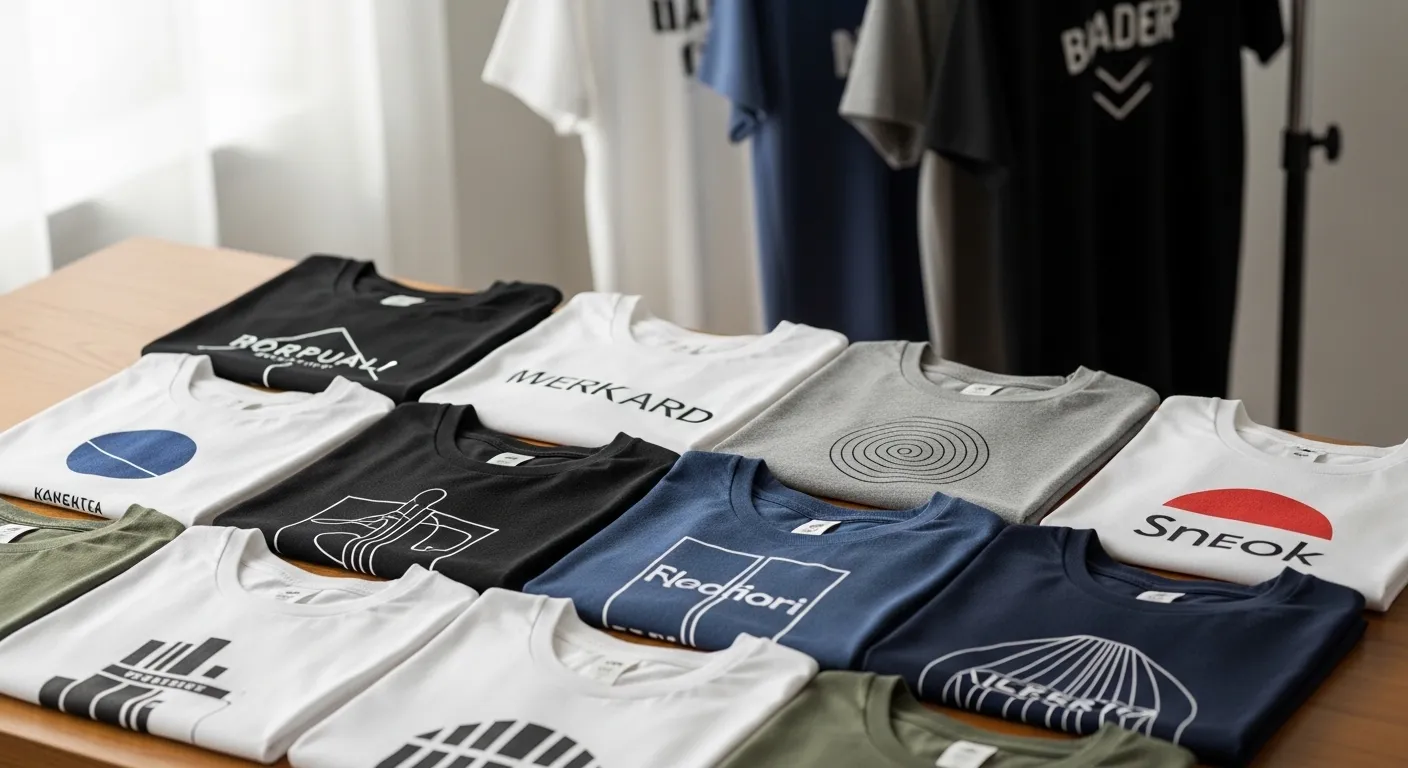
Printed plain t-shirts use regular-fit, oversized, slim-fit, and athletic-fit sizing structures for different retail and workwear categories. Fit type influences comfort, mobility, and fashion positioning.
Oversized T-Shirts Dominate Streetwear Production
Oversized t-shirts use extended body width and dropped shoulder seams for relaxed silhouettes. Streetwear brands use heavyweight fabrics for oversized collections.
Popular t-shirt fits include:
- Regular-fit t-shirts, for example, workplace uniforms
- Oversized shirts, for example, streetwear collections
- Slim-fit apparel, for example, fashion retail garments
- Athletic-fit shirts, for example, gym wear
Ribbed Collars Improve Shape Retention
Rib-knit collars maintain neckline structure during repeated washing cycles. Reinforced shoulder taping also improves garment durability.
Online Printing Systems Simplify Apparel Ordering
Digital apparel platforms allow customers to upload artwork, approve proofs, and track production online.
Online Design Tools Improve Production Accuracy
Digital mockup systems display print placement, garment color, and artwork dimensions before manufacturing begins. Proof approval systems reduce scaling and alignment errors.
Modern ordering systems include:
- Real-time design previews
- Online payment processing
- Bulk size management
- Automated invoice generation
- Shipment tracking systems
Printed Plain T-Shirts Support Branding and Retail Sales
Printed plain t-shirts function as wearable branding assets for businesses, sports organizations, and fashion retailers. Printed apparel increases public logo exposure during daily use.
Corporate Apparel Improves Staff Recognition
Printed uniforms standardize employee appearance across hospitality, retail, and logistics industries. Consistent branding improves customer-facing professionalism.
Industries using printed t-shirts include:
- Restaurants, for example, cafés and delivery services
- Educational institutions, for example, colleges and academies
- Fitness centers, for example, gyms and sports clubs
- Retail businesses, for example, clothing stores and supermarkets
Fashion Brands Use Printed T-Shirts for Seasonal Collections
Graphic t-shirts dominate fashion retail because printed apparel supports rapid product launches and trend-based merchandising. Streetwear brands release seasonal collections using heavyweight cotton garments.
FAQ Section
How Long Does Printed T-Shirt Production Take?
Printed plain t-shirt production requires 24 hours to 10 business days, depending on the decoration method and order quantity. The DTG and DTF production process faster for low-volume orders.
What Printing Method Lasts Longest on T-Shirts?
Screen printing and embroidery maintain durability for 40 to 60 wash cycles under standard laundering conditions. Plastisol ink and polyester embroidery thread resist fading effectively.
Why Do Heavyweight T-Shirts Cost More?
Heavyweight t-shirts use higher GSM fabric construction with increased yarn density and material consumption. Thicker garments also increase shipping and production costs.
What Fabric Works Best for Printed T-Shirts?
100% cotton garments produce sharper DTG and screen printing results because natural fibers absorb pigment efficiently. Polyester fabrics perform better for sublimation and sportswear applications.
How Does T-Shirt Fit Affect Fashion Trends?
Oversized t-shirts dominate modern streetwear collections because relaxed silhouettes align with current fashion retail demand. Heavyweight oversized garments also support large-format graphic placement.


























Sign in to leave a comment.