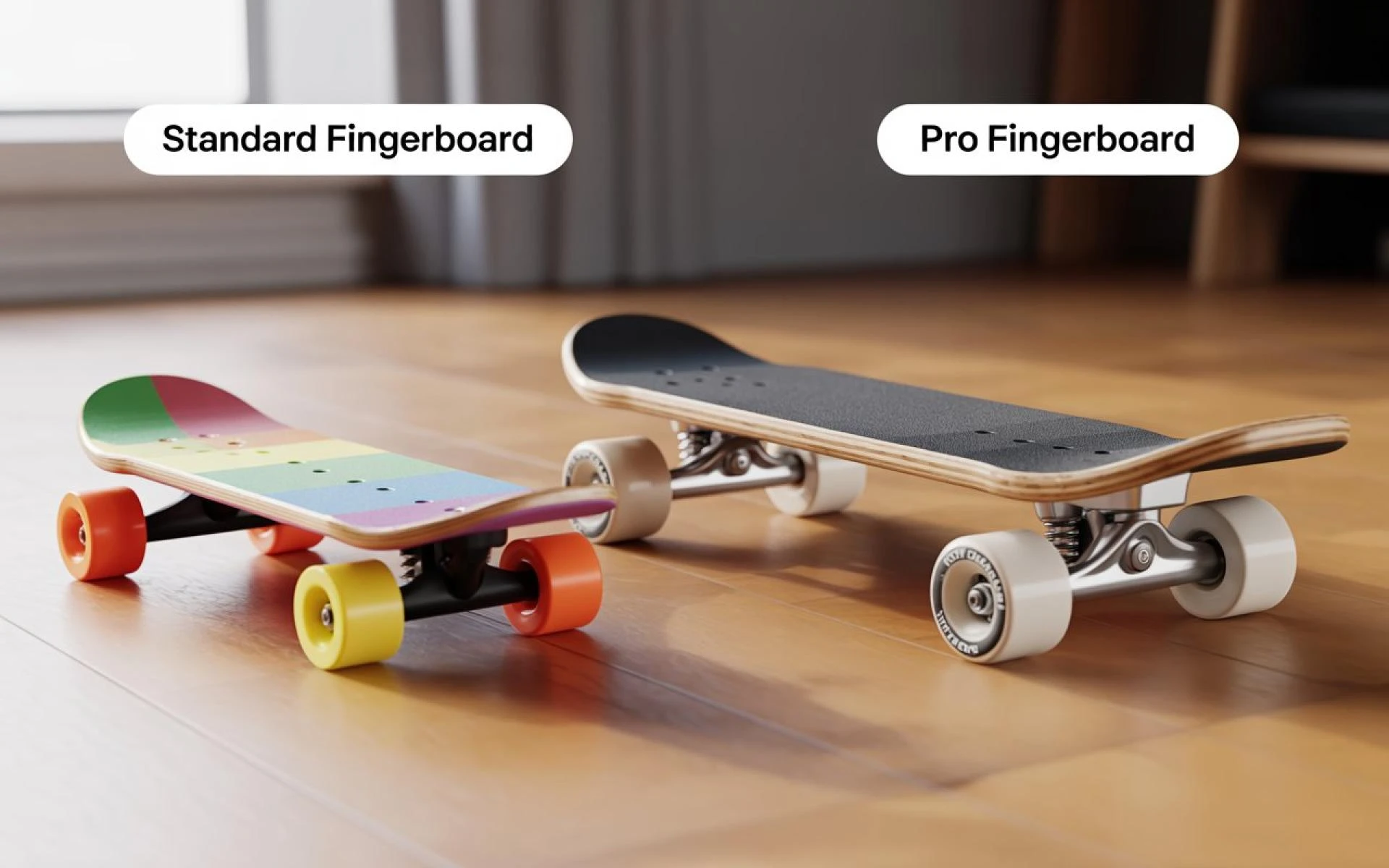

Fingerboarding has come a long way from being a simple toy to a professional-level hobby and even a competitive sport. If you’re new to the world of fingerboards, you’ve probably seen terms like regular fingerboard and pro fingerboard and wondered what the actual difference is. On the surface, both look like mini skateboards that fit in your hand. But in reality, the two are worlds apart when it comes to performance, quality, and overall experience.
Whether you are a starter just starting out or an enthusiast wanting to upgrade, knowing these differences can assist you in determining which type of fingerboard would best fit your playing style. Let's break it down in detail.
1. Materials and Build Quality
The largest difference between a standard fingerboard and a pro fingerboard begins with the materials.
Regular Fingerboards – These are usually mass-produced toys made from plastic. You’ll often find them in toy stores or bundled as collectible items. While they look fun and colorful, the materials are lightweight and not designed for long-lasting use. The trucks and wheels are usually molded plastic, which makes them less durable and harder to control.
Pro Fingerboards – Contrary to that are pro boards, made with precision and high-quality materials. Pro decks are mostly constructed with real wood of multiple plies, similar to full-size skateboards. The trucks are CNC-machined metal, allowing you to experience the weight and ruggedness required for authentic tricks. Wheels are produced using urethane (identical with skateboard wheels), which gives more smooth rolls and improved grip.
Verdict: Unless you're just messing around, standard boards will do. But if you want the real skateboarding experience in compact size, pro fingerboards are the way to go.
2. Performance and Control
When it comes to actually executing tricks, night and day is the difference.
Regular Fingerboards – The plastic construction makes them light, but also too slippery and inconsistent. Because of the hard plastic wheels, you’ll often find it difficult to land tricks smoothly. Pop tricks like ollies or kickflips don’t feel very controlled, and the trucks can feel stiff or wobbly.
Pro Fingerboards – This is where they really come into their own. Pro decks are made for accuracy. The concave form of the deck (the curve of the board) is modeled on a real skateboard, allowing you greater control under your fingers. Trucks swivel naturally, and the urethane wheels have grip, making tricks smoother and more rewarding. Pro boards let you grind rails, flip tricks, and land combos that simply aren't available with toy-grade fingerboards.
Verdict: For real skill development and trick advancement, pro fingerboards operate on a whole other level.
3. Customization Options
Another major difference is the ability you have to customize your board.
Regular Fingerboards – With toy models, what you see is what you get. You can't typically replace wheels, trucks, or upgrade decks. This restricts creativity and advancement if you wish to customize the board to your liking.
Pro Fingerboards – You get to have fun with customization. You can handcraft your own setup by picking out the deck, trucks, wheels, and even grip tape. Artist decks, engraved trucks, and specialty wheels are available from most brands. Like full-sized skateboards, pro fingerboarding is about the ability to show off your own style, while at the same time, improving performance.
Verdict: If you like customization and creativity, pro fingerboards provide infinite possibilities.
4. Difference in Price
Of course, price comes into it.
Regular Fingerboards – They're inexpensive and easy to find, usually costing between $3 and $10. They're affordable and perfect for children or beginners who only play casually.
Pro Fingerboards – You pay for what you get. Based on the company and materials, pro boards can cost anywhere from $30 to more than $100 for the full setup. Though the cost sounds excessive for something so diminutive, the workmanship, performance, and longevity make it worth the expense for serious commuters.
Verdict: Economy boards take the prize for thriftiness, but pro boards offer you much greater value for long-term satisfaction.
5. Who Should Use Which
This is where it gets personal.
Standard Fingerboards are most suitable for younger children, occasional players, or collectors who appreciate the novelty. They're readily available, affordable, and still offer lots of enjoyment without commitment.
Pro Fingerboards are perfect for hobbyists, skaters, and anyone who wants to seriously practice fingerboarding tricks. If you’re planning to build a collection, compete, or join the thriving fingerboard community online, a pro setup is worth it.
6. The Community Factor
Another aspect to point out is the fingerboarding community. The professional scene has expanded enormously over the years, with competitions, special skate parks, and sponsor brands for riders. Having a pro fingerboard makes you part of this world, where you can exchange tricks, edits, and even compete.
Regular boards aren't really about that level of community involvement—they're more of a stepping stone. But a lot of riders begin with toys and later upgrade once they get hooked on the scene.
Final Thoughts
So, what's the difference between a regular fingerboard and a pro fingerboard? In short: everything. Regular boards are toys, while pro boards are miniature skateboards created with real performance in mind.
If you're just looking for some casual fun, grab a standard fingerboard.
If you're serious about fingerboarding, get yourself a pro board—you'll feel the difference immediately.
The best part of fingerboarding is that anyone can begin, regardless of budget. But once you get to experience control, quality, and creativity offered by a pro fingerboard, it's not easy to turn back.
Fingerboarding isn't play, it's an art, a sport, and a method for joining the community of people that share the same interest. And selecting the right setup is the first step on your path.

























Sign in to leave a comment.