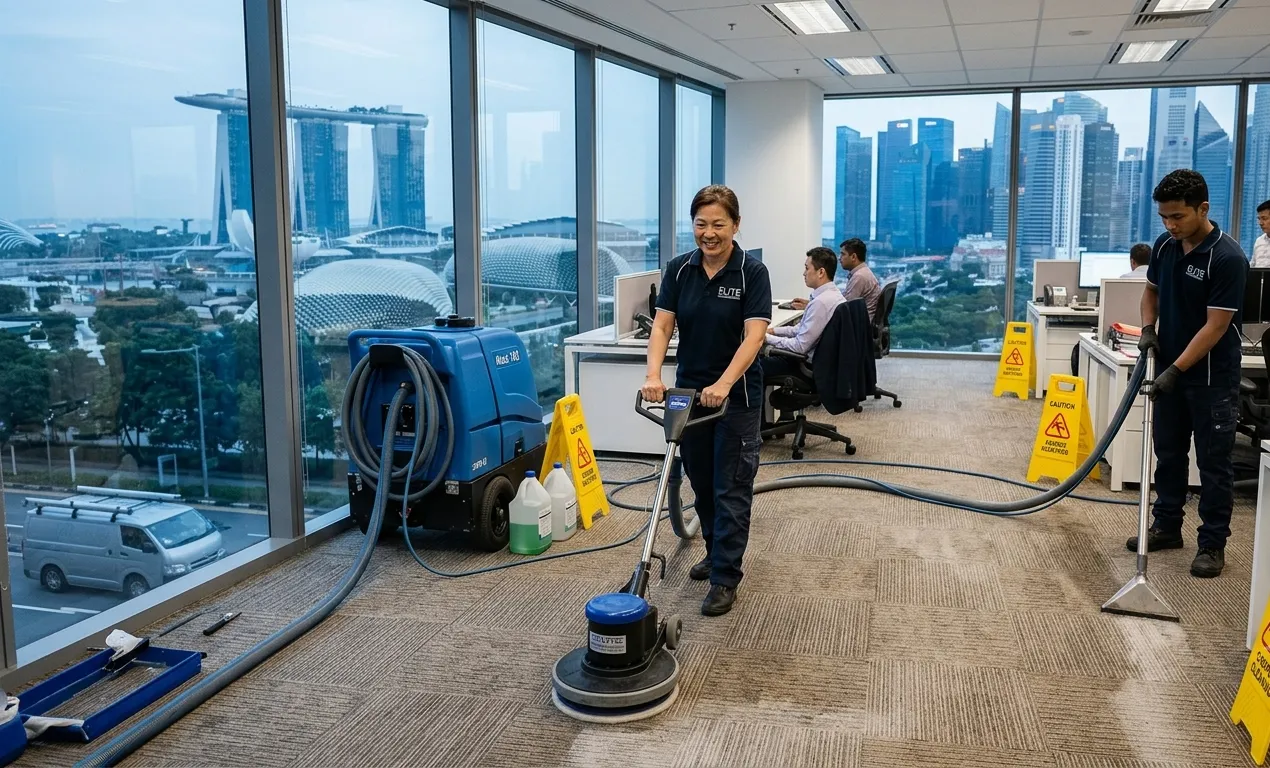

Regular professional carpet cleaning in offices removes embedded dirt, allergens, bacteria, and pollutants that routine vacuuming cannot reach. For workplaces with moderate to heavy foot traffic, deep cleaning every three to six months significantly reduces airborne contaminants, extends carpet life, and creates a healthier environment for employees and visitors alike.
Why Office Carpets Deteriorate Faster Than You Think
Commercial carpets take a beating. In a busy office, a single square metre of carpet can accumulate up to one kilogram of dirt and debris per year, according to the Carpet and Rug Institute. Every person who walks through your door brings in dust, pollen, moisture, and microorganisms — and most of it sinks deep into the carpet fibres where a standard vacuum cleaner cannot reach.
The problem compounds quietly. Surface-level cleaning gives the illusion of a clean workplace, but pollutants trapped below the surface continue to affect indoor air quality. Over time, that invisible layer builds up and starts working against your team's health and productivity.
The Direct Link Between Office Carpet Cleaning and Workplace Hygiene
Workplace hygiene is not limited to kitchen counters and bathroom tiles. Carpets are one of the largest surface areas in any office and act as a reservoir for:
- Dust mites and their allergens
- Mould spores, especially in humid climates like Singapore
- Bacteria tracked in from outdoors
- Fine particulate matter and volatile organic compounds (VOCs)
- Food debris that attracts pests
Singapore's year-round humidity creates a particularly challenging environment. Moisture trapped in carpet fibres accelerates mould and bacterial growth. The National Environment Agency (NEA) of Singapore highlights that poor indoor air quality contributes to headaches, fatigue, respiratory irritation, and reduced cognitive performance — conditions collectively referred to as Sick Building Syndrome.
Regular office carpet cleaning is not a cosmetic decision. It is a direct investment in the health and output of your workforce.
What Professional Carpet Cleaning Actually Does
Hot Water Extraction (Steam Cleaning)
This is the industry gold standard for commercial environments. Hot water is injected deep into carpet fibres under pressure, then extracted along with dissolved dirt, bacteria, and allergens. It is highly effective for heavily trafficked areas and leaves carpets sanitised rather than just surface-clean.
Encapsulation Cleaning
A low-moisture method where a specialised polymer compound crystallises around dirt particles and is then vacuumed away. This method is popular for offices that cannot afford long drying times and is ideal for interim maintenance between deeper cleans.
Dry Compound Cleaning
An absorbent compound is spread across the carpet, worked into the fibres, and then removed via vacuuming. No drying time is required, making this suitable for 24/7 operations or spaces that need to remain in use throughout the process.
Professional technicians assess the carpet type, soiling level, and operational requirements before recommending a method. This is something a general cleaning crew or in-house maintenance team is not equipped to do accurately.
How Often Should You Schedule Commercial Cleaning Services for Carpets?
The right frequency depends on your office's specific conditions. Here is a practical framework:
| Office Type | Foot Traffic Level | Recommended Frequency
|
|---|---|---|
| Small office (under 20 staff) | Low | Every 6–12 months |
| Mid-size office (20–100 staff) | Moderate | Every 3–6 months |
| Large corporate or open-plan office | High | Every 1–3 months |
| Hospitality, medical, or retail spaces | Very high | Monthly or as needed |
These are baselines. Offices near construction sites, food-heavy environments, or buildings with poor ventilation may need more frequent attention. A reputable commercial cleaning provider will assess your specific situation and build a maintenance schedule around it.
The Business Case: What Happens When You Skip It
Neglecting carpet maintenance has measurable consequences that extend well beyond aesthetics.
Accelerated carpet wear: Grit and debris act like sandpaper on carpet fibres with every footstep. Carpets that are not cleaned regularly degrade significantly faster, meaning replacement costs arrive years earlier than necessary.
Higher absenteeism: Research published in the journal Indoor Air found that poor indoor air quality correlates directly with increased employee sick days. Allergens and mould spores embedded in carpets are a primary contributor.
Client and visitor perception: Stained or odorous carpets signal neglect. For businesses where first impressions matter — law firms, financial advisors, recruitment agencies, healthcare providers — a dirty office carpet undermines credibility before a conversation even begins.
Compliance risk: Certain industries in Singapore are subject to workplace health and safety inspections. Demonstrable standards of hygiene, including flooring condition, can form part of an audit trail.
What to Look for in a Commercial Carpet Cleaning Provider
Not all cleaning companies operate at the same standard. When evaluating providers for your office, prioritise:
- Commercial experience: Residential and commercial cleaning are different disciplines. A provider with proven experience in office environments understands the operational constraints — minimal disruption, fast drying times, and after-hours scheduling.
- Certified technicians: Look for companies whose staff are trained in carpet fibre types, chemical safety, and equipment handling.
- Eco-friendly products: Low-toxicity, low-residue cleaning agents matter in an enclosed working environment. Harsh chemicals can leave residues that continue to off-gas after the clean.
- Transparent pricing: A reputable provider will inspect the area and provide a written quotation rather than a ballpark figure over the phone.
- Post-clean reporting: Some commercial providers offer documentation of work completed — useful for facilities managers who maintain compliance records.
Simple Maintenance Steps Between Professional Cleans
Professional cleaning does the heavy lifting, but day-to-day habits extend the results considerably:
- Vacuum high-traffic areas at least three times per week using a HEPA-filter vacuum
- Place entrance matting at all access points to capture outdoor debris before it reaches the carpet
- Address spills immediately — blot, never rub, and use a pH-neutral cleaner
- Rotate furniture periodically to prevent concentrated wear patterns
- Implement a no-food-at-desk policy in carpeted areas where feasible
These are not substitutes for a professional clean — they are the maintenance layer that keeps your carpet in better condition between scheduled sessions.
Conclusion
A well-maintained carpet is a functional asset, not just a decorative one. It supports air quality, reflects your brand's standards, and directly affects the wellbeing of everyone in your building. For office managers and business owners in Singapore, building a consistent carpet maintenance schedule is one of the most cost-effective decisions you can make for your workplace. If you are ready to elevate the hygiene standard of your office environment, SB Cleaning Services offers professional commercial carpet cleaning solutions tailored to Singapore's unique climate and business demands.
Frequently Asked Questions
How often should office carpets be professionally cleaned?
Most offices benefit from professional carpet cleaning every three to six months. High-traffic environments such as reception areas, open-plan floors, or spaces near food preparation areas may require monthly or quarterly cleaning. The right schedule depends on foot traffic volume, carpet type, and the overall air quality requirements of your workplace.
What is the best carpet cleaning method for offices?
Hot water extraction is widely considered the most thorough method for commercial carpets as it removes deep-seated dirt, bacteria, and allergens. For offices that need minimal downtime, encapsulation or dry compound cleaning offers effective results with little to no drying time. A professional technician can recommend the best method based on your carpet's condition and operational needs.
Can dirty carpets really affect employee health?
Yes. Carpets trap dust mites, mould spores, bacteria, and allergens that degrade indoor air quality. In poorly maintained offices, these pollutants contribute to respiratory irritation, allergic reactions, headaches, and fatigue — symptoms associated with Sick Building Syndrome. Regular professional cleaning significantly reduces these contaminants and supports a healthier work environment.
How long does it take for office carpets to dry after cleaning?
Drying time varies by method. Hot water extraction typically requires four to eight hours, depending on ventilation and humidity. Encapsulation cleaning reduces this to one to two hours. Dry compound cleaning requires no drying time at all. Many commercial cleaning providers offer after-hours or weekend scheduling to minimise disruption to your operations.
Is professional carpet cleaning worth the cost for small offices?
Yes. Even in smaller offices, carpets accumulate pollutants that affect air quality and carpet longevity. Regular professional cleaning extends carpet life by several years, reducing replacement costs significantly. It also supports employee health and maintains the professional appearance of your workspace — both of which carry real business value regardless of office size.
What should I do to maintain office carpets between professional cleans?
Vacuum high-traffic areas at least three times per week using a HEPA-filter vacuum, place entrance matting at entry points, and address spills immediately by blotting rather than rubbing. Periodic furniture rotation prevents concentrated wear. These steps do not replace professional cleaning but extend the quality and cleanliness of results between scheduled maintenance sessions.




























Sign in to leave a comment.