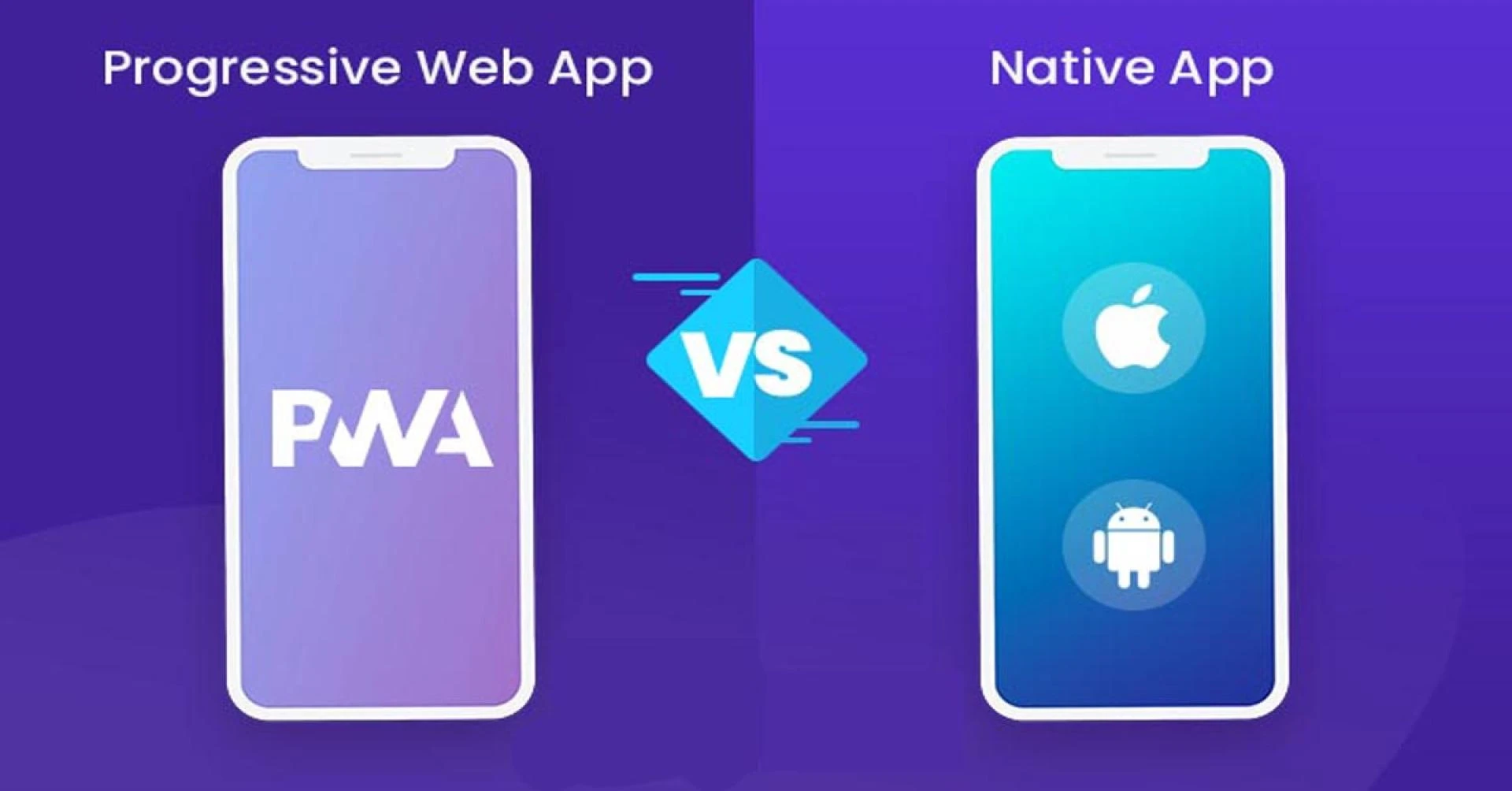

Never Worry About What to Do About PWAs Vs. Native Apps Again With These Tips
Progressive Web Apps(Pwas)
To give mobile application functionalities through a web browser, PWA was developed. Progressive web apps provide users with a native mobile application experience using web technologies like HTML, CSS, and JS.
Alex Russell and Frances Berriman, two Chrome Developers at Google, coined the phrase "Progressive Web Apps." They aimed to employ a single codebase to build better user experiences across devices.
The goal is to develop online applications that, without requiring users to download and install any software, have the same appearance and feel as native apps.
Native Mobile Application
Native mobile apps (i.e., downloadable apps) are designed for a specific operating system (iOS or Android). They're written in a cross-platform framework like React Native or a platform-specific language like Swift or Objective-C (for iOS) or Java or Kotlin (for Android). Native applications are installed on the device. They are built using the operating system's SDK and can access various resources on the device: camera, GPS, phone, device storage, etc.
Advantages over public native apps
If you compare native apps to web apps, the most significant advantage of PWAs is that they are app store-independent. With 25% of smartphone users uninstalling apps due to a lack of storage space, this independence can be a huge benefit. Customers do not need to download PWA and use storage space. Only a web browser is required.
Although PWAs are better than native mobile apps, they are not always easier to use or more convenient. When building native mobile applications, your business applications gain great flexibility because you can design the user interface the way you want. If you decide to develop a PWA as a native mobile application to meet your business needs, you don't have this flexibility.
Fast And Reliable:
Regular web applications rely heavily on network bandwidth. Regardless of the network's condition, advanced web applications are small and load quickly. PWAs can stop depending on the network, thanks to pre-caching. Google has a concept called "Service Workers" that incorporates a background script that operates separately from the webpage. The developers now have total control over everything, even offline experiences.
When using online apps, most people frequently run into issues with performance. High-performing websites connect with their visitors more, which increases traffic. In addition, PWAs deliver a better user experience since they load more quickly, especially on networks with limited bandwidth.
Similarities to public native apps
Native and hybrid apps use different underlying technologies, but they are similar in their functionality - so both apps are tested the same way. It would be best if you tried that all application functionality works as expected for functional testing. Necessary available tests are:
In their simplest form, progressive web apps may be subject to the same limitations as standard websites, meaning you don't need to add access to devise functionality. You can establish some connections that can be found through the API (such as social media logins) to improve the user experience, but there are limitations.
Development Cost
PWAs
PWAs use a single codebase, making development simpler and scalability easier. When your mobile applications are performance-driven, you should design them on a native platform. They must therefore be created especially for each platform they will be displayed. Mobile app development and maintenance costs are higher than those of a PWA, even if built on a hybrid platform. It still requires investment in research and development, just as you would with native app development because developers must recreate much of what the native and mobile SDKs currently provide. However, creating PWAs is far simpler than creating native applications, and the expenses in terms of both time and money reflect that.
Native App
When developing your native app in-house, you're looking at a minimum of two additional hires and existing staff time spent commenting and testing. You should also consider the cost of outsourcing development if your team needs help handling it.
With these high barriers, building native apps become a big, risky challenge for Smaller Businesses.
Conclusion
There is no doubt that Progressive Web Apps (PWAs) are the future of mobile apps. For those unfamiliar with the term, PWAs are web apps designed using modern web technologies, such as HTML5, CSS3, and JavaScript, to provide a user experience similar to a native app. PWAs are also designed to be lightweight, fast, and responsive, making them perfect for use on mobile devices.
0











Sign in to leave a comment.