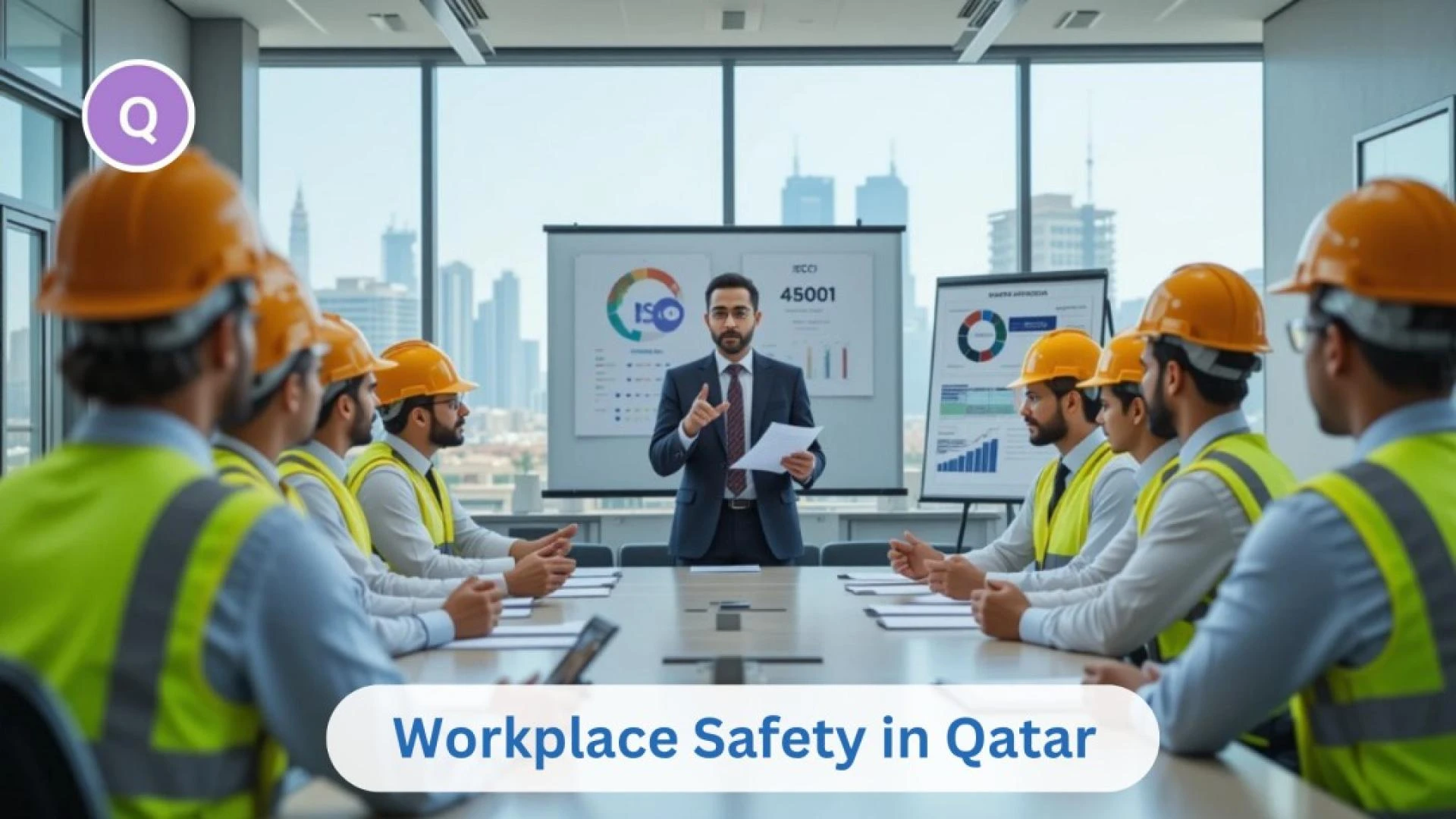

In recent years, there’s been a noticeable shift across Qatar’s business landscape. More and more companies—whether in construction, oil and gas, manufacturing, or even office-based services—are pursuing ISO 45001 certification in Qatar. But what’s driving this trend? And more importantly, should your organization be following suit?
Let’s unpack what’s really happening—and why it matters for your workplace.
What Is ISO 45001 Certification?
ISO 45001 is the international standard for Occupational Health and Safety Management Systems (OHSMS). It helps businesses across industries create a safe workplace by systematically reducing risks, preventing injuries, and complying with applicable legal requirements.
This certification focuses on proactive risk management, regulatory compliance, and continuous improvement—all vital in high-risk sectors operating in Qatar. It replaces OHSAS 18001 and is now the globally accepted benchmark for occupational health and safety.
Why Are Qatari Companies Choosing ISO 45001?
Here’s what’s driving the growing demand for ISO 45001 certification in Doha, Ras Laffan, Dukhan, and Mesaieed:
1. Government & Client Requirements
Government regulations and major project owners increasingly require ISO 45001 certification as a prerequisite for contracts—particularly in oil, gas, construction, and infrastructure sectors.
2. Building Corporate Reputation
Qatari businesses understand that ISO 45001 is more than compliance—it's about trust, professionalism, and global recognition. ISO 45001 consultants in Qatar assist organizations in showcasing their safety-first culture and building a strong brand image.
3. Reducing the Cost of Workplace Incidents
Workplace injuries disrupt operations and bring legal, medical, and financial consequences. ISO 45001 helps organizations identify hazards, assess risks, and implement controls that significantly reduce these occupational health and safety risks.
4. Attracting and Retaining Skilled Workers
In a talent-driven market, job seekers prioritize health and safety. ISO 45001 shows your workforce that their well-being is non-negotiable. A safer workplace leads to greater employee satisfaction and retention.
Benefits of ISO 45001 for Your Business
ISO 45001 is not limited to high-risk industries. Businesses of all types—factories, logistics firms, hospitals, educational institutions, and offices—can benefit:
- Minimizes workplace injuries and downtime
- Ensures compliance with Qatar’s occupational safety and health (OSH) regulations
- Strengthens safety awareness and employee engagement at every level
- Boosts operational efficiency and staff productivity
- Improves incident reporting and risk analysis processes
- Enhances your eligibility for both local and international tenders and projects
The ISO 45001 Certification Process in Qatar
With guidance from experienced Qatari ISO consultants, certification becomes a manageable, step-by-step process tailored to your industry:
- Gap analysis – Review existing safety protocols and identify compliance gaps
- System design – Establish ISO-aligned policies, procedures, and control measures
- Employee training – Foster safety awareness, competence, and participation
- Internal audits – Test, refine, and correct your safety system before final review
- Certification audit – Undergo the official audit and receive ISO 45001 certification
Whether you’re based in Doha, Mesaieed, Ras Laffan, or Dukhan, local support is available to help you meet ISO 45001 standards effectively.
Final Thoughts: Investing in a Safer Future
ISO 45001 certification isn’t just about ticking a compliance checkbox. It’s a long-term investment in your workforce, business resilience, and competitive advantage. Companies that prioritize health and safety build more productive teams, win better contracts, and reduce legal and operational risks.
In Qatar’s competitive and safety-conscious economy, implementing a certified Occupational Health and Safety Management System puts you ahead of the curve.
So if you’re considering ISO 45001, ask yourself: Can you afford not to prioritize workplace safety?







Sign in to leave a comment.