
Quality Management System: A Smart Investment for Business Growth
Under the increasingly competitive and quality-conscious market environment, organizations are constantly under pressure to make their processes efficient, eliminate waste and increase customer satisfaction. A QMS provides a systematic process towards realizing these goals by making sure that everything in the operations of an organization is compliant with the requirements of the customer and the law.
A Quality Management System is not a system of procedure or documentation, rather a complete system that helps businesses to provide consistent top quality products or services. Some of the most widely known are ISO 9001:2015; it is based on world accepted principles and requirements for the establishment of a quality-centered organization.
By introducing a QMS, a lot of benefits are brought. Perhaps, one of the most important is process efficiency. By revealing inefficiencies and redundancies, bottlenecks, a QMS helps companies optimize operations and lower the cost of operations. The other big advantage is customer satisfaction. When process standardization and quality is maintained, customers expect quality and above expectations products and services, and hence increased loyalty and stronger brand image.
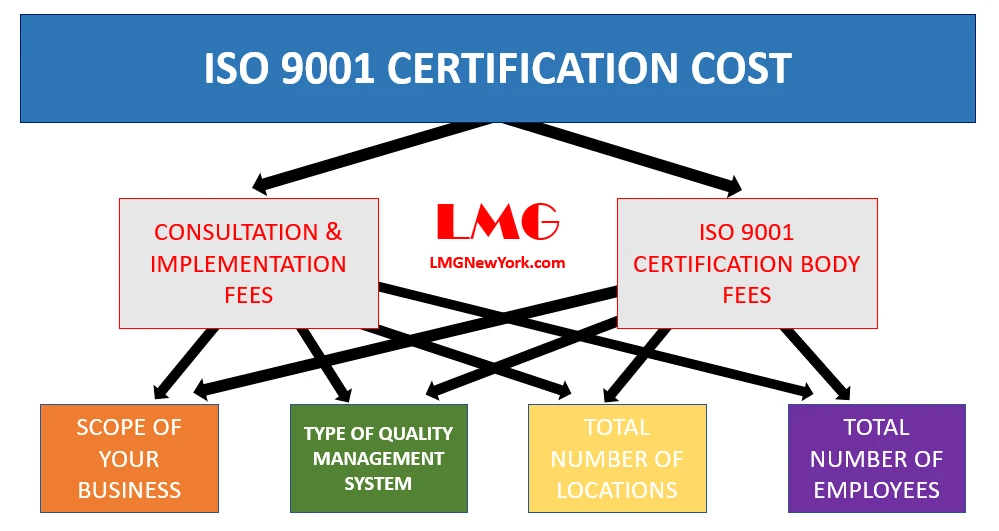
Now, when it comes to the cost of implementing a QMS, several factors influence the total investment, including the size of the organization, the number of processes, industry type, and the chosen certification body. In the UAE, a typical ISO 9001:2015 implementation and certification may involve the following approximate costs:
- Gap Analysis and Documentation: AED 5,000 to AED 12,000
- Internal Auditor Training: AED 2,500 to AED 5,000
- Certification Audit (Initial Year): AED 7,000 to AED 20,000 or more, depending on company size
- Annual Surveillance Audit: AED 5,000 to AED 10,000
- Optional QMS Software Tools: AED 3,000 to AED 15,000+
These costs can vary based on the complexity of the business, the number of employees, and the number of sites being audited. For small and medium enterprises (SMEs), bundled packages or government-subsidized programs may help reduce initial expenses.
Although the financial investment in a QMS may appear substantial at first glance, the long-term returns are even greater. Reduced errors, better resource utilization, stronger customer relationships, and access to new markets all contribute to a higher return on investment. In many cases, businesses recover their implementation costs within the first year through improved operational performance and reduced customer complaints.
In conclusion, a Quality Management System is more than just a compliance tool—it is a strategic business asset. Organizations that prioritize quality are better positioned to survive, grow, and lead in their industries. For companies in the UAE and GCC, where quality is closely tied to reputation and opportunity, implementing a QMS like ISO 9001:2015 is not just beneficial—it’s essential.
If your organization is considering implementing a QMS, it’s advisable to consult with experienced professionals who can guide you through the process efficiently and cost-effectively. With the right support, achieving ISO 9001 certification can be a smooth journey toward operational excellence and sustainable success.




























Sign in to leave a comment.