The Quatertower project by Studio Symbiosis reimagines the conventional high-rise as an urban landmark and a symbol of cultural and architectural identity. Designed for a rapidly evolving former textile district, the tower marks the gateway to a new mixed-use neighborhood—one that combines residential, commercial, and public space into a cohesive urban narrative.
A Gateway to the New Urban Fabric
Located in a district undergoing dynamic transformation, the Quatertower stands out amid its surroundings not merely as another high-rise, but as a defining marker for the area. Studio Symbiosis’s design responds to the context by acknowledging the history and industrial legacy of the site: it interprets textile patterns and the linear structure of worsted yarn as guiding formal ideas, translating them into the vertical rhythm of the facade.
The tower’s facade is articulated through a sequence of white vertical ceramic elements that rise from base to pinnacle in an expressive interplay of form and shadow. These vertical lines establish a visual cadence that resonates with the site’s textile past, while projecting a contemporary architectural identity that relates to the future aspirations of the district.
Mixed-Use Program and Urban Activation
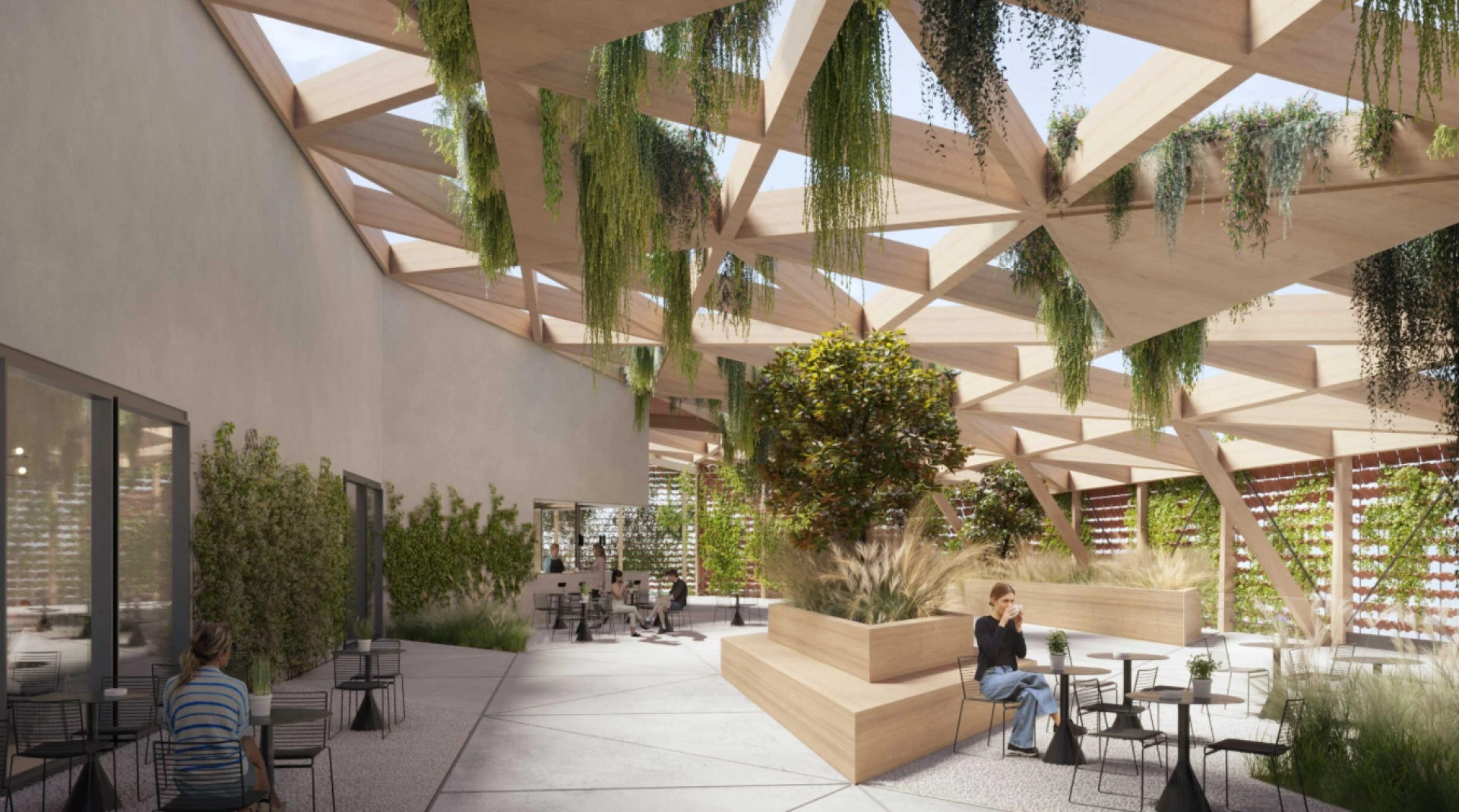
Rather than segregating functions, Quatertower integrates a diverse range of uses across its height. The base of the building, up to the fourth floor, houses flexible office spaces and a café, fostering interaction and activity at the street level. Above this, the residential portion occupies the upper floors, offering apartments that combine privacy with expansive views of the surrounding city.
One of the defining features of the design is the thoughtful incorporation of terraces and loggias, created by intentional recesses in the massing. These outdoor spaces provide generous areas for residents to congregate, relax, and connect with nature—even at height. A communal terrace on the eighth floor offers panoramic views and becomes a focal point for social interaction, while lower-level terraces and green areas help soften the transition between public and private space.
A Human-Centered High-Rise
The ground floor lobby is conceived as more than a transitional zone; it is designed as a welcoming public space that serves both residents and visitors. Adjacent to the café and office entrances, the lobby flows into shared lounge areas that function as extensions of communal life. Here, architecture meets social design, fostering community while enhancing everyday experience.
By incorporating loggias with sound-insulated glazing, the design responds to the acoustic challenges of an urban environment. This ensures comfort and quality of life for occupants while maximizing daylight and natural ventilation.
Sustainability and Comfort
Sustainability is embedded in both form and performance. Passive measures, such as thermal comfort strategies, high daylight penetration, and sound mitigation, contribute to reduced energy consumption. The use of regenerative energy potential and thoughtful material choices further aligns the project with contemporary environmental standards.
The Quatertower by Studio Symbiosis is a compelling example of how architecture can celebrate urban transformation and cultural continuity—not just through function, but through form, meaning, and community engagement.



























Sign in to leave a comment.