
Will you give up your interests in real property without having a proper record? The reason is simple, even when you are transferring or gifting the title deed to our sibling or the children, you will want to ensure that the transaction is recorded correctly.
No one wants to sell the property and record it. It may leave your spouse or the kids without anything, so you will want to make sure that you want to keep a historical record of every transaction. Thanks to Maryland quitclaim deed, you can quickly transfer the rights in the property.
About the Deed
The quitclaim deed or a non-warranty deed is the legal instrument that is used to transfer the interests in the real property from one person to the other. It simplifies the conveyance of the rights to the property between the families and trusts legally. The person who gives up his rights is called the grantor, and the one who receives the property rights is known as grantee.
But the quitclaim deed doesn’t provide any warranties on the title. That’s why the deed is called a non-warranty deed. This condition means that the executed quitclaim will not offer any guarantee that the grantor is the actual legal owner of the property. The deed only transfers the rights that are held by the grantor at the time the deed is signed. So if it is found that the deed has defects, the grantee will not have any legal action against the grantor.
Creating a Valid Deed
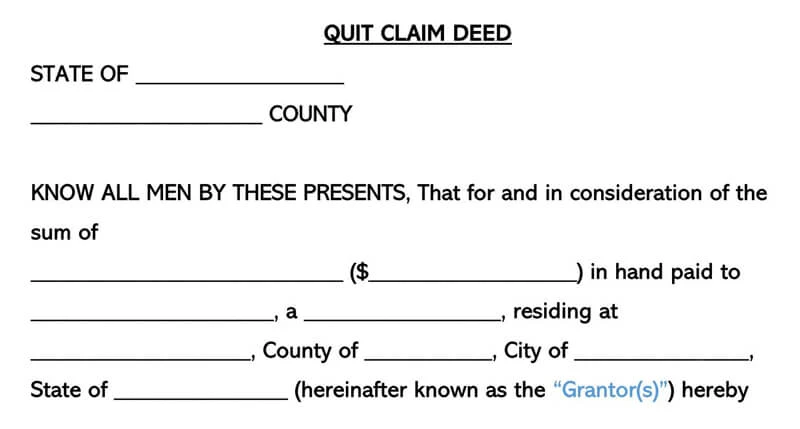
When you are using the quitclaim deed to transfer the rights to the property to a grantee, you must first get the deed form from the legal forms site. The quitclaim deed Maryland form serves as a template to guide you in the preparation of the deed. However, you will have to follow some regulations.
You need to provide the correct details with the full legal names, the mailing addresses and the marital status of the grantor and the grantee. You should also give the details about how the grantee wishes to handle the property title. It is critical to consider when you are buying the residential property.
The deed should also give the details of the source of the grantor’s title by providing the details of the previous titles. It should have the complete legal description of the real property. The deed’s certificate of preparation is needed as well. The deed needs to be signed by the grantor and the grantee in the presence of the notary public. However, in Maryland, you may not require witnesses for the conveyance.
Key Uses of Deed
You can use the quitclaim deed to transfer the interests in the real property from the parent to the children. It can be used to transfer the property between the siblings or to transfer the property between the other family members.
Another use of the quitclaim deed is in clearing the clouds on a title. If the title deed has issues that can affect the issuance of the insurance of title, the insurance company might want to ask you to create a new deed to clear the defect in the title.
If you want to change the title, if you have changed the name after getting the title of the property, you can use the quitclaim deed to enter the new name.
The quitclaim deed is also useful in the transfer of interests in the property to a living trust or the Trust
Finally,
You can Maryland quitclaim deed to add or remove the name of the spouse from the title of the property. Want to create a deed now? Visit any legal forms site and download the form you need!






Sign in to leave a comment.