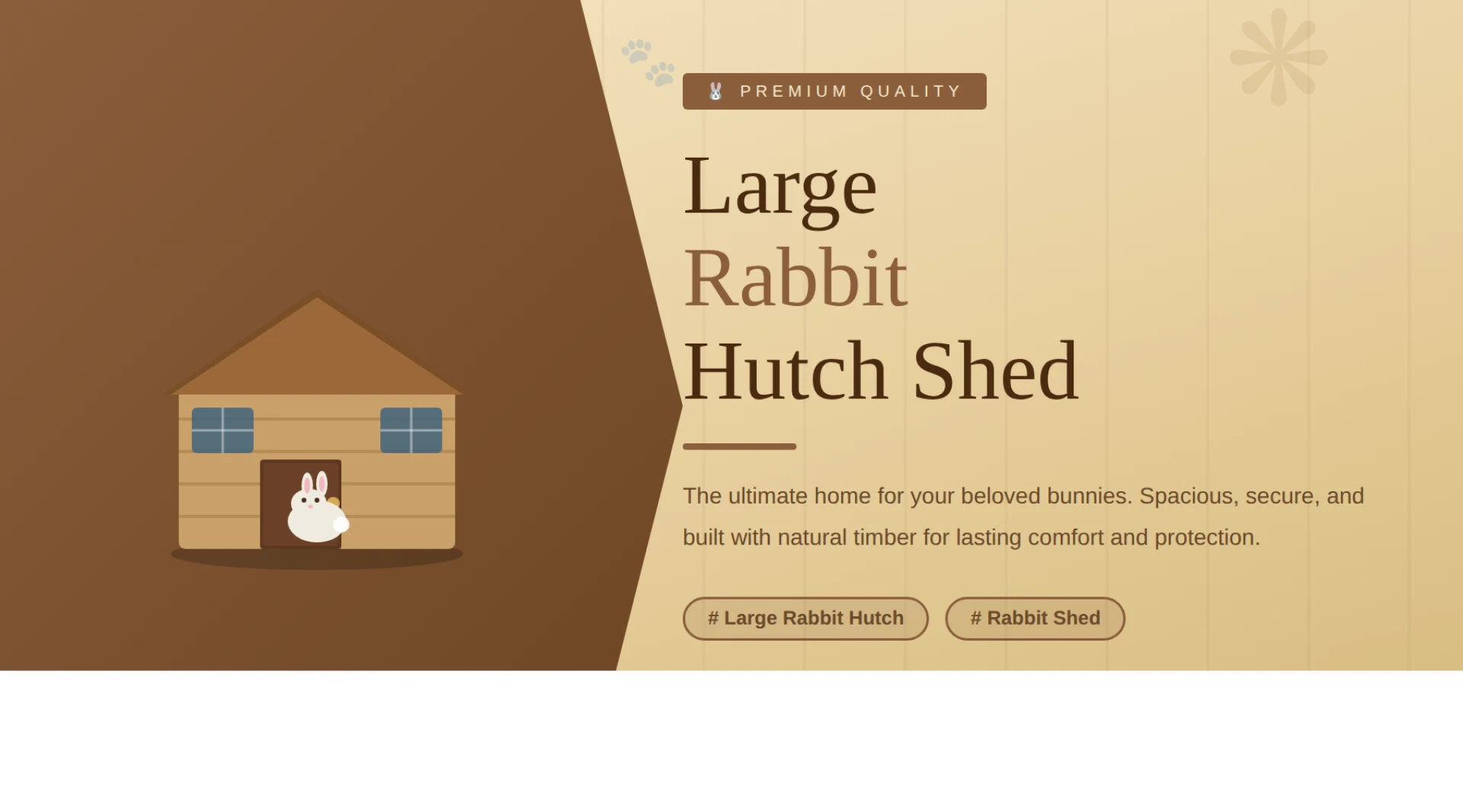

Introduction: Why a Rabbit Shed Changes Everything
When I first started keeping rabbits, I thought a small cage was enough. I believed rabbits were quiet and didn’t need much space. But after a few weeks, I noticed something was wrong. My rabbits looked bored, moved less, and did not show their playful side. That’s when I built my first Rabbit shed, and it felt like opening a door to a new world for them. They started hopping, exploring, and showing joyful behaviors that I had never seen before.
A Rabbit shed is more than a shelter. It is a home, a playground, and a safe zone for your rabbits. It gives them space to move, relax, and express natural behavior. In this guide, I will share everything you need to know about choosing, designing, and using a shed for rabbits in a simple and friendly way. Think of this as advice from a fellow rabbit lover who learned through real experience.
What Is a Rabbit Shed and Why It Matters
A Rabbit shed is a larger, structured space designed to house rabbits comfortably. Unlike small hutches or cages, a shed offers room for movement, rest, and play. Rabbits are active animals that need to hop, stretch, and explore daily. When they live in tight spaces, they can develop stress, health problems, and bad habits like chewing or aggression.
A shed gives rabbits freedom while still keeping them safe. You can divide the space into areas for sleeping, eating, and playing. This layout helps rabbits feel secure and organized. Imagine living in a tiny room with no space to move; now imagine a full apartment where you can walk, relax, and play. That is what a Rabbit shed feels like for your pet.
Benefits of a Rabbit Shed for Rabbits and Owners
A Rabbit shed brings many benefits for both rabbits and their owners. The most obvious benefit is space. Rabbits can move freely, which improves their muscles, digestion, and overall health. More space also reduces boredom, which means fewer destructive behaviors.
Some key benefits include:
- Better physical health through daily movement
- Lower stress and anxiety levels
- More natural behaviors like hopping and exploring
- Easier cleaning due to organized layout
- Stronger bonding with your rabbits through observation and interaction
From an owner’s point of view, a shed makes care easier. You can organize food, water, and litter in one place. You can also watch your rabbits play, which is relaxing and joyful. A Rabbit shed turns rabbit keeping into a calm and rewarding experience.
Choosing the Right Size for a Rabbit Shed
Size is the most important factor when planning a Rabbit shed. Rabbits need enough room to stand on their hind legs, stretch fully, and hop several times in a row. A small shed defeats the purpose and can harm your rabbit’s health. Bigger is always better when it comes to rabbits.
Here is a simple size guide to help you:
| Number of Rabbits | Minimum Shed Size | Ideal Shed Size |
|---|---|---|
| 1 Rabbit | 4 x 3 feet | 6 x 4 feet |
| 2 Rabbits | 6 x 3 feet | 8 x 4 feet |
| 3+ Rabbits | 8 x 4 feet | Add an attached run area |
A Rabbit shed should feel open and airy, not cramped. If you can walk inside or comfortably reach every corner, it is likely a good size. Remember, rabbits grow and may need more space over time.
Indoor vs Outdoor Rabbit Shed: Which Is Better
Many rabbit owners ask whether a Rabbit shed should be indoors or outdoors. Both options have benefits and challenges. Indoor sheds protect rabbits from predators, rain, and extreme temperatures. They also allow you to spend more time with your pets, which builds trust and affection.
Outdoor sheds give rabbits fresh air and sunlight, which they enjoy. However, outdoor sheds must be protected from heat, cold, and predators. Shade, insulation, and secure locks are essential. In my experience, an indoor shed with supervised outdoor playtime works best. This setup gives rabbits safety and natural stimulation at the same time. A well-placed Rabbit shed should be quiet, calm, and away from loud noise or stress.
Materials for a Safe and Durable Rabbit Shed
The materials used in a Rabbit shed affect comfort, safety, and durability. Wood is a popular choice because it is warm and natural. Metal frames add strength and security. Plastic trays help with cleaning and moisture control. A mix of these materials often works best.
Avoid toxic paints, weak wire, or sharp edges. Rabbits love to chew, so everything must be safe. Good ventilation is also important to keep the air fresh and prevent odor. A strong, well-built Rabbit shed can last for years and provide a safe home for your rabbits.
Designing the Inside of a Rabbit Shed
The inside of a Rabbit shed should feel like a small rabbit apartment. You need areas for sleeping, eating, and playing. Soft bedding, a litter tray, and a hay rack are basic needs. Add hiding boxes, tunnels, and chew toys to keep rabbits entertained. Rabbits like to hide and feel secure, so private spaces are important.
You can also add platforms or ramps to create vertical space. Rabbits enjoy climbing and exploring different levels. Keep food and water in a clean, easy-to-reach area. A well-designed Rabbit shed makes rabbits feel safe, reduces boredom, and makes cleaning easier for you.
Cleaning and Maintenance Tips for a Rabbit Shed
A Rabbit shed needs regular care to stay clean, fresh, and safe. Rabbits are clean animals, but their space can get dirty fast if you ignore it. I remember skipping cleaning for a few days during a busy week, and the smell was noticeable. My rabbits also seemed less active, which showed me how important a clean environment is for their mood and health.
Daily spot cleaning is simple and quick. Remove droppings, leftover food, and wet bedding. Clean the litter tray every one or two days to prevent odor and bacteria. A deep clean once a week is ideal. Use mild soap and warm water, then dry everything fully before placing it back. A clean Rabbit shed keeps pests away, protects rabbit health, and makes your home feel fresh.
Common Mistakes to Avoid When Using a Rabbit Shed
Many rabbit owners make mistakes without realizing it. One common mistake is placing the Rabbit shed in direct sunlight or a windy area. Rabbits are sensitive to heat and drafts, so the shed should be in a shaded and calm spot. Another mistake is using only wire flooring. Wire can hurt rabbit feet and cause sore hocks over time.
Another big mistake is lack of enrichment. A shed without toys, tunnels, or hiding spots becomes boring. Rabbits may chew wood, dig excessively, or become aggressive due to boredom. Skipping regular cleaning is also harmful, as bacteria and ammonia can build up. Avoiding these mistakes ensures your rabbits stay healthy, relaxed, and happy.
How a Rabbit Shed Improves Rabbit Health and Behavior
A Rabbit shed can change your rabbit’s life in powerful ways. Rabbits need movement to stay healthy. When they can hop freely, their muscles stay strong and their digestion improves. This reduces the risk of obesity and digestive problems. I noticed my rabbits became more energetic and playful after moving them into a shed.
Mental health is just as important. Rabbits in small cages often feel stressed or depressed. A spacious shed gives them control over their environment. They can hide, explore, and rest when they want. This reduces anxiety and builds confidence. A Rabbit shed also improves bonding, as relaxed rabbits are more friendly and curious around humans.
Budget-Friendly Ways to Build or Buy a Rabbit Shed
You don’t need a big budget to create a good Rabbit shed. Many people build sheds using wooden panels, mesh, and storage grids. DIY sheds are flexible and can be expanded as your rabbit family grows. They are also fun projects that let you customize the design.
If DIY is not your style, affordable ready-made sheds are available. Focus on size, ventilation, and easy cleaning features. Avoid paying extra for decorative features that don’t improve rabbit comfort. Even a simple Rabbit shed can be amazing if it is spacious, safe, and clean.
Essential Features Checklist for a Rabbit Shed
To make sure your Rabbit shed meets all needs, include these features:
- Spacious floor area for hopping and stretching
- Soft bedding for warmth and comfort
- Litter tray and hay rack for hygiene and feeding
- Fresh water bowl or bottle available at all times
- Hiding boxes and tunnels for security
- Chew toys and wooden blocks for dental health
- Easy-access doors and panels for cleaning
These features turn a simple shed into a functional and comfortable rabbit home. A well-equipped Rabbit shed keeps rabbits active, calm, and healthy.
Feeding and Water Setup in a Rabbit Shed
Feeding setup matters a lot in a Rabbit shed. Heavy bowls work best because rabbits love to flip light bowls. Hay should be in a rack or basket to keep it clean and dry. Fresh vegetables and pellets should be in separate dishes to prevent mess and spoilage. Water must always be clean and available.
Creating feeding zones helps keep the shed organized. Rabbits like routines and clear spaces for eating, sleeping, and playing. This layout reduces waste and makes cleaning easier. A smart feeding setup in a Rabbit shed supports digestion, hydration, and overall health.
Safety Tips for a Rabbit Shed
Safety should always be a priority when setting up a Rabbit shed. Check for sharp edges, loose wires, or gaps that could trap a rabbit. Doors should have secure locks, especially for outdoor sheds where predators may try to enter.
Outdoor sheds need insulation, shade, and waterproofing. Rabbits can suffer from heatstroke or cold stress, so stable temperatures are important. Indoor sheds should be away from loud noise and other pets. A secure Rabbit shed gives peace of mind and protects your rabbits from harm.
Emotional Benefits of a Rabbit Shed
Rabbits show happiness in subtle ways, like hopping, stretching, and performing joyful jumps. When I moved my rabbits into a Rabbit shed, I saw these behaviors daily. It felt like watching children play in a big backyard instead of sitting in a small room.
A shed gives rabbits emotional freedom. They can choose where to rest, play, or hide. This control reduces fear and builds confidence. A Rabbit shed also strengthens your bond with your rabbits, as relaxed rabbits are more affectionate and curious.
FAQs About Rabbit Shed
1. How often should I clean a Rabbit shed?
Daily spot cleaning and weekly deep cleaning keep the shed healthy and fresh.
2. Can a Rabbit shed be used indoors?
Yes, indoor sheds are safe and great for bonding with your rabbits.
3. How many rabbits can live in one Rabbit shed?
It depends on size, but always provide enough space for each rabbit to move and hide.
4. What is the best bedding for a Rabbit shed?
Paper-based bedding, hay, or fleece mats are safe and comfortable.
5. Is a wooden Rabbit shed safe?
Yes, if it uses non-toxic materials and has no sharp edges.
























Sign in to leave a comment.