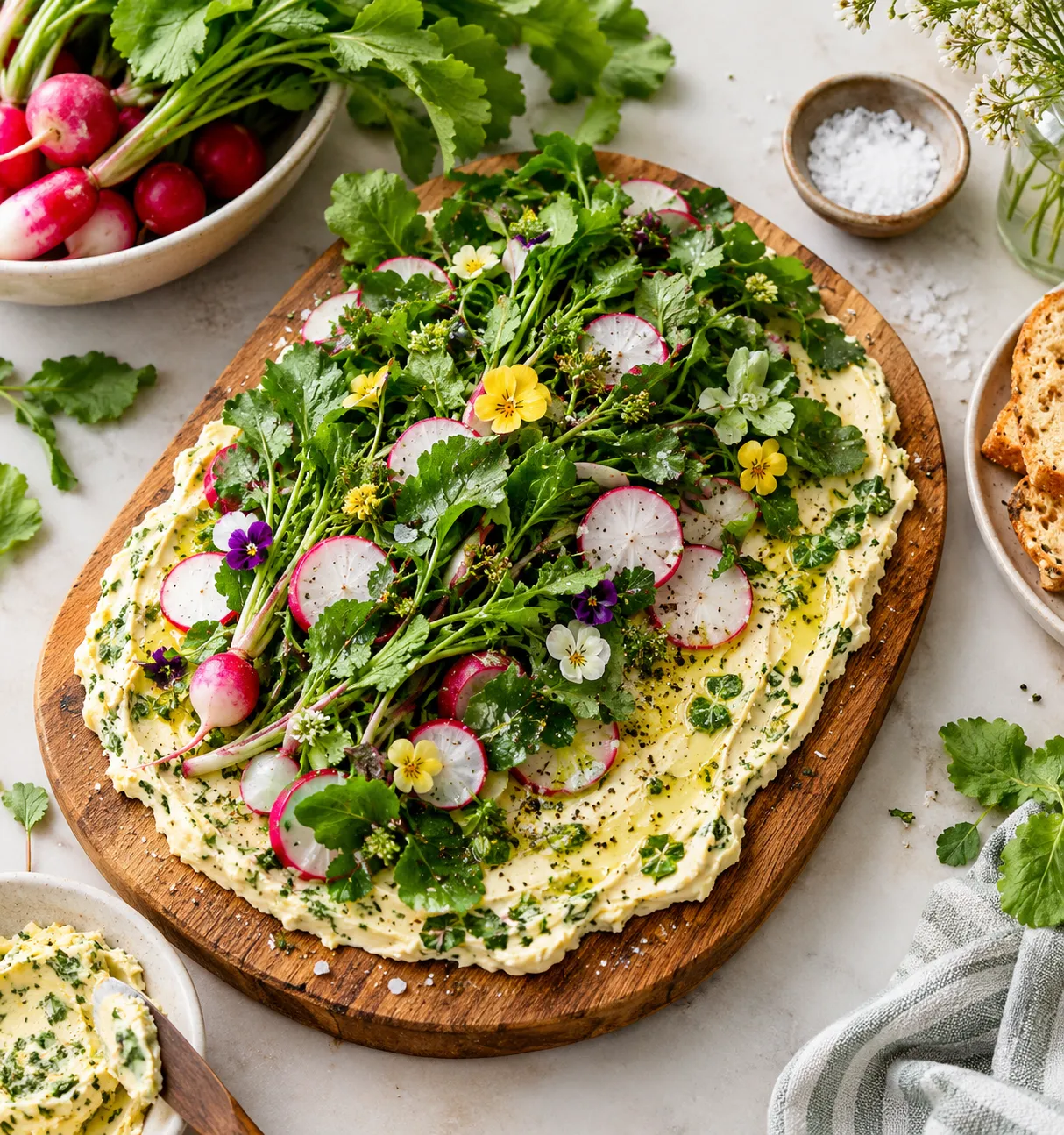

There is something especially satisfying about discovering that an ingredient you have been throwing away can become the most memorable part of a meal. Radishes are a perfect example. Their crisp, peppery roots are a spring favourite, but the leafy tops are often removed and discarded before they ever make it to the kitchen table.
Those greens deserve a second look.
Fresh radish leaves have a pleasantly peppery character that works beautifully with creamy butter, bright lemon, and a little sea salt. Turn them into radish top butter, place that butter in a simple ceramic dish, and surround it with warm bread, fresh vegetables, and cheese, and you have an appetiser that feels both elegant and effortless.
It is exactly the kind of entertaining idea that proves a beautiful table does not have to be complicated.
Why Radish Tops Are Worth Saving
When you buy radishes with their greens attached, you are getting more than the familiar red root. USDA standards specifically recognise bunched radishes as having fresh, intact tops, reinforcing that the greens are a normal part of the whole vegetable rather than something that simply needs to be discarded.
From a kitchen perspective, the tops offer another useful quality: flavour.
Radish greens have a fresh, slightly peppery taste that can bring complexity to simple recipes. Their flavour is particularly appealing when paired with rich ingredients because the greens provide contrast rather than adding another heavy element.
That makes them a natural match for butter.
Using the tops also fits into a broader effort to make better use of the food already in your kitchen. The USDA defines food waste as edible food that goes unconsumed, including food discarded because of appearance or other reasons.
The goal isn't to make every meal about reducing waste. It is simply to notice what you already have and ask whether it can be used in another delicious way.
What Is Radish Top Butter?
At its simplest, radish top butter is softened butter combined with finely chopped radish greens and complementary seasonings.
The magic is in the balance.
The butter provides richness and a smooth texture, while the radish greens add a fresh, peppery note. Lemon zest brightens the mixture, and sea salt helps bring all of the flavours into focus. A small amount of garlic can also be added if you want a more savoury finish.
For the best texture, start with softened unsalted butter. It should be easy to stir but should not be melted.
A Simple Flavour Formula
A useful way to think about the butter is:
- Good-quality unsalted butter
- Fresh radish greens
- Finely grated lemon zest
- Sea salt
- Optional fresh garlic
Wash the greens thoroughly and dry them well before chopping. Excess water can make the finished butter watery and can dilute its flavour.
Finely chop the greens rather than leaving them in large pieces. You want their flavour distributed throughout the butter so that every bite has a little freshness and peppery character.
Once everything is combined, taste and adjust the seasoning.
That final taste is important. Compound butter should taste flavourful enough to stand on its own because it will be paired with relatively simple foods such as bread and vegetables.
How to Build a Radish Top Butter Board
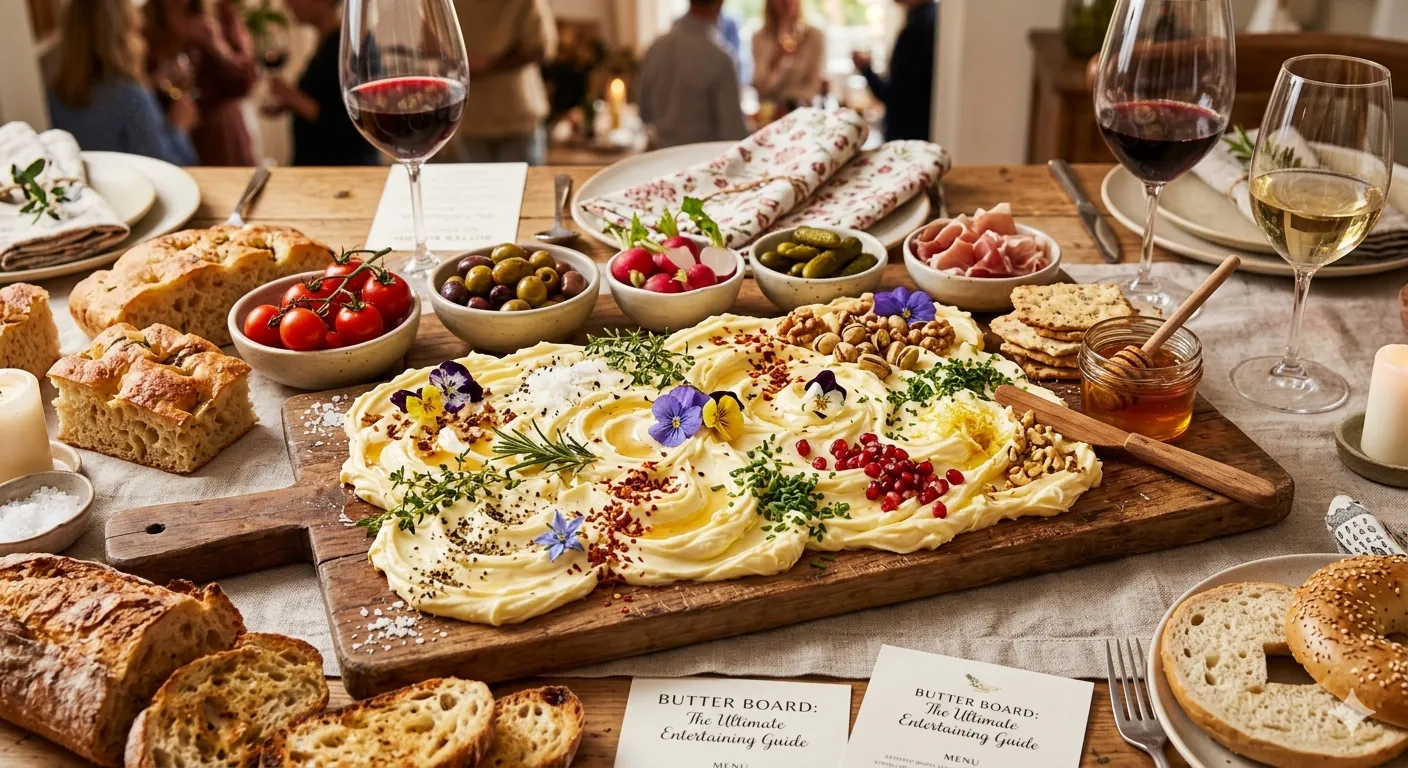
A butter board does not need to mean spreading butter directly across a wooden surface. For an especially practical presentation, place the butter in a small ceramic bowl or ramekin and arrange the accompanying foods around it.
This keeps the butter contained while still giving you the visual abundance that makes a board so inviting.
1. Start With the Butter
Prepare your radish top butter ahead of time and refrigerate it until you are ready to assemble the board.
Before serving, let it sit at room temperature briefly so it becomes soft enough to spread easily.
The butter should be creamy and spreadable rather than cold and hard.
2. Choose a Simple Foundation
A round or oval wooden board works beautifully, but you can also use a slate platter, marble serving piece, or another large flat surface.
Think of the board as a composition rather than a checklist.
The goal is to create a natural flow between the ingredients.
3. Make the Butter the Focal Point
Place the ceramic butter dish slightly off-center rather than automatically putting it in the middle.
This small styling decision leaves space for larger ingredients and creates a more relaxed, editorial look.
From there, build outward.
4. Add Warm Bread
Focaccia is particularly good with radish top butter because its soft, airy texture gives the butter something substantial to cling to.
Cut the bread into generous pieces and arrange them in a loose cluster.
If possible, serve the focaccia slightly warm. The contrast between warm bread and cool, creamy butter makes the combination even more appealing.
5. Bring in Fresh Spring Vegetables
This is where the board becomes visually interesting.
Try a mixture of:
- Whole or sliced radishes
- Cucumbers
- Carrots
- Sweet peppers
- Sugar snap peas
- Other crisp seasonal vegetables
Keep some radishes with their tops attached. They create a visual connection between the fresh ingredient and the finished butter.
Use vegetables in different colours and shapes rather than arranging everything identically. A little variation makes the board feel abundant without requiring more food.
Add a Second Creamy Element
A small dish of soft goat cheese can add another layer of flavour without competing with the butter.
Drizzle the cheese with good olive oil, add freshly cracked black pepper, and finish it with a little fresh thyme.
The combination works because the goat cheese brings tang and richness, while the radish top butter contributes freshness and peppery character.
You can also experiment with other soft cheeses depending on what you already have available.
The key is contrast: creamy with crisp, rich with fresh, and savoury with bright.
How to Make the Board Feel Elegant Without Overthinking It
The most successful entertaining boards often look effortless because they are not overly arranged.
Instead of trying to make everything perfectly symmetrical, focus on balance.
Place the largest items first. Then add smaller ingredients around them. Finally, fill obvious gaps with vegetables or pieces of bread.
Think in terms of colour, texture, and accessibility.
Guests should not have to reach across the entire board to get to the butter. Every important component should be easy to pick up, scoop, or spread.
And remember that empty space is useful. A board packed from edge to edge can look crowded. A little breathing room makes the individual ingredients more appealing.
Why This Idea Works for Spring Entertaining
Spring entertaining naturally lends itself to lighter, fresher flavours.
Instead of building an appetiser around heavy dips and rich sauces, a radish top butter board creates a balance between indulgence and freshness. Butter provides the richness, while radishes, cucumbers, carrots, and peppers add crunch and colour.
It also gives guests a reason to interact with the food.
They can spread the butter onto focaccia, pair it with vegetables, add goat cheese, or experiment with combinations themselves.
That makes the board more than an appetiser. It becomes part of the experience of gathering around the table.
How to Use Leftover Radish Top Butter
One of the best things about compound butter is that it does not have to end with the appetiser board.
If you have extra radish top butter, try it on:
- Warm crusty bread
- Roasted vegetables
- Grilled chicken
- Steamed potatoes
- Corn on the cob
- Warm grains
- Freshly baked rolls
You can also let a small amount melt over a hot vegetable dish just before serving.
This is where making a compound butter becomes particularly useful. One simple preparation can add personality to several meals throughout the week.
A More Thoughtful Way to Entertain
The appeal of a radish top butterboard goes beyond the recipe itself.
It represents a style of entertaining that feels thoughtful without feeling precious. You are using an ingredient more completely, building a colourful seasonal presentation, and giving guests something delicious to discover.
That philosophy fits naturally with the way I approach food and entertaining at Just Jeannie start with good ingredients, understand how they work together, and let small details create the feeling.
You do not need an elaborate menu or a table filled with expensive ingredients to make people feel welcome.
Sometimes it is simply warm bread, good butter, fresh vegetables, and a thoughtful idea.
Final Thoughts
Radish tops may be one of the most overlooked ingredients in a spring kitchen, but they have everything you need to create something memorable: freshness, colour, character, and a little unexpected flavour.
By turning those greens into radish top butter, you transform something commonly overlooked into the centrepiece of a beautiful appetiser.
Serve it in a ceramic dish, surround it with crisp vegetables and warm focaccia, add a little goat cheese, and let the ingredients speak for themselves.
The result is simple enough for a casual weekend gathering but polished enough for a spring dinner party.
And perhaps that is the best kind of entertaining: food that looks beautiful, tastes wonderful, and gives you one more reason to appreciate what is already in your kitchen.

























Sign in to leave a comment.