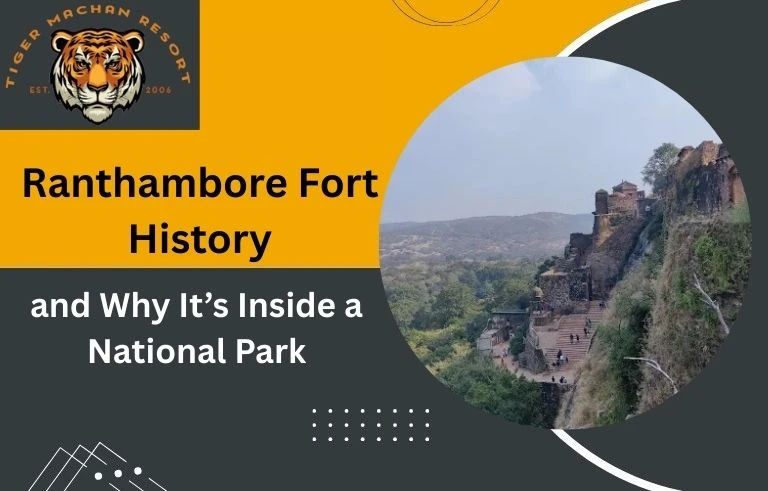

Ranthambore is widely celebrated for its majestic tigers, dense forests, and dramatic landscapes. Yet rising above this wilderness is an ancient stone sentinel that tells a very different story — one of dynasties, devotion, and strategic brilliance. Ranthambore Fort, perched atop a rocky hill, is not just an architectural marvel but a living chronicle of India’s medieval past. What makes it even more fascinating is its unusual location: right inside a national park.
This blend of natural wilderness and historical legacy is rare, making Ranthambore Fort one of the most intriguing heritage sites in India. To truly understand its significance, one must explore its layered history and the reasons it still stands at the heart of Ranthambore National Park today.
The Origins of Ranthambore Fort
The origins of Ranthambore Fort date back to the 10th century when it was constructed by the Chauhan rulers of Rajasthan. Originally known as Ranastambhapura Durg, the fort served as a powerful stronghold guarding the trade routes between northern and central India. Its elevated position, nearly 700 feet above the surrounding plains, offered a clear strategic advantage against invading forces.
Over time, the fort became one of the most formidable military bastions in the region. Massive stone walls, deep moats, and steep natural cliffs made it nearly impregnable. Unlike forts built in open plains, Ranthambore was designed to merge with the terrain, using the forested hills as a natural defense.
A Fortress of Power and Conflict
Ranthambore Fort witnessed centuries of intense conflict as it became a prized possession for various rulers. After the Chauhans, it came under the control of the Delhi Sultanate, including Alauddin Khilji, who captured it in 1301 after a prolonged siege. The fort later passed through the hands of several Mughal emperors, including Akbar, who recognized its strategic importance.
During the Mughal era, Ranthambore Fort served not just as a military outpost but also as a royal retreat and administrative center. Despite repeated battles, the fort was never completely destroyed, which speaks volumes about its resilient construction and strategic design.
Architectural Grandeur Amid Wilderness
One of the most striking aspects of Ranthambore Fort is its scale. Spanning over seven kilometers, the fort complex includes grand gateways, palaces, temples, stepwells, and reservoirs. Each structure reflects a blend of Rajput and Mughal architectural influences.
Key highlights include the Hammir Palace, Badal Mahal, and the iconic Ganesh Temple, which continues to attract devotees from across the country. What makes the architecture even more remarkable is its harmony with nature. Rainwater harvesting systems, ancient tanks, and stone pathways show how the fort’s builders adapted to the forest environment rather than altering it.
The Spiritual Heart of Ranthambore
Ranthambore Fort has always been more than a military structure. It was also a spiritual center. Temples dedicated to Lord Ganesh, Shiva, Ramlalaji, and Jain Tirthankaras coexist within the fort walls, symbolizing religious harmony long before the modern era.
The Trinetra Ganesh Temple is especially significant, as it is believed to be one of the oldest Ganesh temples in India. Even today, letters addressed to Lord Ganesh are delivered here, reflecting the fort’s enduring spiritual relevance.
Why Is Ranthambore Fort Inside a National Park?
The presence of a centuries-old fort inside a protected wildlife reserve may seem unusual, but the answer lies in history. Ranthambore National Park was declared a protected area much later, in the 20th century. Long before conservation laws existed, the fort and surrounding forests were integral to royal hunting grounds and strategic territories.
When the area was designated as a national park, authorities chose to preserve both its ecological and historical value. Rather than isolating the fort, it was integrated into the protected landscape, creating a rare coexistence of heritage and wildlife.
A Landscape Where History Meets Nature
Today, Ranthambore Fort stands surrounded by dry deciduous forests, lakes, and grasslands that are home to tigers, leopards, sloth bears, and countless bird species. This unique setting allows visitors to experience two contrasting worlds in a single journey.
The fort’s location also helped protect the forest ecosystem. Since human settlements were limited over centuries due to royal control, large tracts of land remained undisturbed. This inadvertently contributed to preserving wildlife habitats, making Ranthambore one of India’s most successful conservation stories.
UNESCO World Heritage Status
In 2013, Ranthambore Fort was declared a UNESCO World Heritage Site as part of the Hill Forts of Rajasthan. This recognition highlighted its outstanding universal value — not just as a historical monument, but as a cultural landmark deeply connected to its environment.
UNESCO acknowledged how the fort exemplifies Rajput military architecture while adapting to challenging terrain. Its integration with the surrounding forest landscape further strengthens its global significance.
Visiting Ranthambore Fort Today
Exploring Ranthambore Fort is like stepping into a living museum. Stone pathways echo with stories of battles, devotion, and royal life, while the surrounding wilderness adds an element of unpredictability. From the top, panoramic views of lakes, valleys, and forests reveal why this location was once considered invincible.
Visitors often combine their fort exploration with wildlife safaris and nature walks. Many travelers choose accommodations nearby, including Best Resorts in Ranthambore, which allow easy access to both the fort and the park while offering insights into the region’s cultural heritage.
The Fort’s Role in Modern Conservation
Ranthambore Fort is not just a relic of the past; it plays an active role in present-day conservation efforts. Controlled tourism, regulated access, and heritage protection guidelines ensure that the fort remains intact without disturbing the park’s fragile ecosystem.
Its continued presence reminds visitors that conservation is not only about protecting wildlife but also about preserving history and cultural identity.
Cultural Legacy and Storytelling
Beyond stone walls and ancient temples, Ranthambore Fort carries legends that have been passed down through generations. Tales of valor, sacrifice, and devotion are deeply woven into local folklore. These stories give the fort a soul — one that cannot be captured through architecture alone.
The fort’s legacy also influences how visitors experience Ranthambore today, whether they stay at a Tiger Safari Resort or explore nearby villages that still reflect traditional Rajasthani life.
Why Ranthambore Fort Remains Unforgettable
Few places in the world offer such a powerful combination of history and nature. Ranthambore Fort stands as a reminder that human civilization and the natural world can coexist when respect and balance are maintained.
Whether viewed through the lens of architecture, spirituality, or conservation, the fort remains central to the identity of Ranthambore. Its presence elevates the region beyond a wildlife destination, transforming it into a cultural landscape where every stone has a story.
For travelers seeking depth in their journeys, the fort adds meaning to the experience — especially when paired with a stay at thoughtfully designed Luxury Resorts in Ranthambore that respect the region’s heritage and environment.
Conclusion
Ranthambore Fort is far more than an ancient monument inside a forest. It is a bridge between eras, connecting medieval dynasties with modern conservation efforts. Its survival through centuries of conflict and change is a testament to strategic brilliance, architectural ingenuity, and cultural resilience.
Set against the wild backdrop of Ranthambore National Park, the fort invites visitors to reflect on how history and nature shape each other. In doing so, it offers a rare and enriching perspective — one where the echoes of the past blend seamlessly with the rhythms of the wild.






























Sign in to leave a comment.