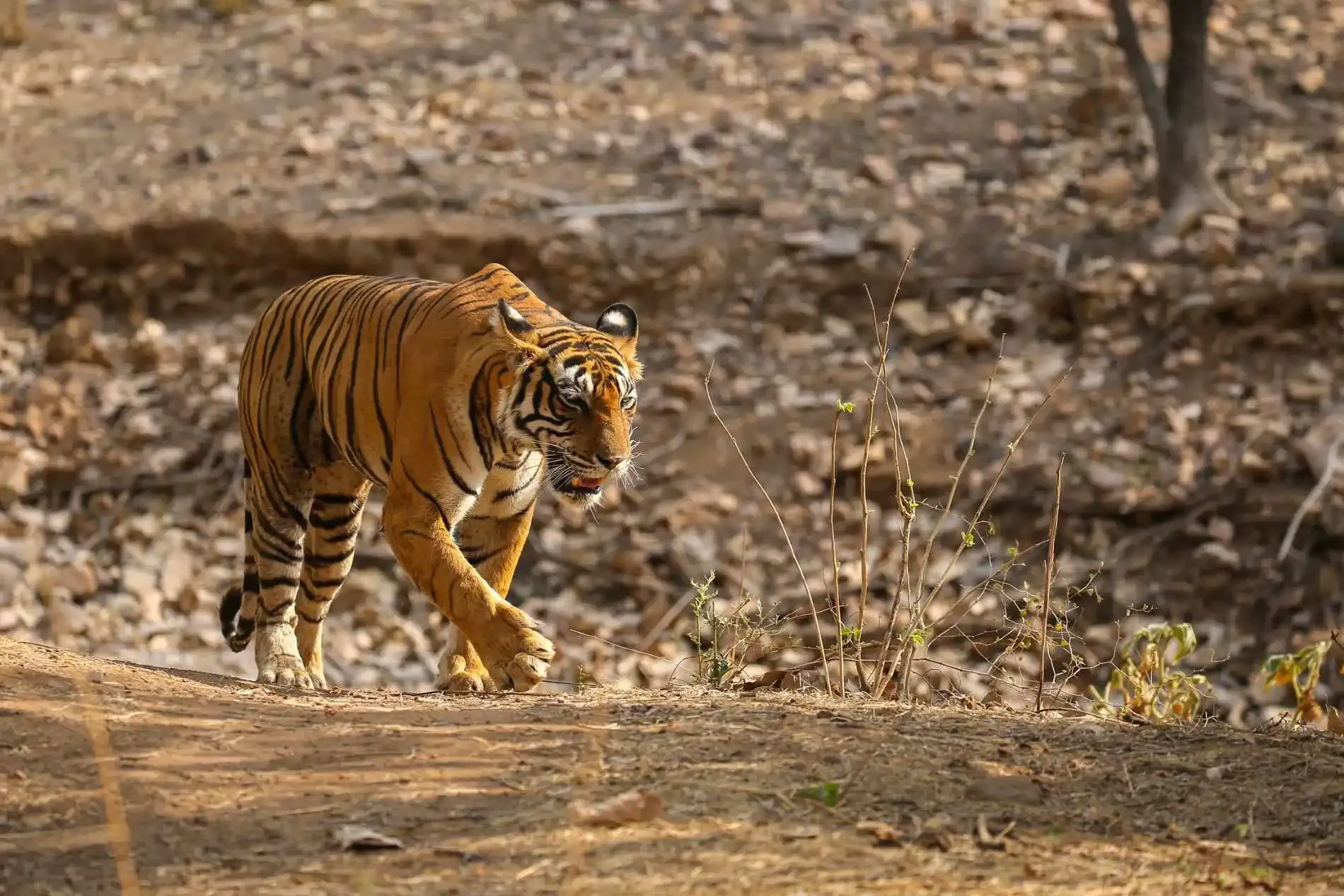

There's a particular kind of silence that falls over a jeep when a pug mark shows up fresh in the dust. Nobody speaks. Guides lean forward. Cameras go quiet, not clicking, just waiting. That's the moment most people are chasing when they plan a trip to Ranthambore, and it's worth knowing what actually goes into getting there — which zone to pick, which safari type suits you, when to travel, and what it will realistically cost.
This guide pulls together everything a first-time visitor or a repeat wildlife traveler needs before locking in a Ranthambore Tiger Safari booking. No fluff, no inflated promises about guaranteed tiger sightings — just a practical, honest breakdown.
Table of Contents
1. About Ranthambore National Park
2. Why Visit Ranthambore
3. Best Safari Zones in Ranthambore
4. Gypsy Safari vs Canter Safari
5. How to Book a Ranthambore Safari
6. Ranthambore Safari Prices
7. Best Time to Visit Ranthambore
8. Tiger Sighting Tips
9. Important Safari Rules
10. Travel Tips for Ranthambore
11. Places to Visit Near Ranthambore
12. Frequently Asked Questions
13. Final Thoughts
About Ranthambore National Park
Ranthambore National Park sits in the Sawai Madhopur district of eastern Rajasthan, roughly a five-to-six-hour drive or a short train ride from Jaipur, and about the same distance from Delhi by road or rail. Spread across dry deciduous forest, rocky outcrops, and lakes fed by the Chambal and Banas rivers, the park covers close to 1,300 square kilometers when you include its buffer zones, though the core tourism area is considerably smaller.
What makes Ranthambore different from many other tiger reserves in India is the terrain itself. The forest thins out in patches, there are open grasslands around the lakes, and a 10th-century fort looms over the core zone, giving the whole park a dramatic, almost cinematic backdrop. This open terrain is part of why tiger sightings here tend to be more frequent than in denser reserves — the cats have fewer places to disappear into.
The park was one of the earliest reserves brought under Project Tiger in 1973, and it has since become one of the most recognized names in Indian wildlife tourism, alongside Bandhavgarh and Kanha.
Why Visit Ranthambore
People visit Ranthambore National Park for different reasons, but a few stand out consistently.
Tiger sightings here are genuinely possible, not just promised. The open landscape and healthy tiger population mean visitors have a realistic — though never guaranteed — chance of spotting a tiger during a two-to-three-day stay. The park also holds a working monument inside a forest: Ranthambore Fort, a UNESCO World Heritage Site, stands within the park boundary, and old chhatris, step-wells, and temple ruins are scattered across several zones, so even a quiet safari drive doubles as a bit of history.
Beyond tigers, the park supports leopards, sloth bears, marsh crocodiles, sambar deer, and a wide variety of birdlife around its lakes, which keeps things interesting even when the tigers stay hidden. And compared to reserves deeper in central India, Ranthambore's proximity to Delhi, Jaipur, and Agra makes it an easy add-on to a Golden Triangle itinerary.
None of this guarantees a tiger will walk in front of your jeep. But the odds here are better than in most parks, and even without a sighting, the drive itself — past lakes, ruins, and dense stands of dhok trees — is worth the trip.
Best Safari Zones in Ranthambore
Ranthambore is divided into ten safari zones, each with its own character, terrain, and reputation for tiger activity. Zones 1 to 5 form the core area closest to the fort and are traditionally the most popular, though zones 6 to 10, part of the buffer area, have improved significantly in recent years as more tigers have moved into that territory.
Zone 1 offers strong fort views and sits close to Padam Talao lake, with moderate to good sighting potential. Zone 2 covers the Rajbagh ruins and denser forest, and tends to produce good sightings fairly consistently. Zone 3, centered on Rajbagh Talao with its open grassland, is often considered one of the strongest zones for tiger movement, thanks largely to its water bodies and clear sightlines. Zone 4, around Anantpura, mixes terrain types and also delivers good results. Zone 5, in the forested hills near Lakarda, is a little quieter but still worth a shot.
Further out, the buffer zones have been catching up. Zone 6 runs through quieter buffer routes with steadily improving activity, Zone 7 near the Kachida valley sees moderate sightings, and Zone 10 in the buffer forest is less crowded and has been improving year on year.
Zone allocation is done by the forest department's online system and is partly randomized, so you can't always choose your exact zone — but you can express a preference when booking, and some tour operators track recent sighting patterns to help guide that choice. Zones 3 and 4 are frequently mentioned as being among the best zones in Ranthambore, but sighting patterns shift with the seasons and with individual tigers' territories, so no zone offers a sure thing.
Gypsy Safari vs Canter Safari
This is one of the first real decisions you'll make when booking, and it affects both your budget and your experience.
A Gypsy Safari uses an open-top 4x4 vehicle that seats a maximum of six tourists plus a guide and driver. It's the more intimate option — you get better photography angles, more flexibility in where the driver positions the vehicle, and a quieter ride that doesn't spook wildlife as easily. The trade-off is cost: because the vehicle fee is split among fewer people, it works out more expensive per person, and Gypsy slots tend to sell out faster.
A Canter Safari uses a larger open vehicle that seats up to 20 people. It's more affordable per person since the cost is shared across a bigger group, and it's usually easier to book on short notice since fewer canter permits go unsold. The downside is a more crowded ride and less say in vehicle positioning, which can matter if photography is your main goal.
If tiger photography or a quieter, more personal experience matters to you, the Gypsy is worth the extra cost. If you're traveling in a larger group or keeping costs down, the Canter still gets you into the park and gives you a genuine shot at a sighting.
How to Book a Ranthambore Safari
Ranthambore Tiger Safari booking works through the Rajasthan Forest Department's official online portal, and the process is fairly structured.
Start by registering on the official booking portal, since bookings open a set number of days in advance (this window has changed over the years, so it's worth checking current rules before planning). From there, choose your safari slot — morning or afternoon — and your vehicle type, Gypsy or Canter. You'll also select a zone preference, understanding that allocation isn't always guaranteed to match your first choice, and submit valid ID proof for every traveler, since the forest department requires identification (passport for foreign nationals, government ID for Indian nationals) at the time of booking and entry. Once payment is made, keep your confirmation handy, as you'll need to show it at the gate.
Because online slots fill up quickly, especially during peak season, many travelers choose to book through a registered tour operator or a trusted local resource such as Ranthambore Wildlife, which can help navigate zone selection and vehicle availability, particularly for last-minute trips or when the official portal shows no availability.
If you're booking independently, give yourself several weeks of lead time during the October-to-April season. Walk-in availability exists but is unreliable, especially on weekends and around Indian holidays.
Ranthambore Safari Prices
Pricing for a Ranthambore Safari typically includes several components: park entry fee, vehicle charge, guide fee, and camera fee (if applicable), and these are usually bundled into a single price by the booking system or tour operator.
As a general guide, the Gypsy Safari costs more per person because the vehicle fee is split among fewer people, typically landing in the mid-to-upper range compared to a Canter. The Canter Safari is more budget-friendly since the shared vehicle cost is divided among up to 20 travelers. Foreign nationals pay a higher entry fee than Indian nationals, which is standard practice across most Indian national parks, and additional charges may apply for still cameras in some fee structures, though this varies.
Prices are also different for morning and evening slots in some seasons, and they can shift year to year based on forest department revisions. Rather than quoting fixed figures here, which risk becoming outdated, it's best to check the latest rates directly on the official portal or with a verified operator before you book, since fees do change without much public notice.
Best Time to Visit Ranthambore
The best time to visit Ranthambore depends on what you're prioritizing — tiger sightings, weather comfort, or lighter crowds.
The park is closed annually during the monsoon months, typically July through September, when the core zones are shut for regeneration, though some buffer zones may remain partially open. Winter, from October to February, brings pleasant weather and generally good conditions for overall wildlife viewing, even though the vegetation is still fairly dense early in the season. Summer, from March to May, is hot and dry, which pushes tigers toward waterholes and often makes this the strongest window for sightings, since thinning foliage also improves visibility. June, the pre-monsoon stretch, is very hot with fewer crowds but still offers decent sightings near water sources.
If your priority is a tiger sighting specifically, April to June is often cited as the strongest window. If you'd rather avoid Rajasthan's peak summer heat, November to February offers a much more comfortable experience, even if sighting odds dip slightly.
Tiger Sighting Tips
No guide can promise a tiger sighting, and any guide that does is overselling. What you can do is improve your odds.
Booking multiple safaris helps significantly — a single safari is a gamble, but three or four across different zones and time slots meaningfully improves your chances. It's also worth asking your operator or resort about which zones have had recent activity, since this changes weekly. Early morning slots often see more animal movement before the heat sets in, so going early within your travel window can help too.
Staying quiet and alert matters more than people expect. Loud conversations and phone use can startle wildlife and cause guides to miss subtle signs like alarm calls from deer or langurs. Trust your guide's instincts here — naturalists read alarm calls, pug marks, and body language from other animals, and these cues often predict a tiger's presence better than random driving around. Finally, manage your expectations. Even in a park as good as Ranthambore, some visitors go home without a sighting. The forest, the birds, and the ruins are still worth the trip on their own.
Important Safari Rules
The forest department enforces a strict set of rules to protect both wildlife and visitors. Carry a valid photo ID at all times, since entry is denied without it, and arrive at the gate at least 30–45 minutes before your slot to complete checks. Maintain silence during the safari, especially near animals, and don't alight from the vehicle at any point inside the core zone.
Feeding animals and littering are strictly off-limits, and flash photography is generally discouraged or restricted near wildlife. Follow your guide's and driver's instructions on vehicle positioning rather than asking them to chase or corner an animal. It also helps to wear muted colors, since bright clothing can be disruptive to wildlife and to other visitors' photographs. Children below a certain age may face restrictions in some zones or vehicle types, so it's worth checking current policy when booking.
Travel Tips for Ranthambore
A few practical notes make the trip smoother. Sawai Madhopur, the nearest town, is well connected by train from Delhi, Jaipur, and Mumbai, and has a railway station within a short drive of most hotels. The nearest major airport is Jaipur, about 3.5 to 4 hours away by road.
For accommodation, options range from budget guesthouses to well-known luxury properties near the park boundary, and booking a place close to the safari gates saves time on early morning starts. Pack in layers, since mornings can be cold even when afternoons are warm, along with a hat, sunscreen, binoculars, and a fully charged camera with a spare battery. Keep some cash handy for small local expenses, since mobile network coverage can be patchy inside and around the park, and carry water, a basic first-aid kit, and any personal medication, since safaris run for a few hours without stops.
Independent research goes a long way, but it also helps to check current zone conditions, timings, and any last-minute changes before you finalize your plans, since park rules and schedules can shift with little notice.
Places to Visit Near Ranthambore
If you're extending your stay beyond the safaris, there's more to see in the area.
Ranthambore Fort, a 10th-century structure inside the park itself, offers temples, gateways, and sweeping views over the reserve. Padam Talao and the Raj Bagh Ruins nearby are as much a photography stop as a wildlife one. Kachida Valley, known for leopard activity, offers quieter, less-visited terrain, while Surwal Lake is a good spot for birdwatching outside the core tourism zones, particularly during winter migration. The Chamatka Ganesh Temple, located inside Ranthambore Fort, is popular with pilgrims and visitors alike. And if you have extra days, Jaipur is just a few hours away by road and pairs well with a stop at the Amber Fort, City Palace, and the old city markets.
Frequently Asked Questions
1. Is Ranthambore National Park open all year round?
No. The core zones close during the monsoon, generally from July to September, though some buffer zones may stay partially accessible.
2. How many safaris should I book to see a tiger?
There's no fixed number, but booking three to four safaris across different zones meaningfully improves your chances compared to a single outing.
3. What's the difference between Gypsy and Canter safaris in terms of tiger sightings?
Sighting chances depend more on zone and timing than vehicle type, but the Gypsy's flexibility in positioning can occasionally offer a slight edge.
4. Can I choose which zone I get for my safari?
You can express a preference during booking, but the forest department's system allocates zones, and your first choice isn't always guaranteed.
5. Is it necessary to book through a tour operator?
No, independent booking through the official portal is possible, but operators can be useful for zone guidance, last-minute availability, and handling logistics for first-time visitors.
Final Thoughts
Ranthambore rewards patience more than luck. The fort walls, the lake reflections, the alarm call of a langur that might mean nothing or might mean everything — all of it is part of what makes a Tiger Safari Rajasthan trip memorable, tiger or no tiger. Getting the logistics right — the right zone, the right vehicle, the right season — simply stacks the odds a little more in your favor.
If Ranthambore has been sitting on your travel list, this is a good year to stop planning and start booking. Check current rates and availability on the official portal, decide between a Gypsy and a Canter based on your budget and priorities, and lock in your dates before the peak season slots disappear. For up-to-date guidance on zones, timings, and booking support, resources like Ranthambore Wildlife can be a useful starting point. The forest, the fort, and — with a bit of patience — the tigers, are waiting.























Sign in to leave a comment.