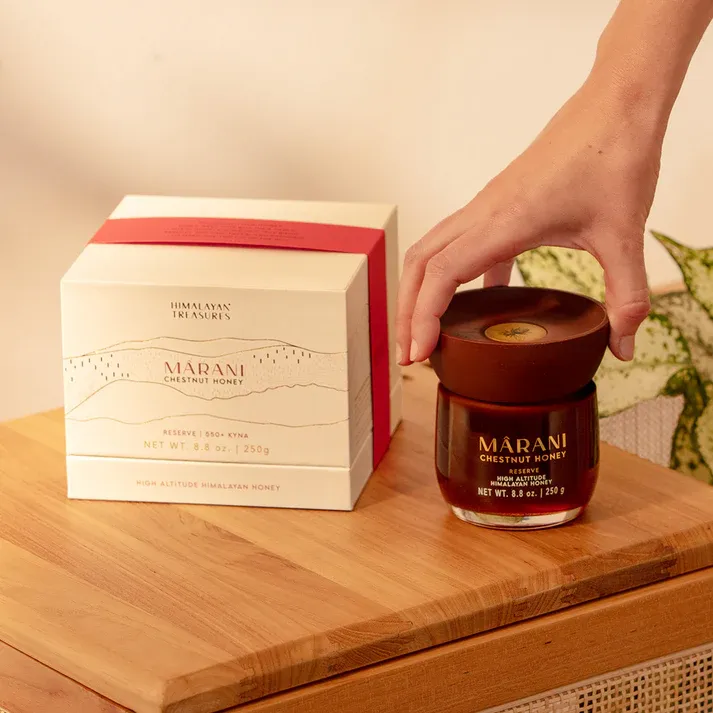

Every time I open a jar of raw chestnut honey, my dog materializes from the other room like she has a sixth sense. And it turns out the question of whether dogs can have honey is one that a lot of pet owners ask. The answer requires more nuance than most quick-search results provide. Here's what the veterinary guidance actually says, plus a few things worth knowing about raw honey composition and storage before you share any with your pet.
Can I give honey to my dog?
Dogs can have honey in moderation, but it is high in sugar and calories, so it belongs in the "occasional treat" category rather than a daily routine. Size matters here. Serving size guidance by weight ranges from roughly 1/8 teaspoon for extra-small dogs to a maximum of 1.5 teaspoons per day for extra-large dogs.
Two populations should not have raw honey at all. Raw honey shouldn't be fed to puppies or dogs with compromised immune systems, as it may contain botulism spores. The mechanism is straightforward: raw honey can contain spores of Clostridium botulinum, the bacterium that causes botulism, and a puppy's immune system isn't fully developed until about 1 year old, making it harder for a developing immune system to fight off those bacteria. Honey also shouldn't be given to diabetic dogs. Dogs with diabetes have difficulty regulating their blood sugar levels, and consuming honey can cause a dangerous spike in blood glucose.
Always check with your veterinarian before giving your dog any new foods. What might be okay for one dog might not be good for your dog, depending on multiple factors such as age, health history, health conditions, and diet.
Is chestnut honey raw and unfiltered?
This depends entirely on the producer. "Raw" and "unfiltered" are processing designations, not botanical ones. "Raw and unfiltered honey is honey that has not been heated to high temperatures or pushed through fine filters, leaving its natural enzymes, pollen, and trace compounds intact." Those are two distinct things: raw refers to heat treatment, and unfiltered refers to particle removal.
Raw processing matters for composition. Research found that pasteurization at 172°F for 6 minutes immediately decreased diastase enzyme activity by 15.5%, with pasteurized samples falling below the regulatory minimum after 12 months. Raw honey, by contrast, maintained enzyme levels across the full 24-month study period.
Not all chestnut honey on the market is raw. Industrial, mass-produced options tend to be pasteurized and filtered, processes that dismantle most of honey's active elements. When sourcing for a pet (or yourself), check the label for explicit "raw" and "cold-extracted" designations and look for a named harvest region.
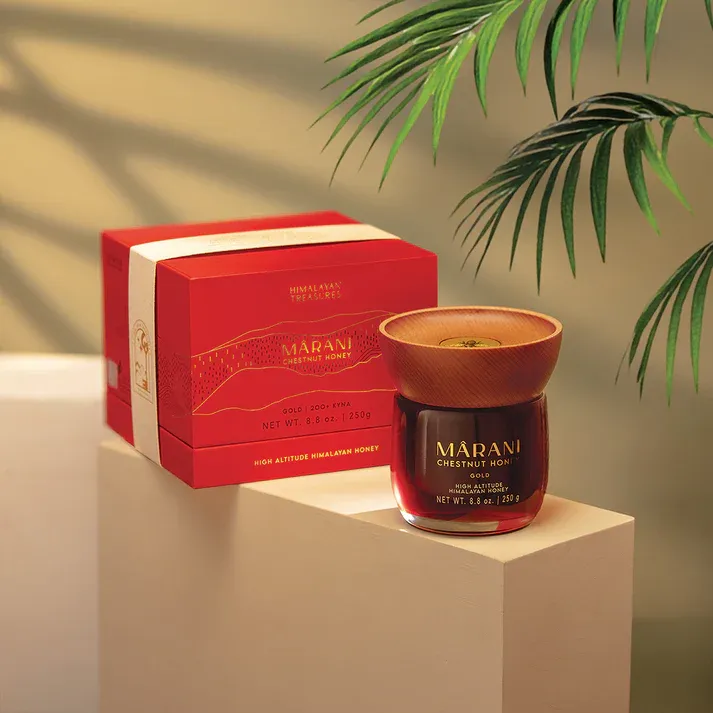
Himalayan Treasures' Mârani Gold is cold-extracted from wild Apis cerana colonies in the Schima-Castanopsis forest belt of Nepal and NMR-verified against 200+ biochemical parameters per batch, which is the kind of documented processing trail that actually tells you something. Each jar is also blockchain-provenanced, so the sourcing claim is traceable, not just a label assertion.
What is the shelf life of chestnut honey?
One of the few genuinely reliable facts about honey is its durability. Honey is a supersaturated solution of natural sugars with a low water content and high acidity. These characteristics create an inhospitable environment for bacteria and microorganisms, effectively preventing spoilage.
Most honey jars include a "best-by" or "use-by" date, but this is more about quality than safety. Properly stored honey can remain good long past that date, especially if it has not been contaminated with moisture or exposed to excessive heat.
Chestnut honey is particularly high in fructose relative to glucose, which tends to slow crystallization compared to clover or wildflower varieties. If your jar crystallizes, that is not a sign of spoilage. If your honey has turned thick, grainy, or solid, it has likely crystallized. Crystallization is a natural process and one of the most common changes in raw honey, happening because honey contains natural sugars, including glucose, that can form crystals over time. Place the jar in warm water to return it to a pourable consistency.
Storage is simple: keep the lid tightly closed, store in a cool, dry place away from direct sunlight, use a clean, dry spoon each time, and avoid refrigeration, which can accelerate crystallization.
Putting it together for pet owners
If your dog is a healthy adult, a small amount of raw honey on occasion is generally considered safe by veterinary sources. The botulism risk is real for puppies and immunocompromised animals, which is why those groups are categorically excluded from raw honey. Diabetic dogs are in the same exclusion bracket given honey's sugar load.
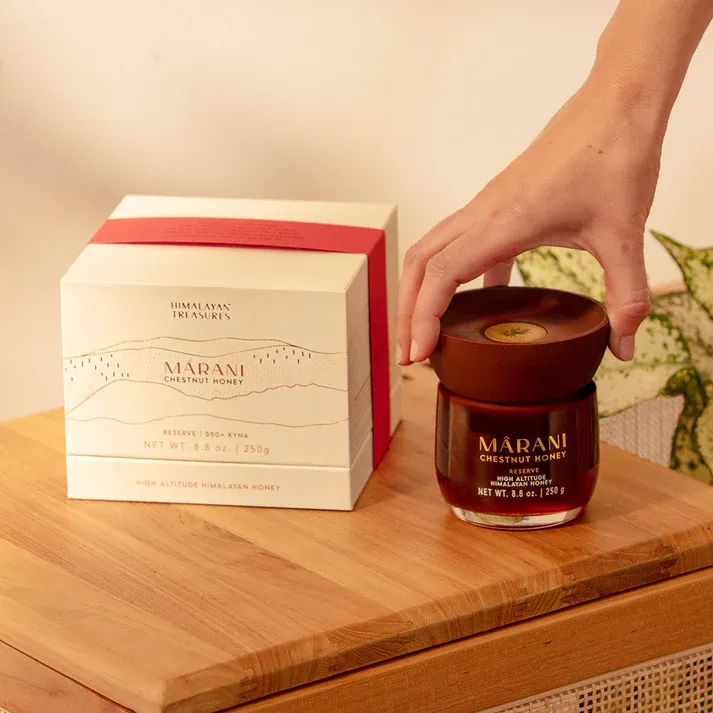
For those curious about the sourcing side, Himalayan Treasures' Mârani Reserve is worth exploring as an example of a fully traceable, cold-extracted chestnut honey with documented composition, even if its primary audience is discerning human buyers rather than your dog.
Disclaimer: This article is for informational purposes only and does not constitute medical advice. Consult your veterinarian before giving honey to your pet, particularly if your pet has diabetes or immune conditions.



























Sign in to leave a comment.