
It's one of the most common questions we get — and honestly, it's a good one.
Whether you've just moved into a new home, had a break-in scare, or simply want to tighten up your security, the choice between re-keying and replacing your locks isn't always obvious. Both options solve the problem. But one is almost always faster, cheaper, and just as effective as the other — if you know which situation calls for which.
We've helped hundreds of Adelaide homeowners and businesses work through exactly this decision. So let's break it down clearly, without the jargon.
What's the Difference Between Re-Keying and Lock Replacement?
Before weighing up which is best, it helps to understand what each one actually involves.
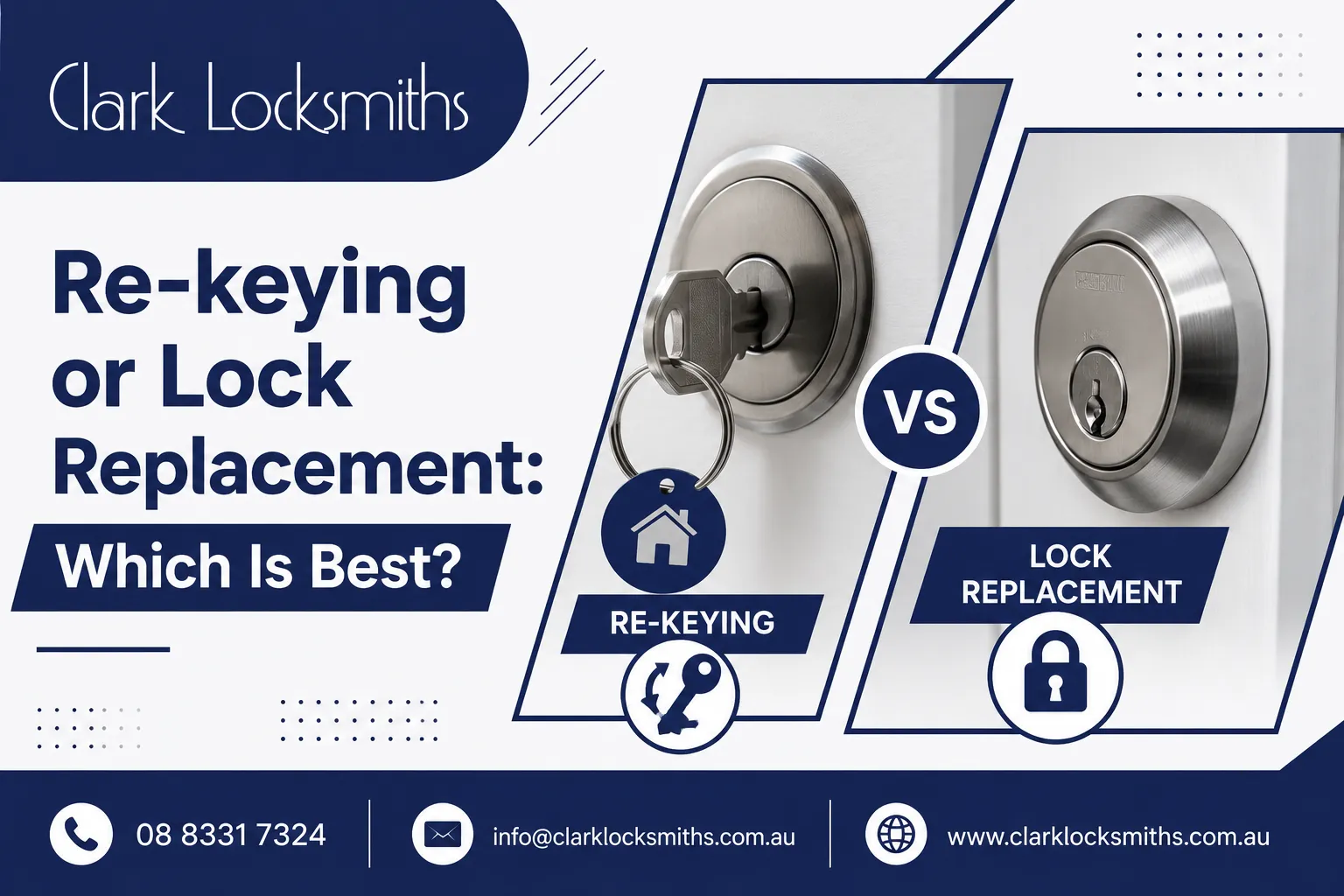
Re-Keying means changing the internal pin configuration of your existing lock cylinder. The hardware stays in place — only the pins are rearranged so that old keys no longer work and new ones do.
Lock Replacement means removing the entire lock — cylinder, hardware, and all — and fitting a brand new one.
| Re-Keying | Lock Replacement | |
|---|---|---|
| Hardware changed? | No | Yes |
| Old keys work after? | No | No |
| Cost | Lower | Higher |
| Time to complete | 20–40 mins | 30–60 mins |
| Best for | Good locks, security reset | Worn, damaged, or upgraded locks |
Both leave you with keys that work and old keys that don't. The difference is what happens to the lock itself.
When Re-Keying Is the Right Call
Re-keying is the smarter, more cost-effective option in the majority of everyday situations. Here's when we recommend it:
You've Just Moved Into a New Home
This is the most common scenario we deal with as a locksmith in Adelaide. When you move in, you have no idea how many copies of the previous keys are still out there — with neighbours, tradespeople, family members of the previous owner.
Re-keying gives you a clean slate without touching the hardware. If the locks are in good condition, there's no reason to spend more on replacement.
You've Lost a Key
If a key is missing and you're not sure where it ended up, re-keying is the quickest way to make that key useless. Fast, affordable, and effective.
A Tenant or Flatmate Has Moved Out
Whether the departure was friendly or not, re-keying between occupants is simply best practice. It protects the incoming tenant and limits your liability as a landlord.
You Want to Master Key Your Property
Re-keying allows a locksmith to reconfigure multiple locks so they all work from a single master key. This is a popular option for landlords and small business owners managing multiple entry points.
✅ Key Takeaway: If your locks are less than 10 years old and in good physical condition, re-keying is almost always the better choice. It's typically 40–60% cheaper than replacement and takes less time.
When Lock Replacement Is the Better Option
There are situations where re-keying simply isn't enough — and pushing ahead with it anyway would leave you with a false sense of security.
Your Locks Are Old or Worn
Locks that are stiff, loose, or difficult to operate aren't just annoying — they're a vulnerability. Re-keying a worn lock doesn't fix the underlying mechanical problem. Replacement does.
There's Been a Break-In or Forced Entry Attempt
If your lock has been tampered with, picked, or physically forced, re-keying won't undo the damage. A compromised lock needs to come out completely. This is also the point where upgrading to a higher-security lock makes real sense.
You're Upgrading Your Security
If you want to move from a basic lock to a high-security cylinder, a deadbolt, or a smart lock system, you'll need a full replacement. Re-keying works within the existing hardware — it can't change the grade of your lock.
The Lock Has Been Exposed to the Elements
Outdoor locks on older Adelaide properties — particularly in coastal or high-rainfall areas — can corrode internally over time. If the lock is deteriorating, replacement is the practical answer.
💡 Pro Tip: Not sure whether your lock is worth keeping? Ask a locksmith to assess it before deciding. A good locksmith will always give you an honest answer — not just push the more expensive option.
What About Car Keys? Is Re-Keying an Option?
This is where things work a little differently.
For vehicles, the equivalent of re-keying is car key replacement and reprogramming — particularly for transponder keys, remote fobs, and smart keys. You're not changing the lock itself, but you are resetting which keys are recognised by the car's immobiliser system.
Car key replacement is something our team handles regularly. Whether you've lost your only key, need a spare programmed, or have a key that's stopped working, we can cut and program replacements on-site for a wide range of makes and models.
| Car Key Type | Can It Be Reprogrammed? | Notes |
|---|---|---|
| Standard metal key | N/A — no electronics | Key cutting only |
| Transponder key | Yes | Cut + chip programming required |
| Remote/fob key | Yes | Cut + remote programming |
| Smart / proximity key | Yes (most models) | Specialist equipment needed |
💡 Pro Tip: Always get a spare car key programmed at the same time as a replacement. The cost of programming two keys in one visit is far less than calling for an emergency locksmith when the single key you have stops working.
Re-Keying vs Replacement: A Quick Decision Guide
Not sure which way to go? Run through this quick checklist:
Choose Re-Keying if:
- ✅ Your lock is in good working condition
- ✅ You've recently moved in or had a change in occupants
- ✅ You've lost a key and want to void it quickly
- ✅ You want to save money without compromising security
- ✅ You want to consolidate multiple locks onto one key
Choose Lock Replacement if:
- ✅ Your lock is worn, stiff, or damaged
- ✅ There's been a break-in or tampering
- ✅ You want to upgrade to a higher-security system
- ✅ The lock is corroded or past its useful life
- ✅ You're installing a smart lock or deadbolt
What Does It Cost? A Rough Guide for Adelaide
Costs vary depending on lock brand, type, and how many locks are involved — but here's a general ballpark:
| Service | Approximate Cost (Adelaide) |
|---|---|
| Re-keying (per lock) | $60 – $120 |
| Lock replacement (per lock, standard) | $150 – $300 |
| High-security lock upgrade | $250 – $500+ |
| Car key replacement (transponder) | $150 – $350 |
| Emergency callout (after hours) | Additional fee applies |
These are indicative figures. The best way to get an accurate quote is to call us directly — we'll ask a few quick questions and give you a real number, not a vague range.
A Real Scenario: When the Cheaper Option Wasn't the Right One
A client in Adelaide's southern suburbs called us after moving into a newly purchased home. They'd been quoted for re-keying by another service, but when our locksmith arrived and inspected the locks, two of the three external doors had badly corroded deadbolts — the kind that looked fine from the outside but had internal rust that made them unreliable.
Re-keying those locks would have cost less upfront. But they would have failed within a year, and one was already easy to manipulate — which is a security risk no amount of re-keying could fix.
We replaced the two corroded locks and re-keyed the third. Total job was done in under two hours. The client paid a little more than they expected, but left knowing their home was genuinely secure.
That's the kind of honest assessment we try to bring to every job.
Talk to Clark Locksmiths Before You Decide
If you're genuinely unsure whether to re-key or replace, the best thing you can do is have someone look at your locks before committing to either.
At Clark Locksmiths, we assess your locks on-site and give you a straight recommendation based on what we actually find — not what's most profitable for us. If re-keying is all you need, that's what we'll tell you.
We service homes, rentals, and businesses across Adelaide and surrounding suburbs. Whether it's a straightforward re-key, a full lock upgrade, or key replacement for your vehicle, our team is set up to help.
Get in touch through our website, fill in the enquiry form with a few details about your situation, and we'll come back to you quickly with your options.
























Sign in to leave a comment.