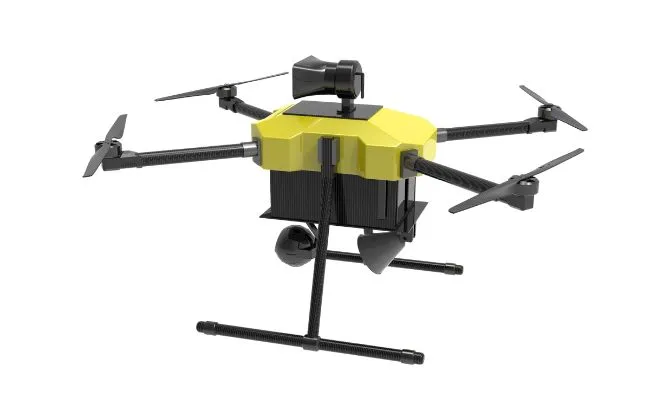

Different farms have different needs, and an agricultural drone rarely performs identically across every setting. This article walks through several common use cases, showing how tank size, spray width, and flight endurance apply differently depending on crop type and field layout.
Orchards and Tree Crops
Orchards often require careful navigation around trees, making maneuverability just as important as tank capacity. Compact units with adjustable spray settings handle this environment well, delivering consistent coverage without excessive chemical drift onto neighboring rows.
Row Crop Farms
Large open fields growing crops such as corn, soybeans, or wheat benefit most from higher capacity sprayers. Machines like the 50 liter or 72 liter models cover wide swaths efficiently, reducing the number of passes needed across expansive acreage during a single day.
Contractor Fleets
Agricultural service contractors managing multiple client farms typically invest in a mixed fleet, combining smaller units for tight spaces with larger sprayers for open fields. This flexibility allows one business to serve diverse client needs without purchasing separate equipment for every job.
Regions With Water Scarcity
In areas where irrigation efficiency matters greatly, precise aerial application reduces overspray and runoff compared to older ground based methods. An agriculture drone applying chemicals directly where needed helps conserve resources while still protecting crop health effectively.
Comparing Use Cases at a Glance
- Orchards: prioritize maneuverability and precision over raw tank size
- Row crops: prioritize tank capacity and wide spray coverage
- Contractor fleets: prioritize flexibility across multiple machine types
- Water sensitive regions: prioritize precision to minimize waste
Support Across All Use Cases
Regardless of farm type, buyers benefit from the same underlying support structure, including operator training, maintenance guidance, spare parts availability, and warranty coverage. This consistency matters because it means switching between machine sizes within a fleet does not sacrifice reliability or serviceability.
Choosing Based on Actual Conditions
Farmers sometimes assume bigger is always better, but orchard operators frequently find smaller, more maneuverable units outperform larger sprayers in tight spaces. Meanwhile, contractors covering vast row crop fields need the opposite priority, favoring capacity and speed over tight maneuverability.
Conclusion
There is no single best configuration for every farm. Understanding how crop type, field layout, and operational scale affect equipment choice helps buyers select the right agricultural drone for their specific situation rather than defaulting to whichever model seems most popular. Matching the tool to the task remains the most reliable path toward genuine efficiency gains.


























Sign in to leave a comment.