

A reinforcement bar does not reach the fabrication yard as a simple line from a structural drawing. It has a size, length, shape, number, and specific bending requirements. A bar bending schedule brings all of that information together so the fabricator knows exactly what needs to be prepared. For teams working with Rebar Shop Drawings Services, the schedule is one of the most practical documents connecting reinforcement detailing with actual bar fabrication.
A Bar Bending Schedule, commonly called a BBS, is essentially a detailed list of reinforcement bars used in a project. Each bar is identified by a bar mark and supported by information such as diameter, shape, cutting length, quantity, and bending dimensions. The information may look simple when placed in a table, but every entry represents a specific reinforcement requirement within the structure.
Reading a Bar Bending Schedule
The easiest way to understand a BBS is to look at what a fabricator actually needs from it.
Suppose a beam requires several different reinforcement bars. Some may run continuously along the beam, while others may have hooks or bends at their ends. Instead of expecting the fabricator to interpret these requirements from several views of the structural drawings, the BBS identifies each bar separately.
A typical entry may show a bar mark, diameter, shape code, dimensions, cutting length, and quantity. The bar mark connects that entry back to its location in the Rebar Drawings.
This relationship is important. If the drawing identifies a bar as T12, for example, the same identification should appear in the schedule. The fabricator can then trace the bar from its location in the structure to its fabrication information.
What Information Does a BBS Contain?
The information included in a bar bending schedule depends on the project and applicable standards, but several details appear in most schedules.
The bar mark gives each reinforcement bar a unique reference. Bar diameter identifies the size of the reinforcement. Shape information explains how the straight bar needs to be bent. Dimensions describe the individual legs, hooks, offsets, or other portions of the bar. Cutting length indicates the length required before bending, while quantity shows how many bars of that type are needed.
Weight may also be included, particularly when reinforcement quantities need to be summarized for procurement or project estimation.
These details work together. A cutting length without the correct shape is not enough. A shape without dimensions is difficult to fabricate. A correct bar description with the wrong quantity can create a different problem altogether.
How the Schedule Is Developed
The BBS begins with the structural information available to the detailer. Structural drawings, reinforcement requirements, member dimensions, design notes, sections, and project standards are reviewed before individual bars are developed.
The detailer then works through the reinforcement arrangement and assigns bar marks to different bar types. The required dimensions and shapes are calculated and organized into the schedule.
This is not simply a matter of copying information from a drawing. A change in beam depth, slab thickness, lap arrangement, hook, or reinforcement spacing can affect the information associated with a bar.
That is why Rebar Detailing Services involve careful review of both the reinforcement arrangement and the information prepared for fabrication.
Connecting the BBS With Shop Drawings
The schedule becomes much more useful when it stays closely connected to the drawings.
A fabricator may see a bar mark on a beam elevation and use that mark to locate the corresponding entry in the bending schedule. The schedule provides the fabrication information, while the drawing provides the location and arrangement within the structure.
This connection needs to remain consistent throughout the drawing set. If a bar mark changes in one view but remains unchanged in another, the fabricator may have to stop and request clarification.
The same issue can occur when a reinforcement revision changes the bar length or quantity but the schedule is not updated. Even a small mismatch can create unnecessary rework.
Why Bar Shape Deserves Attention
Two bars can have the same diameter and cutting length but still require completely different bending.
A straight bar, L-shaped bar, U-shaped bar, and bar with multiple bends cannot be treated as the same fabrication item. Their dimensions and shape information tell the bending team how the bar needs to be formed.
This becomes more important in beams, columns, footings, walls, and heavily reinforced connections where several bar shapes may appear close together.
A clear schedule gives each shape its own identity instead of leaving the fabricator to interpret what the designer intended.
Common Problems in a Bar Bending Schedule
Many BBS problems are not caused by complicated mathematics. They often come from small coordination mistakes.
An incorrect bar mark can disconnect the schedule from the drawing. An outdated quantity can remain after a design revision. A missing dimension can make a bent bar difficult to fabricate. A wrong cutting length can affect the actual amount of reinforcement prepared.
Another common issue is failing to review related drawings after a change. For example, changing the dimensions of a structural member can affect bar lengths, bends, spacing, and quantities at the same time.
A proper checking process looks at these connections rather than reviewing every schedule entry in isolation.
BBS and BIM Workflows
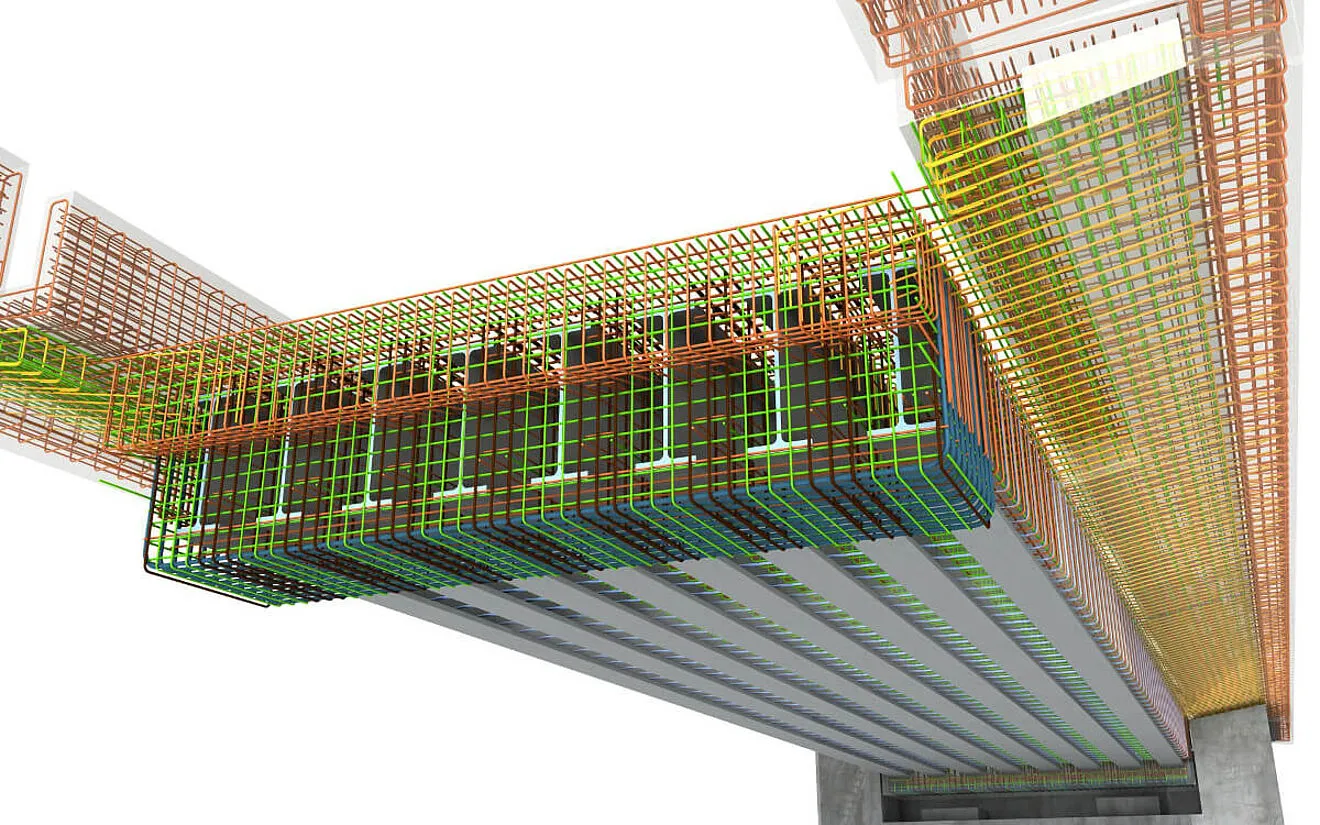
BIM has also changed how reinforcement information can be developed and reviewed. When reinforcement is modeled, bar geometry can be viewed directly within the structural model, making it easier for detailers and engineers to examine complex arrangements.
Depending on the software and project workflow, reinforcement data can also be organized and extracted for schedules. This can reduce repetitive work, but the model still needs professional review.
Software can process information quickly, but it does not automatically understand every design decision or project-specific requirement. The person developing the reinforcement still needs to understand why the bar is shaped and placed in a particular way.
From Drawing Information to Fabrication
A bar bending schedule is ultimately about making reinforcement information usable.
The engineer provides the structural requirements. The detailer develops the reinforcement arrangement and bar information. The BBS organizes that information into a format that supports fabrication, while the shop drawings show where those bars belong within the structure.
For professionals involved in Rebar Services, keeping these pieces connected is important throughout the project. A well-developed schedule should agree with the drawings, reflect current revisions, and give the fabrication team information they can work with directly.
The strength of a bar bending schedule is not in how complicated the table looks. It is in how clearly each bar can be understood from design through fabrication. When bar marks, shapes, dimensions, quantities, and drawing references all agree, the BBS becomes a practical working document rather than just another sheet in the project set.
























Sign in to leave a comment.