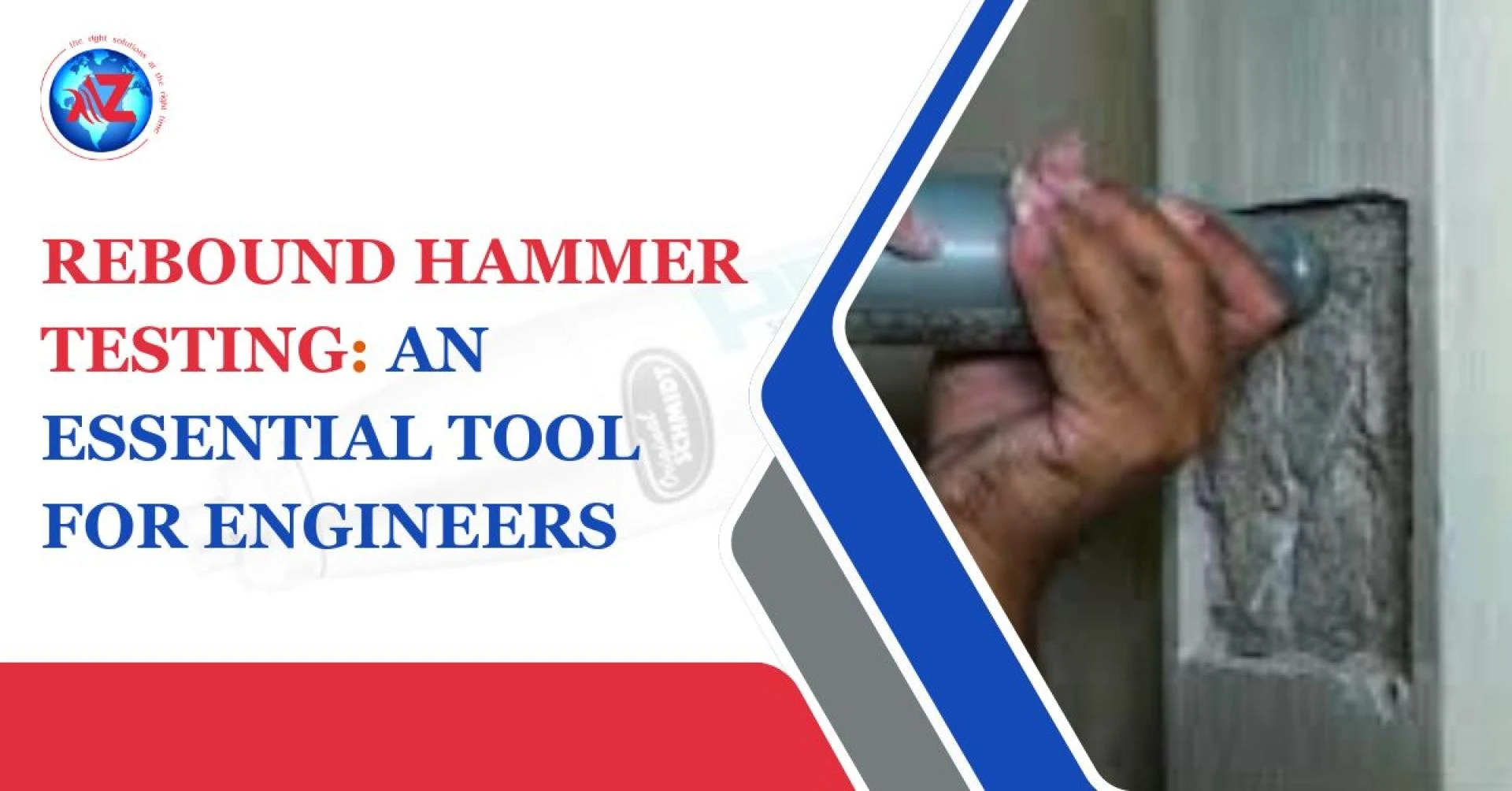

In civil engineering and construction, ensuring the quality and integrity of concrete structures is crucial. Among various testing methods, Rebound Hammer Testing stands out as a quick, reliable, and non-destructive way to assess the compressive strength of concrete. This blog explores why Rebound Hammer Testing is an essential tool for engineers and its significant impact on construction projects.
What is Rebound Hammer Testing?
Rebound Hammer Testing, also known as the Schmidt Hammer test, measures the hardness of concrete by using a spring-loaded hammer. When the hammer hits the concrete surface, it bounces back, and the rebound distance is measured. This rebound distance, known as the rebound number, correlates with the concrete\'s compressive strength. Higher rebound numbers indicate stronger concrete, while lower numbers suggest weaker or deteriorated material.
Importance of Rebound Hammer Testing
- Non-Destructive Testing
One of the primary advantages of Rebound Hammer Testing is its non-destructive nature. Engineers can assess the strength of concrete without damaging the structure. This feature is particularly valuable for assessing existing structures, where maintaining integrity is essential.
- Quick and Efficient
Rebound Hammer Testing is a fast method that allows engineers to obtain results on-site without extensive setup or waiting times. This efficiency is crucial in fast-paced construction environments, enabling engineers to make immediate decisions based on the test results.
- Cost-Effective Solution
This testing method is also cost-effective. Unlike more complex testing methods that require specialized equipment and laboratory analysis, Rebound Hammer Testing requires minimal investment in tools and training, making it accessible for many engineering projects.
- Versatility in Application
Rebound Hammer Testing can be used on a variety of concrete structures, such as buildings, bridges, pavements, and more. Its versatility makes it an ideal choice for engineers across different construction sectors.
How Rebound Hammer Testing Works
The process of Rebound Hammer Testing involves a few straightforward steps:
Preparation: The surface of the concrete must be clean and dry. Any loose material, dirt, or moisture should be removed to ensure accurate results.
Testing: The rebound hammer is held perpendicular to the concrete surface and is released, striking the surface with controlled force. The rebound distance is then measured and recorded.
Data Interpretation: The rebound number obtained is compared against established standards or charts to estimate the concrete\'s compressive strength.
Reporting: The results are documented for further analysis and decision-making in the engineering process.
Applications of Rebound Hammer Testing
- Quality Control in Construction
During construction, engineers use Rebound Hammer Testing to monitor the quality of the concrete being poured. By regularly checking the rebound numbers, they can ensure that the concrete meets the required strength specifications, allowing for timely adjustments in the construction process.
- Assessing Existing Structures
For existing structures, Rebound Hammer Testing is invaluable for evaluating the concrete\'s condition. Engineers can identify areas that may need repair or reinforcement, ensuring the long-term durability and safety of the structure.
- Research and Development
In research settings, Rebound Hammer Testing is often used to investigate new concrete mixes and formulations. By comparing rebound values, researchers can determine which mix designs yield the strongest concrete.
- Historical Structures
For historical buildings and monuments, preserving integrity while assessing condition is vital. Rebound Hammer Testing allows engineers to evaluate the concrete without damaging the historical fabric of the structure.
Limitations of Rebound Hammer Testing
While Rebound Hammer Testing is a valuable tool, it is essential to recognize its limitations. The results can be affected by surface conditions, such as smoothness or moisture presence. Additionally, it provides only an indirect estimate of compressive strength and should ideally be used in conjunction with other testing methods for a comprehensive assessment.
Complementary Testing Methods
To gain a complete understanding of concrete quality, engineers often combine Rebound Hammer Testing with other methods, such as:
Ultrasonic Pulse Velocity Testing: This method uses high-frequency sound waves to assess concrete integrity, helping identify internal flaws and defects.
Core Sampling: Involves extracting concrete cores from a structure to perform laboratory testing, providing direct measurements of compressive strength.
Compression Tests: Laboratory tests are conducted on concrete samples to determine precise compressive strength values.
Conclusion
Rebound Hammer Testing is a vital tool for engineers, offering a quick and cost-effective way to assess concrete strength. Its non-destructive nature makes it ideal for both new constructions and existing structures. By using this method alongside other testing techniques, engineers can ensure the safety and durability of concrete structures. For dependable Rebound Hammer Testing services, count on A TO Z NDT SOLUTIONS PVT LTD to support your project needs.










Sign in to leave a comment.