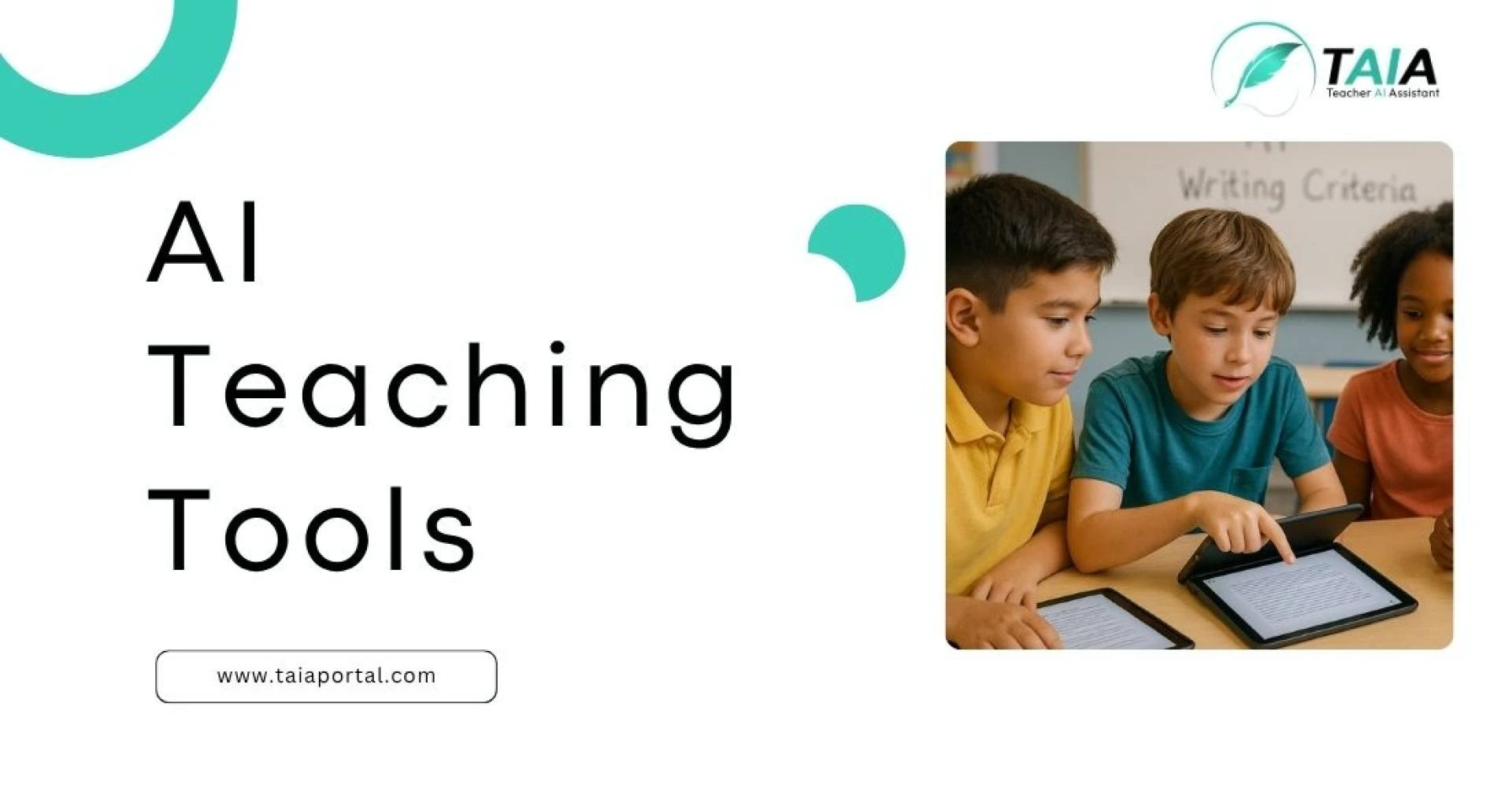

Teachers across K-12 schools know the challenge hidden inside every week. This includes the real pressure of planning, preparation, and assessment time being truly productive. Hours set aside for grading often disappear before progress happens. The reason is not inefficiency. It is the weight of repetitive work that eats away at creative energy. AI now offers a realistic fix that restores both time and focus.
Administrative Demands
Teachers often find their professional enthusiasm slipping when administrative work consumes their energy. According to a 2023 report from Education Week, nearly half of educators report daily stress. 3 out of 4 say workload has harmed their mental health. Those same hours could be spent on students or on planning lessons. Without better workflow systems, instructors are left exhausted.
Brief Planning Period
PPA sessions are meant to secure educators’ time. Yet most instructors admit the period rarely feels enough. Exam material takes longer than expected. Follow-ups stretch beyond schedule. And collaborative planning interrupts individual focus. A recurring question arises:
Can these responsibilities be carried out only within work hours?
Yes. But how? With automation, for it can complete repetitive tasks. And then instructors can better lead with creativity.
Productivity Through AI Teaching Tools
Artificial intelligence simplifies processes that drain hours from the week. It takes over data analysis, grading, and scheduling so that human effort moves toward direct teaching. A 2024 OECD study found that schools integrating AI support systems improved teacher efficiency by nearly 25 percent within one academic year. Such numbers prove that using AI tools is not a luxury but a necessity for sustainable education.
Faster Assessment
Grading is one of the most time-intensive parts of routine work. Platforms such as Gradescope and Turnitin Feedback Studio can scan essays. They also evaluate structure and highlight grammar issues within seconds. Teachers retain full control of final decisions. Yet they save hours every week. This shift offers richer feedback that nurtures student thinking instead of just checking boxes.
Insightful Data for Student Progress
Performance monitoring becomes more meaningful when powered by data analytics. Solutions like Illuminate Education and Renaissance Analytics compile attendance, test scores, and participation metrics into simple dashboards. These systems make invisible patterns visible so teachers can plan targeted interventions. Such AI tools in education free instructors from spreadsheets and let them focus on improvement strategies that matter.
Resource Creation
Another persistent challenge is preparing learning materials suited to different student needs. Artificial intelligence now creates worksheets, quizzes, and reading guides almost instantly. MagicSchool AI and TeachMateAI can adapt a single concept into multiple flashcards for quick recall, slides for visual learning, or practice sheets for revision. These AI education tools allow teachers to customize resources for bilingual or special-needs students without starting from scratch each time. The variety enriches inclusivity while reducing exhaustion.
- Teachers can duplicate successful templates for future lessons.
- Learning content can be localized for cultural context.
- Classroom materials stay consistent with curriculum standards.
Time Management
Many educators feel their workdays fragment into endless small tasks. Digital assistants integrated with productivity platforms now create structured schedules that safeguard planning blocks. Notion AI and Trello AI add-ons manage reminders, categorize deadlines, and ensure meetings do not invade teaching focus.
According to McKinsey & Company’s Education Practice (2023), instructors use automated planners recovered nearly 5 hours a week. Those regained hours often translate into better lesson delivery and more personal time after school.
Planning with Lesson Plan App for Teachers
Lesson design used to require long evenings at the desk. Today, reliable lesson plan apps shorten that cycle. TeachMateAI drafts curriculum-aligned outlines that teachers can refine rather than build from zero. Each plan comes pre-mapped to academic standards, ensuring compliance without endless paperwork. When teachers focus on creativity instead of formatting, students benefit from well-structured yet flexible instruction.
Intelligent Tools for Teachers
No conversation about efficiency would be complete without AI tools, such as Teacher AI Assistant (TAIA). It eliminates repetitive uploading work by transferring lesson plans to platforms like Canvas, Atlas, and VHL Central. With a few clicks, educators can digitize content, preview it, and make edits before publishing. Across one school year, these small automations can reclaim nearly 200 hours. It’s the exact time that can be redirected to interactive instruction and mentoring.
Other platforms extend similar benefits, for instance:
- Curipod automatically maps resources across terms for curriculum coherence.
- Khanmigo provides grade-specific practice aligned with national standards.
- Socrative handles quizzes with preset answers, saving manual scoring effort.
Addressing Concerns
Despite clear benefits, hesitation still exists. Teachers worry about fairness, privacy, and potential over-reliance on technology.
- Bias: Modern AI grading systems undergo continuous calibration. Teachers can review outputs before releasing scores, ensuring fairness remains intact.
- Data Security: Platforms compliant with FERPA and GDPR maintain strict safeguards for student information.
- Job Security: Automation supports educators; it does not replace them. The empathy and mentorship central to teaching stay human.
- Skill Gap: Short workshops and peer training can close the technical gap quickly.
Responsible Adoption
Responsible integration creates visible change. Teachers report tangible relief once AI automates routine duties. According to UNESCO’s 2024 Global Education Monitoring Report, educators in pilot programs using AI support experienced a 30 percent reduction in administrative workload within two semesters. Classrooms became more interactive, and lesson quality improved.
Such evidence confirms that technology, when guided by ethical standards, strengthens rather than weakens teaching. Each saved hour can go into building stronger relationships and deeper student understanding.
Barriers That Still Hold Schools Back
Some institutions hesitate due to funding limits or outdated infrastructure. Others resist because of uncertainty about measurable outcomes. Yet delaying adoption keeps teachers stuck in cycles of manual labor.
To move forward:
- Begin with one small process, such as automated quiz grading.
- Offer professional development credits for AI proficiency.
- Collect performance data to track time savings and learning impact.
End Note
The modern classroom faces old challenges in new forms. Artificial intelligence provides an opportunity to balance these forces responsibly. Tools like Teacher AI Assistant, TeachMateAI, and MagicSchool AI free teachers from mechanical tasks and give them the freedom to teach with purpose. Education will always be human at its core. But the methods supporting it can be smarter.

















Sign in to leave a comment.