

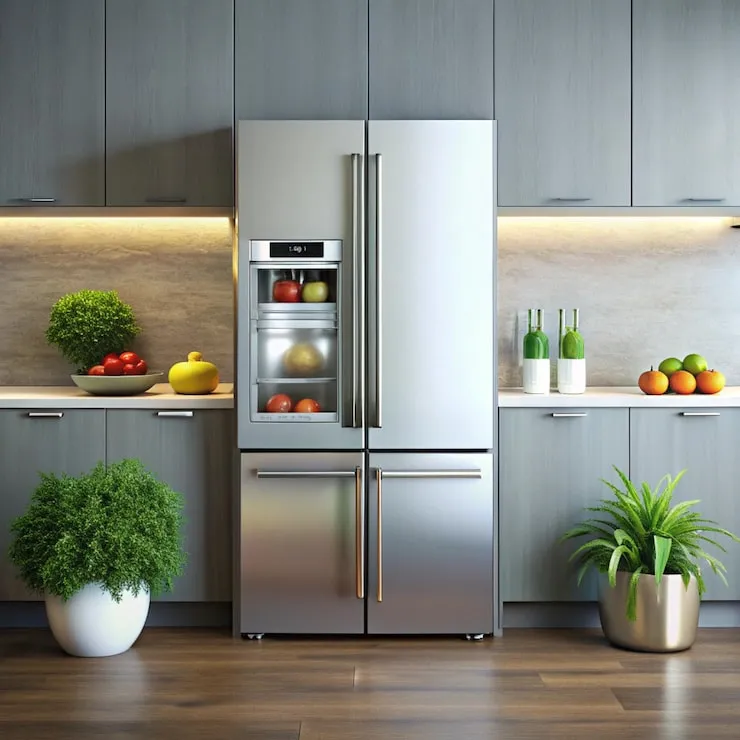
A refrigerator runs throughout the day, so choosing the right model affects food freshness, kitchen convenience, and long-term running costs. Size and appearance matter, but cooling performance, internal layout, compressor technology, and warranty support deserve equal attention.
Before buying, consider your household size, grocery routine, available kitchen space, and freezer requirements. A model that suits a couple may feel too small for a family that stores weekly groceries, frozen food, drinks, and meal-preparation containers.
Choose Cooling Technology That Matches Daily Use
An inverter ref uses a compressor that adjusts its operating speed according to the cooling demand. Instead of repeatedly running at full power and stopping, it can maintain the required temperature with more controlled operation.
This technology can support quieter performance and stable cooling during regular use. Actual electricity consumption still depends on capacity, temperature settings, door-opening habits, room conditions, and product efficiency.
Compare the Storage Layout Before Buying
A double door fridge separates fresh-food storage from the freezer section, making it easier to organise groceries and access frequently used items. Depending on the design, the freezer may be positioned above, below, or beside the main compartment.
Top-freezer models provide a familiar layout and easy access to frozen items. Bottom-freezer options keep fresh food closer to eye level, while side-by-side designs offer separate vertical sections for fresh and frozen storage.
Select the Right Capacity for Your Household
Capacity should match the number of users and the amount of food stored at home. Choosing a larger model without a genuine need can take up kitchen space and leave shelves unused.
Small and Medium Households
Compact and medium-capacity refrigerators can suit couples, small families, offices, and apartments. They usually provide enough room for everyday groceries, bottles, vegetables, and basic frozen items.
Large Families
Larger households may need wider shelves, bigger vegetable drawers, stronger door racks, and more freezer space. Families that buy groceries in bulk should also check how easily large containers fit inside.
Measure the available kitchen area before ordering. Leave room for ventilation, cleaning, door movement, and access to nearby cabinets.
Check Features That Improve Daily Convenience
Useful refrigerator features should make food storage easier rather than simply increasing the price.
A double door fridge can help organise fresh and frozen food in separate compartments, making frequently used items easier to access.
Adjustable shelves create space for tall bottles and large pots. Removable trays make cleaning easier, while transparent drawers help users identify stored vegetables and frozen items without opening every section.
Interior lighting should cover the main compartment without leaving dark corners. Strong door racks are useful for bottles, sauces, cartons, and other regularly used items.
Some models also include separate temperature controls for different compartments. These settings can be helpful when storing meat, dairy products, vegetables, and frozen food that require different cooling conditions.
Review Energy Use and Voltage Requirements
Do not rely only on labels such as “energy saver” or “low power.” Check the official product specifications, compressor type, rated input, and energy information provided by the manufacturer.
Keep the door seals clean and avoid placing hot food directly inside. Leaving the door open for long periods allows cold air to escape and makes the compressor work harder.
Voltage conditions can vary by location. Follow the manufacturer’s recommendations and use suitable protection if required.
Compare Warranty and Service Support
A refrigerator is a long-term appliance, so warranty coverage and technician availability matter. Review the compressor warranty, parts coverage, labour terms, and service-centre access before buying.
Customers comparing refrigerators through ShoppingJin should review capacity, dimensions, cooling technology, shelf design, delivery conditions, and after-sales support instead of choosing only by appearance.
Common Refrigerator Buying Mistakes
One common mistake is selecting a model without measuring doorways, staircases, lifts, and kitchen entrances. The appliance may fit the final space but still be difficult to deliver.
Buyers also overlook door direction, plug location, ventilation gaps, and nearby cabinets. Another mistake is paying for features that do not improve everyday storage or cooling.
Conclusion
The right refrigerator should match your household size, food-storage habits, kitchen layout, and budget. Compare capacity, compressor technology, internal organisation, energy information, warranty coverage, and service support before making a decision.
A well-matched model will be easier to organise, more comfortable to use, and better suited to everyday food storage.
Frequently Asked Questions
1. Is inverter technology useful in a refrigerator?
It can support controlled compressor operation, stable cooling, and quieter performance. Results depend on the model and usage conditions.
2. Which refrigerator capacity is best for a family?
The right capacity depends on household size, shopping frequency, freezer use, and available kitchen space.
3. Is a top freezer better than a bottom freezer?
A top freezer offers easy access to frozen food. A bottom freezer keeps fresh items closer to eye level.
4. How much ventilation space does a refrigerator need?
Follow the manufacturer’s installation instructions because required clearance can differ between models.
5. What should I check in the warranty?
Review compressor coverage, parts warranty, labour terms, exclusions, and local service availability.
























Sign in to leave a comment.