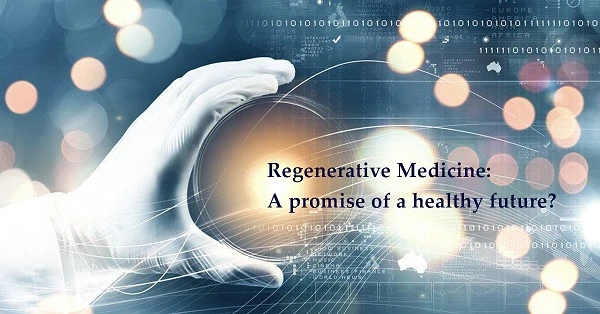
Regenerative medicine combines cells and biomaterials to repair components in the body that have become dysfunctional as a result of disease or damage. What distinguishes regenerative medicine from many traditional medications is that the latter primarily treats symptoms, whilst the former tries to deal with the underlying cause of a patient's ailment by replacing lost cells or organs or by altering a faulty gene sometimes.
Regenerative medicine promises to revolutionize medical treatment, putting stem cells and biocompatible materials at the forefront of this shift. Over the years, numerous advances in the field of stem cell technologies have been published and recognized in scientific journals and the media.
The Promise of Regenerative Medicine
Regenerative medicine seeks to restore normal function by repairing cells or regenerating damaged tissue or organs. The focus on "normal function" perceives this method of healthcare from many widely-prescribed medicines, which often treat symptoms but fail to tackle the root causes.
Cell therapies and regenerative medicine signify a structural revolution in healthcare by putting emphasis on the fundamental nature of the disease by restoring, replacing, or regenerating injured cells in the body. These treatments have the potential to improve patient health.
For instance, a person with type 1 diabetes is unable to make insulin. Instead, daily insulin shots are necessary to maintain healthy blood sugar levels. By repairing the islets of Langerhans, which enable the person to produce insulin, regenerative medicine aims to address this issue.
While the treatment of diabetes with stem cells is not a mainstream approach, there are some areas in regenerative medicine that are well-known in medical practice.
Early triumphs in cell therapy
Transfusions of blood, which are typical in most therapeutic settings today, were the initial kind of cell therapy. The transplantation of bone marrow came next, allowing patients with blood malignancies or radiation damage to create fresh, healthy blood cells using the donor's bone marrow stem cells. When a patient has suffered serious burns or scalds and does not have enough healthy skin to undergo skin graft surgery, cell therapy employing the patient's own cells is also used.
In this instance, skin cells are extracted from a tiny biopsy and multiplied in a specialised lab. To hasten the healing of the burn wound, millions of cells can be generated in a short amount of time and transplanted there. But despite these achievements and the fact that researchers are frantically developing novel treatments, regenerative medicine therapies are still not widely used in the majority of medical specialities.
For several prevalent diseases including stroke, heart disease, degenerative neurological problems, autoimmune diseases, and trauma, there is the potential to greatly lessen the burden of disease with stem cell therapy. Regenerative medicine treatments have the potential to significantly extend life expectancy as well as the quality of life for many chronic disease patients.
Research to Medical Practice
Numerous researchers from all over the world are developing novel regenerative medicine treatments for common illnesses and injuries. Cell treatment has saved thousands of lives and has generated clinically astonishing results. Successful research takes time to translate into medical practise because regulatory bodies like the FDA, which approve novel therapies, need to be convinced that the therapies are both effective and safe.
It will be advantageous to consider strategies to make regenerative medicine products more reasonably priced and economically viable so that patients can gain from them. The development of new treatments is being funded by both large and small companies in the pharmaceutical and healthcare sectors, which is evidence of the great demand for regenerative medicine approaches to treating common health issues.
What lies ahead for us?
Research on stem cells and regenerative medicine has made strides that are being hailed as scientific achievements. The public's expectations and the rate at which new therapies can be produced frequently clash since a study breakthrough does not necessarily translate into new medication. Though only in a relatively small number of disorders, regenerative medicine does have a successful track record.
From the very first blood transfusion to bone marrow transplantation, cloning, the creation of viral vectors, ES (embryonic stem cells) and, more recently, iPS (induced pluripotent stem) cells, genome editing, and organoids show enormous promise for the future. Therefore, the basic idea is still the same: cure a patient's illness or injury by injecting them with donor cells, biomaterials, chemicals, or any combination of these.
Great research, better regulation, cost-effective manufacturing techniques, and a way to demonstrate how treatments benefit patients and society as a whole, in the long run, are all needed for regenerative medicine to enter the forefront of medicine.











Sign in to leave a comment.