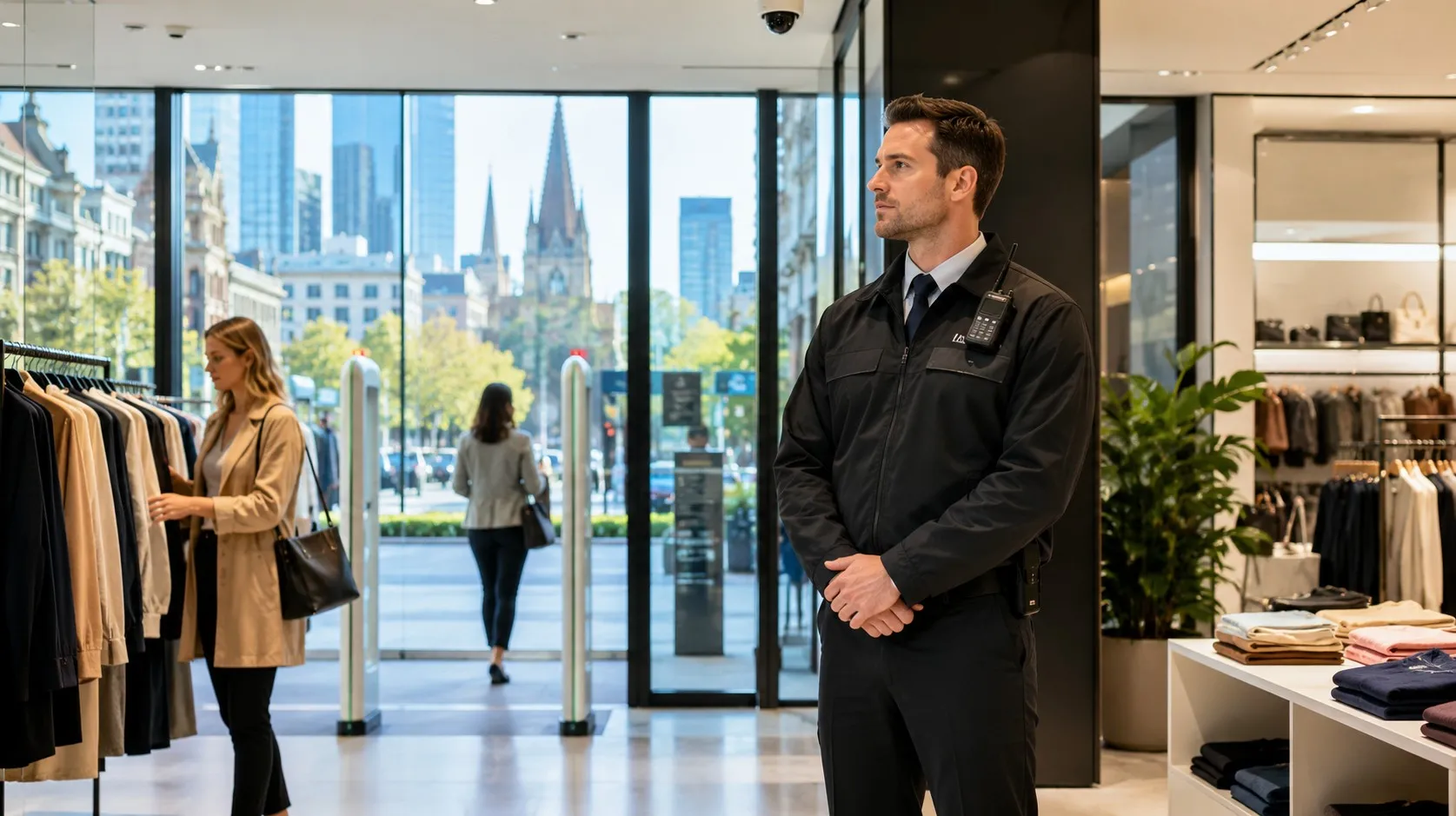

Melbourne retailers recorded roughly 37,800 theft and shoplifting offences in 2024, close to double the 19,700 logged in 2022. Aggression toward retail staff climbed more than 20% in the same stretch. For a store owner, that's not an abstract statistic; it's stock walking out the door and staff who don't feel safe on a closing shift. A good retail guard does two jobs at once: cuts the loss and keeps the floor welcoming. Get the balance wrong and you either bleed margin or scare off the customers you're trying to serve. This guide covers how retail security works in Melbourne, what guards can and can't legally do, and how to brief one for your store.
How Bad Is Retail Theft in Melbourne Right Now?
Retail crime in Melbourne is climbing fast, and the numbers back it up. Theft and shoplifting offences nearly doubled in two years, and most of Victoria's retail crime concentrates in metro areas. Across Australia, retail losses to theft run into the billions each year, and a single store's share of that shows up as shrinkage on the books.
Shrinkage isn't only shoplifters. Internal theft by staff, organised groups working a floor in pairs, and refund fraud all eat into the same margin. The pattern matters because the fix differs: a lone opportunist responds to a visible guard, while an organised crew needs trained observation and coordination with the team. A provider who understands the mix builds for it rather than parking one officer at the door and hoping.
What Retail Guards Do Beyond Standing at the Door
Deterrence is the first and cheapest win. A uniformed guard near the entrance changes the calculation for an opportunist, which is why a staffed floor loses less stock than an empty one. But the visible presence is only the surface. Guards run foot patrols through high-risk aisles, watch for the behavioural tells of concealment, and step in early when something looks off.
When an incident happens, the job is to handle it without turning the shop floor into a scene. Walton Security's retail security guards are trained in conflict de-escalation, so a suspected theft is managed discreetly and a difficult customer is calmed rather than inflamed. Guards also support staff safety directly, walking takings to the safe, covering closing shifts, and giving staff someone to call when a situation escalates.
Uniformed or Plain-Clothes? Choosing the Right Presence
Presence is a tactical choice, not a default. The two main approaches do different jobs, and many stores use a mix depending on the day and the threat.
- Uniformed guards deter openly. The visible presence stops casual theft and reassures customers and staff, which suits high-traffic stores and peak trading.
- Plain-clothes officers blend in to catch organised and repeat offenders who watch for uniforms before they act.
- Mixed deployment puts a uniform at the door for deterrence and a plain-clothes officer on the floor for detection.
The right choice tracks your store type. A boutique with a calm clientele leans uniformed and customer-facing. A supermarket or department store with a known organised-theft problem benefits from plain-clothes detection. The deployment should come out of a look at your layout, trading hours, and loss history, not a one-size template.
What a Retail Guard Can and Can't Legally Do
Legal limits matter as much as training, because a guard who oversteps creates liability for the store. In Victoria, a retail security guard must hold a current private security licence issued through Victoria Police. Their powers are closer to a citizen's than a police officer's: they can observe, approach, and ask, and they can make a citizen's arrest only on reasonable grounds, which carries real legal risk if mishandled.
This is exactly why training and clear store instructions matter. A well-briefed guard knows when to detain, when to simply observe and report, and when to call police. They avoid the use-of-force missteps that turn a shoplifting stop into a lawsuit. So when you hire, ask how guards are trained to handle a suspected theft and what the store's agreed escalation steps are. The answer protects you as much as it protects your stock.
Do retail security guards actually reduce shoplifting in Melbourne?
Yes. A visible guard deters opportunistic theft and a trained officer catches concealment and organised offenders, so a staffed floor consistently loses less stock than an unstaffed one. The effect is strongest when deployment matches the store's actual risk.
Should I hire uniformed or plain-clothes retail guards?
Uniformed guards deter openly; plain-clothes officers detect organised and repeat offenders. High-traffic stores often use both, with a uniform at the door and a plain-clothes officer on the floor. The mix depends on your store type and loss history.
Can a retail security guard detain a shoplifter?
Only on reasonable grounds, under citizen's arrest powers, which carry legal risk if mishandled. Trained guards know when to detain, when to observe and report, and when to call police, which is why training and clear store instructions are essential.
How much do retail security guards cost in Melbourne?
Cost depends on guard hours, the number of officers, whether you use uniformed or plain-clothes cover, and your store's risk. A single guard for peak trading hours sits well below a multi-officer plan for a large department store. A site assessment sets the figure.
Are retail guards in Victoria licensed?
Yes. Every retail security guard in Victoria must hold a current private security licence through Victoria Police and pass background checks. Always confirm licence details before a guard starts on your floor.
Can security guards help with staff safety, not just theft?
Yes. With aggression toward retail staff rising, guards cover closing shifts, escort takings to the safe, and de-escalate hostile customers, giving staff a trained point of contact when a situation turns.
Protecting a store, boutique, or shopping centre in Melbourne? Walton Security provides licensed retail and loss-prevention guards across Melbourne and Victoria, with a free store assessment.






















Sign in to leave a comment.