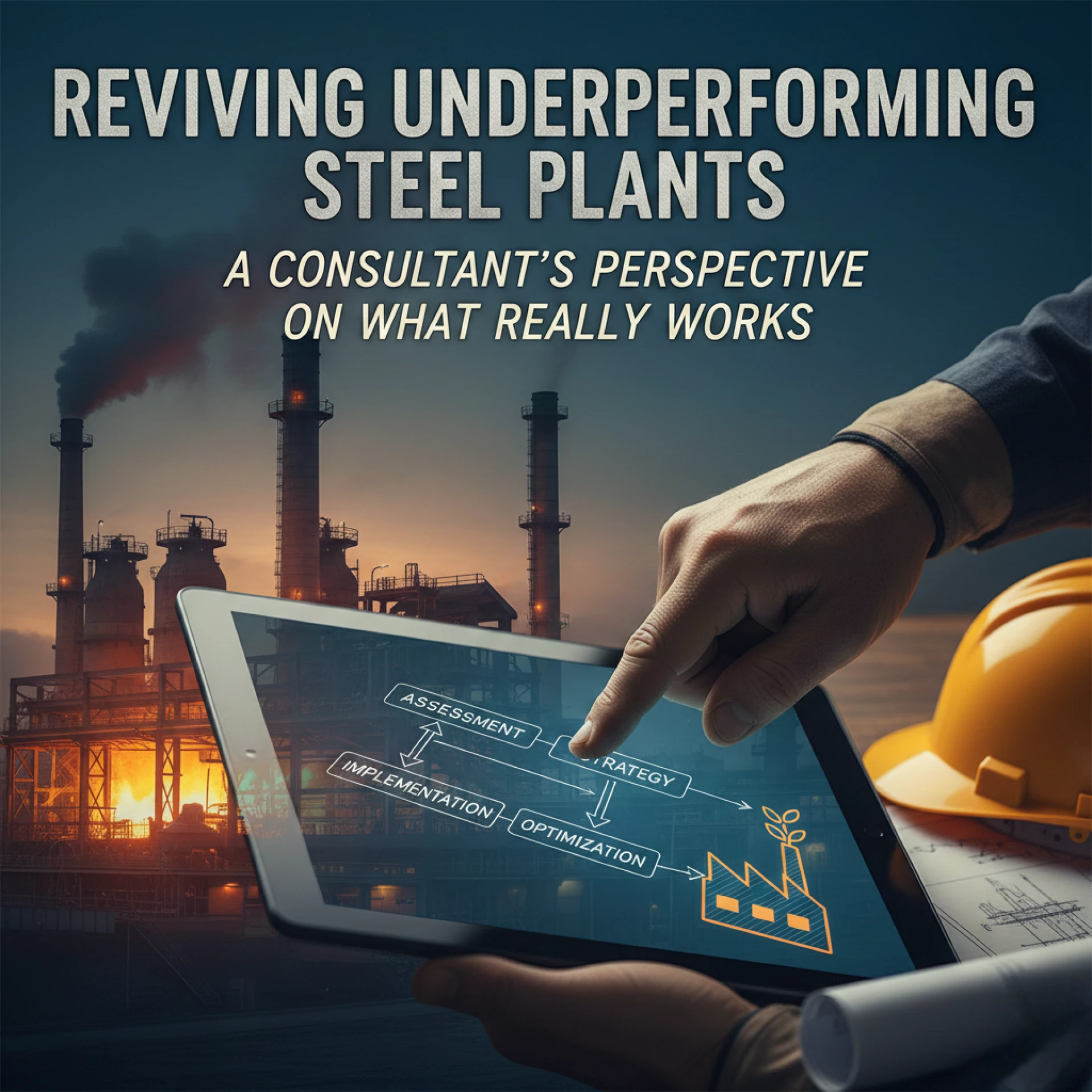

Many steel plants don’t fail because of a lack of capacity or technology. They fail because their systems stop talking to each other. Production might be moving, but efficiency stalls, energy costs climb, quality fluctuates, and suddenly margins disappear. I’ve seen this pattern across multiple facilities, and the truth is simple: revival is possible, but only with a structured advisory approach instead of patchwork fixes.
Here’s what actually works.
First, accept that the plant needs correction
Most underperforming plants keep running on temporary adjustments, hoping things will eventually settle. They don’t. A steel plant consultant comes in with a neutral view, which is exactly what’s needed to diagnose what’s really holding performance back.
Common hidden issues:
• outdated process flow
• uneven heat control
• energy losses nobody is measuring
• poor furnace discipline
• weak planning between rolling and melting
• unreliable maintenance cycles
These don’t look dramatic day to day, but they quietly destroy profitability.
Process-first, technology-second
This is something I’ve heard repeated by veteran advisors like Dinesh Kumar Saraogi: a broken process cannot be repaired with new machines. Most plants rush into buying equipment instead of mapping their existing flow.
The revival map usually starts with:
• process audits
• performance benchmarking
• furnace behaviour analysis
• bottleneck identification
• energy-leak points
• rolling optimization
Once the root problems are visible, investments suddenly become smarter.
Fix the furnace, fix the plant
In a steel facility, your furnace decides your cost. A large portion of underperformance links back to furnace control, heat consistency, and fuel mix. Steel plant advisory frameworks always start here, and the results are almost immediate.
Improvements typically come from:
• heat recovery
• combustion optimization
• automation of reheating
• better temperature discipline
• modern refractories
Plants often see 8 to 15 percent improvement just by tuning furnace behaviour alone.
Data must make decisions, not assumptions
You can’t manage what you’re not measuring. Underperforming plants struggle because decisions are based on experience rather than numbers.
With advisory oversight, data becomes day-to-day:
• digital dashboards
• energy metering
• rolling metrics
• downtime mapping
• yield tracking
Once decision-making becomes data-backed, revival is no longer guesswork.
Align operations for output, not speed
Most plants try to speed up production, thinking volume will save margins. In reality, improving yield and stability has a far higher financial impact.
True revival comes from:
• fewer defects
• lower rework
• reduced scrap
• uniform quality
• consistent output
That’s where profit returns, not just from running faster.
What this really means
Revival isn’t about adding equipment or pushing more tons. It’s about reorganizing the plant so every unit, every stage, every furnace, and every process moves with purpose and data.
When a steel plant advisory expert leads this transformation, change becomes structured instead of chaotic.
And yes, the results can be dramatic.
Final thought
Underperforming plants don’t need miracles. They need clarity, benchmarking, energy discipline, and professional advisory support that replaces assumptions with evidence.
When guided by experienced experts like Dinesh Kumar Saraogi, plant revival stops being a risky trial-and-error exercise and becomes a predictable, measurable turnaround.






























Sign in to leave a comment.