

RFID technology covers a wide range of products, and not all of them do the same job. Some stop unauthorized scans; others talk to a reader. RFID blocking material disrupts radio-frequency signals so a card's data stays private.
RFID tags, by contrast, respond to a reader and share stored information. This difference matters before you buy. This article covers how each works, where they're used, and how to pick the right fit.
What Is RFID Blocking Material?
RFID blocking material is a shielding construction designed to interfere with RFID and NFC signals before they reach a chip. It stops unauthorized readers from pulling data off a nearby contactless card, the main concern behind skimming. Blocking products come in several materials, including PVC, metal, and wood, depending on the finish an application needs.
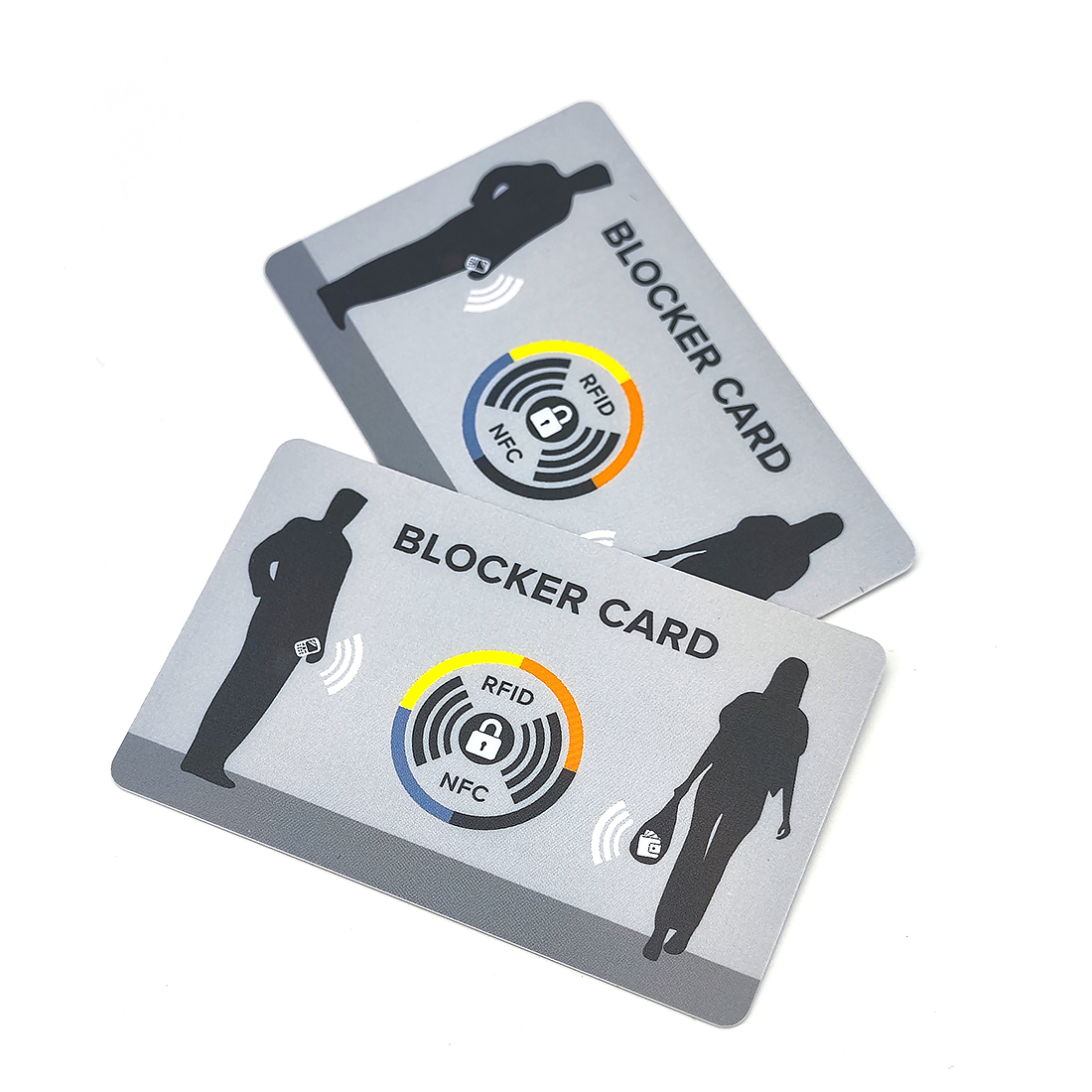
Many are made in standard credit-card dimensions, so they slide easily into a wallet. Frequency matters too — a shielding card built for 13.56 MHz guards against cards on that same band, often through E-Block shielding technology.
What Are RFID Tags and How Do They Work?
RFID tags work in the opposite direction. Each one holds a chip and antenna built to exchange information with a reader instead of blocking it. The process is simple: a reader sends a radio signal, the tag's antenna picks it up and the chip returns its stored ID data.
Tags enable communication which is what tracking, identification and access systems depend on. They come in different frequency ranges, and the right choice depends on read range, material penetration, and how the application is set up.
RFID Blocking Card vs. RFID Tags: Key Differences
Once you separate the two by purpose, the comparison gets clearer.
| Factor | RFID Blocking Products | RFID Tags |
| Primary purpose | Disrupt unauthorized RFID scanning | Enable identification and data exchange |
| Communication | Interferes with or blocks RFID signals | Responds to signals from RFID readers |
| Typical use | Protects cards and stored data from unauthorized scans | Used for tracking, identification, and access control |
| Main components | RFID shielding material or technology | RFID chip and antenna |
| Frequency consideration | Must be compatible with the frequency being protected | Selected according to the reader and application |
These two shouldn't be treated as interchangeable — one protects data, the other shares it.
Where Are They Used?
Each technology fits a distinct set of situations, split along blocking versus identification lines.
RFID Blocking Applications
Shielding cards are common in wallet protection, guarding contactless bank cards from unauthorized scans. Corporate security programs use them to protect employee badges and payment credentials. They also work as promotional gifts, since a custom card is something people keep and use daily.
RFID Tag Applications
RFID tags handle a wider range of jobs: access control, employee and student ID cards, and retail inventory tracking. Logistics teams rely on tags to trace shipments, and hotels use them for room access. The same tag format also supports membership programs and cashless payment.
How To Pick A Trustworthy RFID Manufacturer
Choosing the right RFID Tags Manufacturer depends on their manufacturing capacity and support. Consider a manufacturer that provides material choices, customization of sizes and technical support through prototype development. A manufacturer such as Top Tag, with its own Research & Development department, can modify tags or blockers to meet your needs.
Why Choose Our RFID Solutions?
Top Tag builds customization into every order — material, size, chip type, printing, and finish — so the finished product matches how it will be used. As an established RFID Tags Manufacturer, we pair in-house R&D and production with hands-on technical consulting, from prototyping through full-scale manufacturing.
That in-house setup means changes to frequency, artwork, or card construction don't require juggling outside vendors. Whether you need a shielding card tuned to a specific frequency or a tag built for a demanding access system, our team works through the details before production starts, not after.
Conclusion
RFID blocking material disrupts signals to protect data; RFID tags exist to share it with a reader. The two solve different problems, and mixing them up means buying the wrong product for the job. Before ordering, decide whether you're trying to stop unauthorized scans or enable identification and tracking. From there, match frequency, materials, and form factor to your system, and work with an RFID Tags Manufacturer who can adjust those details rather than sell you a fixed catalog item.

















Sign in to leave a comment.