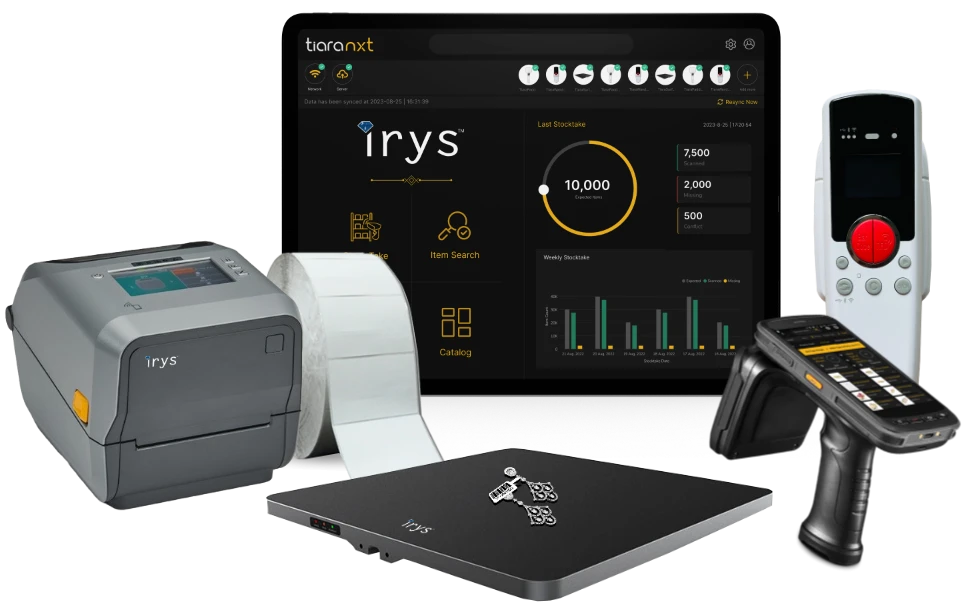
The jewelry industry has always demanded precision, security, and efficiency in managing high-value inventory. Traditional methods like manual counting or barcode scanning often fall short in meeting these demands, leading to errors, delays, and risks of loss. That’s where Radio Frequency Identification (RFID) technology steps in. By combining specialized tools like the RFID jewelry label and an RFID tag scanner, jewelry businesses can achieve real-time visibility, improved accuracy, and maximum security for their assets.
This blog explores how RFID jewelry labels and scanners work together to transform inventory management and why they are becoming essential in modern jewelry businesses.
The Importance of RFID in the Jewelry Industry
Jewelry items, especially small ones like rings, earrings, and diamonds, are challenging to manage and track. Traditional inventory processes can take hours or even days, and the risk of human error is high. On top of that, theft and misplacement remain major concerns.
RFID technology addresses these issues by:
- Automating stock audits.
- Providing real-time updates on inventory.
- Preventing unauthorized movement.
- Offering quick product identification.
The core components of this system are RFID jewelry labels and RFID tag scanners, which work seamlessly together.
What is an RFID Jewelry Label?
An RFID jewelry label is a specially designed tag that contains a microchip and antenna, allowing it to store and transmit data. These labels are tailored for small, high-value items and can be attached without damaging delicate jewelry.
Features of RFID Jewelry Labels
- Compact Design: Fits easily on jewelry items without affecting appearance.
- Durability: Resistant to tampering and environmental factors.
- Unique Identification: Each label carries a unique ID for precise tracking.
- Compatibility: Works seamlessly with RFID readers and management software.
Benefits of RFID Jewelry Labels
- Accurate Tracking: Every item can be identified instantly.
- Theft Prevention: Alerts are triggered if tagged items move without authorization.
- Faster Audits: Inventory that takes hours manually can be checked in minutes.
- Improved Customer Service: Staff can quickly locate items for customers.
What is an RFID Tag Scanner?
An RFID tag scanner is the device responsible for reading data from RFID labels. It captures the information stored in the label’s microchip and transmits it to the inventory management system.
Types of RFID Tag Scanners
- Handheld Scanners: Portable and ideal for quick inventory checks.
- Fixed Scanners: Installed at entry/exit points to monitor jewelry movement.
- Desktop Scanners: Used for item registration and billing.
Benefits of RFID Tag Scanners
- Speed & Efficiency: Can scan multiple items at once, unlike barcode scanners.
- Accuracy: Reduces human error in stock counting.
- Integration: Works with software for real-time inventory updates.
- Security: Identifies unauthorized movements instantly.
How RFID Labels and Scanners Work Together
- Tagging Jewelry: Each jewelry item is tagged with an RFID jewelry label.
- Data Capture: The RFID tag scanner reads the tag’s unique information.
- Inventory Updates: The data is synced with the management software in real time.
- Monitoring & Alerts: The system tracks movement, preventing loss or theft.
This seamless integration ensures jewelry businesses can maintain accuracy, speed, and security.
Applications of RFID in Jewelry Management
1. Inventory Management
- Complete stock checks in minutes.
- Ensure real-time visibility of all items.
2. Theft Prevention
- Fixed scanners send alerts if items leave storage areas without authorization.
3. Customer Experience
- Staff can instantly locate and present jewelry to customers, enhancing satisfaction.
4. Multi-Store Operations
- Centralized monitoring allows businesses to manage stock across multiple locations.
Why Jewelry Businesses Should Invest in RFID Solutions
Implementing RFID is not just about improving efficiency—it’s about staying competitive. With RFID jewelry labels and scanners, businesses benefit from:
- Reduced operational costs.
- Improved security of high-value assets.
- Accurate stock data for decision-making.
- Seamless integration with billing and POS systems.
Future of RFID in Jewelry Industry
As technology advances, RFID solutions are becoming smarter and more affordable. The integration of cloud-based systems and IoT will further enhance capabilities, allowing jewelry businesses to track inventory from anywhere.
Conclusion
The combination of an RFID jewelry label and an RFID tag scanner offers jewelry businesses unmatched efficiency, security, and accuracy in inventory management. By adopting RFID solutions, jewelers can reduce risks, save time, and deliver a superior customer experience.
For businesses dealing with valuable assets, RFID is no longer optional—it’s a necessity for growth and long-term success.


























Sign in to leave a comment.