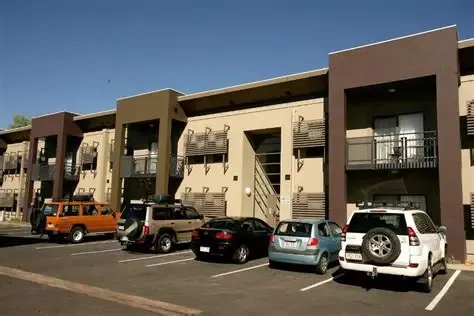

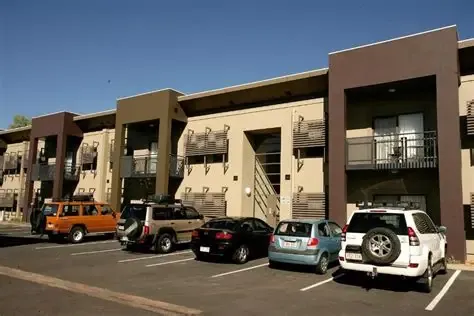
On the edge of the Todd Street mall, a block of land that has sat empty for longer than many locals care to remember is finally stirring. The old Melanka site — once a public housing precinct, later a backpackers' hostel — has been a gap in the heart of Alice Springs since 2009. Two separate redevelopment proposals came and went, in 2010 and 2015, leaving behind nothing but frustrated expectations. But the third attempt has taken hold, and the difference is this: this time, the building was designed for the place.
A Sculpture in the Landscape
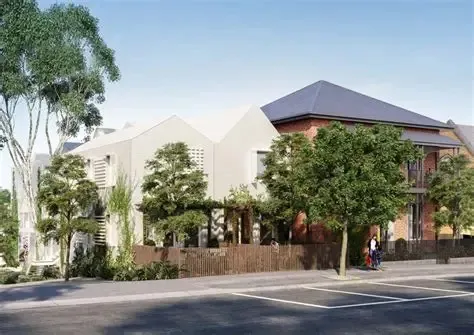
When Northern Territory planning minister Joshua Burgoyne approved the latest development application for the Todd Street site, he posted a blunt assessment on social media: “I remember seeing the old Malankas being torn down. After more than 15 years of nothing but talk. We now have a government taking action to rebuild our economy”. The approved complex, designed by David King Jones of DKJ — an architect who has called Alice Springs home for a decade and worked in the Territory for over 45 years — will deliver 144 apartments spread across five buildings up to six storeys in height. But the numbers tell only part of the story.
The architect's statement describes the development as a “sculptural piece of domestic scale urban art, integrated with the landscape”. Rather than imposing a monolithic tower block on the streetscape, the six-building complex scales to the adjacent hospital precinct and speaks to the “unique visual avenue characteristics of Gap Road and Todd Street”. The finishes, colours and details are restrained to reduce visual bulk, while screens add depth and interest to the built form.
The Tree That Held Its Ground
Perhaps the most telling detail of the design is what it kept. A collection of existing trees has been retained, including a boab tree that has watched over the land since before the backpackers arrived, before the public housing that came before that, before the empty years stretched from 2009 to today. These mature trees are being enhanced with new urban landscaped spaces, woven into the fabric of the development rather than cleared away.
Half of the new apartments will be acquired by the NT government for public and essential worker housing. That means alongside private purchasers, nurses who staff the hospital, teachers who fill the classrooms and police who patrol the streets will finally have secure, modern rental housing within walking distance of the town centre. For the families who will one day call it home, the sixteen-year wait is finally over.
A New Address in the South
While the Melanka redevelopment addresses the city centre, a different kind of growth is taking shape south of The Gap. Kilgariff Estate has become one of Alice Springs' most popular new suburbs, a greenfield development designed to provide diverse housing options alongside future schools, shops and recreational facilities. The estate's landscaped perimeters and purpose-built cycle paths connect residents directly to the town centre, offering a safe and pleasant commute through natural surrounds.
The latest release, named the Wattle Release, will deliver 36 single and multi-dwelling residential lots ranging in size, with land available for purchase as of 18 April 2026. The release builds on the success of earlier stages, with all 80 residential lots from Stage 1 already sold and constructed upon, and 52 lots delivered in Stage 2A with titles issued in August 2024. For home builders, Kilgariff offers something rare in a tight market — serviced land ready to build on, with the flexibility to choose their own builder and design a home that suits their needs.
Frontline Workers Find a Foothold
Just 800 metres from the Alice Springs Hospital, the Alice Stars complex at 43-47 Gap Road is catering specifically to medical professionals who have struggled to find adequate, stable housing. All 36 apartments feature private outdoor areas with covered decks and balconies, offering a secure, resort-style environment within walking distance of the hospital doors. For nurses and doctors relocating from interstate, the complex provides a soft landing — a place to call home while they focus on caring for the community.
A Sanctuary Built on Culture
Perhaps the most profound project in Alice Springs' housing landscape is the one you won't find in glossy brochures. The Apmere Mwerre Visitors Park — the name means "Good Place" — provides safe, affordable accommodation for First Nations people travelling to the town for healthcare, economic opportunities, community services and domestic violence support. A $4.9 million expansion added 20 new short-term beds to the facility, but the real story is in the details.
The accommodation is designed to be flexible, with adaptable layouts capable of housing family groups ranging from two to eight people — because in many First Nations families, "household" means grandmothers, aunties, grandchildren and cousins, all travelling together. Walkways double as verandahs, providing shade and privacy screening for the new rooms, with entries set back from the pathways to create small shared seating areas where visitors can sit outside, see the shared courtyard, and still feel a sense of ownership over the space.
The project was delivered under budget and has already been recognised in the 2026 National Architecture Awards. It also gave a local young man — Tama — a paid work placement on-site while he completed Year 12. Tama is now in full-time employment with the head contractor and plans to start a carpentry apprenticeship. That is what culturally safe architecture looks like: not just four walls, but a door that opens to a future.
Small Victories That Add Up
Not every new home makes the headlines. The Social Housing Accelerator Payment has delivered five new architecturally designed homes across Gillen, comprising three one-bedroom properties on Nicker Crescent and two two-bedroom dwellings on Ashwin Street, with completion scheduled for early 2026. These are not large projects, but for the families who will finally move off the waitlist, they are everything.
The City That Turned the Corner
For years, the story of Alice Springs was told in vacancies. Empty lots. Empty promises. Empty hope. But 2026 is different. From the sculptural apartments rising on Todd Street to the masterplanned community taking shape at Kilgariff, from the frontline worker housing at Gap Road to the culturally sensitive sanctuary of Apmere Mwerre, the cranes on the skyline are not just building apartments. They are building a future where a nurse can serve her community without sleeping in a swag. Where a young family can put down roots. Where a First Nations elder can access healthcare with dignity. After sixteen years of waiting, Alice Springs is finally watching its next chapter rise from the red dust. And this time, the building listened.


























Sign in to leave a comment.