

Estate planning is not only about deciding who receives property after death. It is also about creating a practical system for managing assets during incapacity, reducing confusion for family members and making sure legal documents work together. A LIVING TRUST ATTORNEY helps turn personal goals into a trust-based plan that reflects California law, family circumstances, property ownership and long-term concerns.

For many Lancaster families, the real challenge is designing, funding and maintaining the trust correctly. A document can look complete while leaving assets outside it or naming an unsuitable successor trustee.
Explaining What a Living Trust Does
A living trust is created during a person’s lifetime. In a typical revocable arrangement, the person creating the trust can serve as the initial trustee, continue controlling trust property and amend or revoke the document while legally competent. A successor trustee is named to manage or distribute trust assets when the creator dies or can no longer handle financial affairs.
California Courts explains that assets placed into a living trust can generally pass to the listed beneficiaries without probate. The important phrase is “placed into the trust.” Signing the document does not automatically move every home, account, investment or business interest
An attorney explains how the trust differs from wills, beneficiary designations, powers of attorney and health care directives so the client can choose suitable tools.
Deciding Whether a Trust Fits the Estate
A lawyer reviews the client’s property, debts, relationships, beneficiaries and goals. Real estate, business ownership, minor children, blended-family concerns and vulnerable beneficiaries can all affect the recommended structure.
A LIVING TRUST ATTORNEY uses these details to determine whether a revocable living trust is appropriate or whether another approach should be considered. A revocable trust offers flexibility, but it is not a universal asset-protection tool. Because the creator normally keeps control, trust property generally remains available to the creator’s c
This prevents the mistake of treating a trust as a one-size-fits-all form.
Drafting Instructions for Real Family Situations
Trust drafting requires more than inserting names into prepared language. The attorney converts a client’s intentions into instructions that can be understood and followed years later.
Some clients want immediate equal shares, while others prefer staged distributions or continued management for younger or vulnerable beneficiaries.
The lawyer also defines trustee powers involving property, expenses, taxes, financial accounts and beneficiary communication. Clear language reduces delay and disagreement.
Selecting a Responsible Successor Trustee
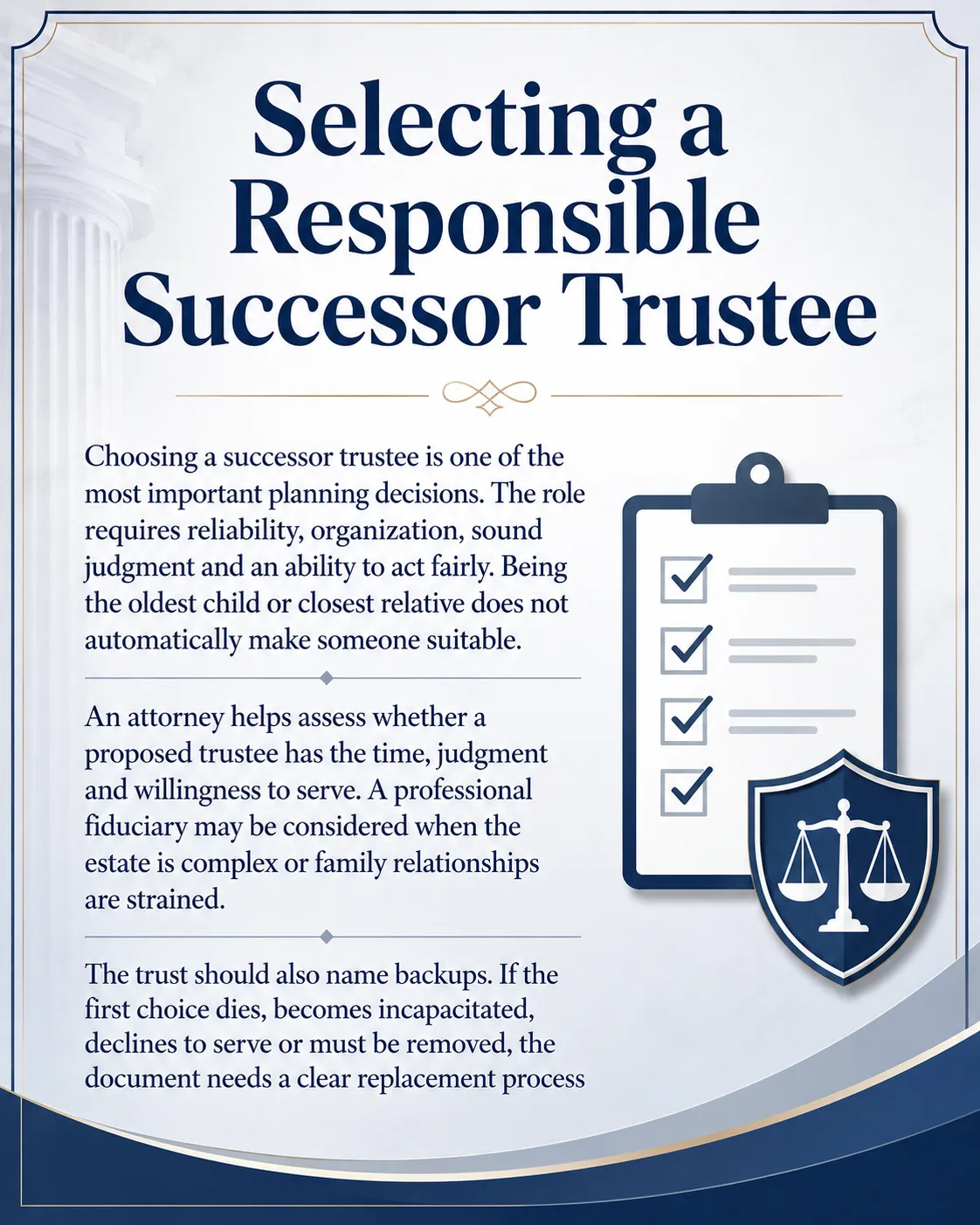
Choosing a successor trustee is one of the most important planning decisions. The role requires reliability, organization, sound judgment and an ability to act fairly. Being the oldest child or closest relative does not automatically make someone suitable.
An attorney helps assess whether a proposed trustee has the time, judgment and willingness to serve. A professional fiduciary may be considered when the estate is complex or family relationships are strained.
The trust should also name backups. If the first choice dies, becomes incapacitated, declines to serve or must be removed, the document needs a clear replacement process.
Coordinating the Trust With Other Documents
A trust does not replace the rest of an estate plan. Trust-based plans commonly include a pour-over will, durable power of attorney, advance health care directive and related authorizations.
A pour-over will can direct remaining assets into the trust and nominate guardians, while powers of attorney and health care directives cover decisions outside the trust. Assets left outside may still require probate.
In the middle of the planning process, the LIVING TRUST ATTORNEY checks these documents for inconsistent instructions. Beneficiary designations on retirement accounts, life insurance and payable-on-death accounts also need review because they may control who receives an asset regardless of what the trust says. A coordinated plan is more dependable than a collection of unrelat
Funding the Trust Correctly
Funding gives the trust practical effect. It usually involves changing ownership of selected assets to the trust or coordinating how they will pass at death.
Funding may include recording a deed for California real estate, retitling non-retirement accounts and reviewing restrictions before transferring business interests.
Retirement accounts, insurance, vehicles and out-of-state property may require different treatment and coordinated beneficiary instructions.
California court guidance notes that after a trust is signed, the creator funds it by transferring title to property. An unfunded or partly funded trust may fail to avoid probate for assets never connect
A Revocable Living Trust Attorney in Lancaster CA can create a funding checklist, coordinate deeds and identify tasks requiring help from financial or tax professionals.
Planning for Incapacity
A properly funded trust can provide continuity if the creator becomes unable to manage financial matters. The successor trustee may step in and handle trust assets according to the document’s terms.
The attorney helps define how incapacity will be established. Depending on the plan, this may involve medical opinions or another stated procedure. Clear standards matter because a change of control affects both the creator’s independence and the successor trustee’s authority.
The trust should explain how funds may be used for care and support, while a durable power of attorney addresses matters outside the trust.
Addressing Tax, Property and Family Concerns
A revocable trust does not automatically eliminate income tax, property tax, capital gains tax, estate tax or creditor exposure. The result depends on the assets, the trust terms, current law and what happens after death.
An estate planning lawyer may coordinate with accountants or financial advisers when business interests, appreciated property, retirement assets or special-needs planning require additional analysis.
For married couples, the trust may also need to distinguish community property from separate property and address what happens after the first spouse dies. Blended families often require careful terms that balance the surviving spouse’s needs with inheritances intended for children from a prior relationship.
Reviewing the Plan as Life Changes
Estate planning does not end when documents are signed. A trust should be reviewed after marriage, divorce, birth or adoption, a death in the family, purchase or sale of real estate, relocation, retirement, a major financial change or a breakdown in a trustee relationship.
Periodic review also catches unfunded new property, outdated designations and unsuitable trustee choices.
An attorney can review amendments, restatements, deeds, trustee choices and funding records. Correcting a problem while the creator is competent is usually easier than asking family members to resolve conflicting documents after incapacity or death.
Avoiding Common Living Trust Mistakes
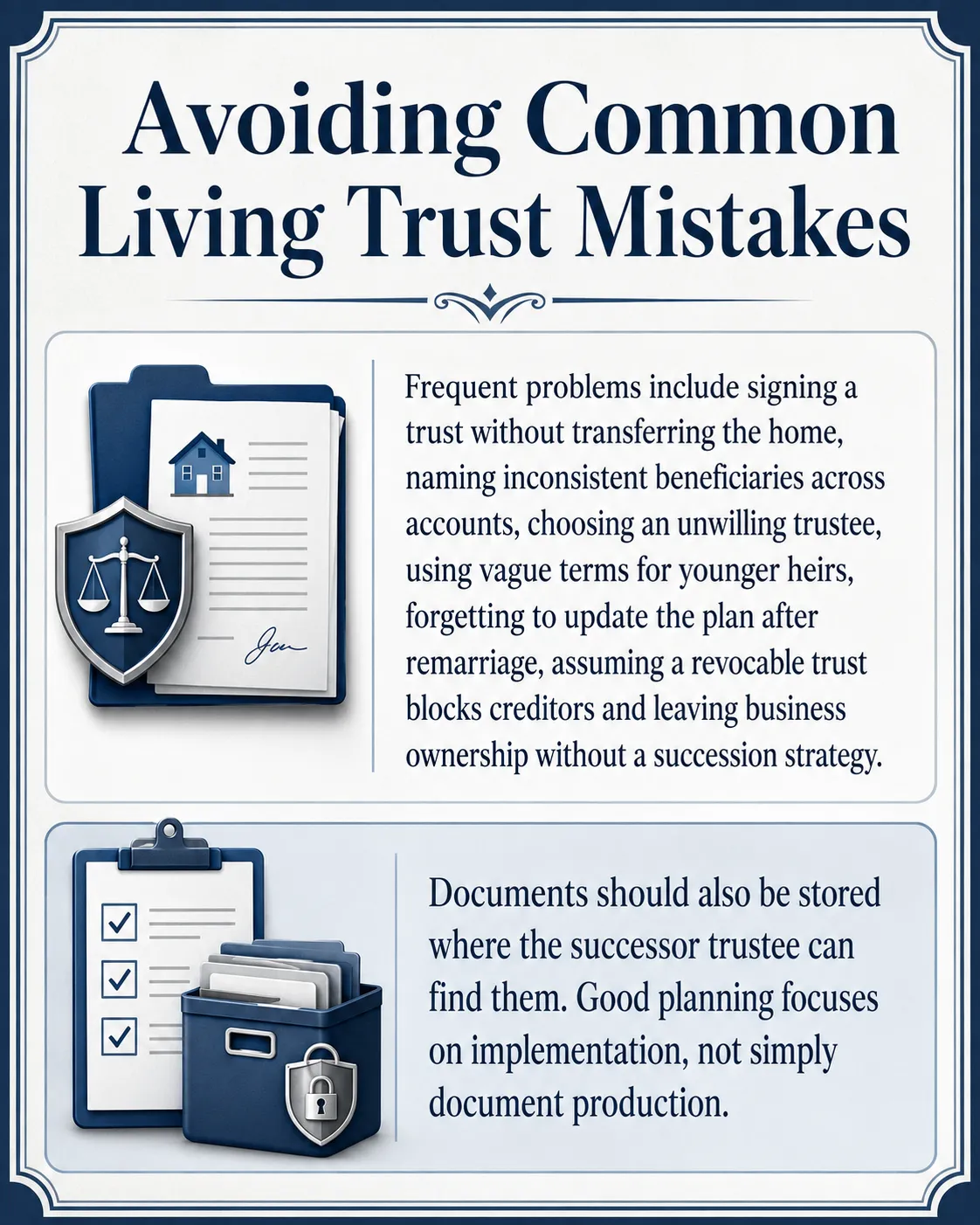
Frequent problems include signing a trust without transferring the home, naming inconsistent beneficiaries across accounts, choosing an unwilling trustee, using vague terms for younger heirs, forgetting to update the plan after remarriage, assuming a revocable trust blocks creditors and leaving business ownership without a succession strategy.
Documents should also be stored where the successor trustee can find them. Good planning focuses on implementation, not simply document production.
Creating a Plan That Works Beyond the Signing Appointment
The value of a living trust depends on clear drafting, responsible trustee selection, correct funding and coordination with the rest of the estate plan. Lancaster residents should consider how the plan would operate during incapacity, after death and through changing family circumstances.
Herbert Law Office has assisted Antelope Valley families with estate planning si
Working with an experienced LIVING TRUST ATTORNEY can help a client organize assets, understand available options, reduce avoidable gaps, and create instructions loved ones can realistically follow. Herbert Law Office can also review an existing plan when property, beneficiaries, trustees or family goals have changed. A useful first step is to prepare a current asset list, gather existing documents, review beneficiary designations and identify the people who could responsibly serve in decision-making roles.
Frequently Asked Questions
1. Can a successor trustee act as soon as the trust creator becomes ill?
Not necessarily. The trust normally states how incapacity must be established before authority shifts. Medical opinions or another defined procedure may be required. Reviewing this language in advance helps family members understand what evidence and steps will be needed.
2. What happens when an asset is left outside the trust?
The result depends on how the asset is titled, its value, and whether it has a beneficiary designation or another non-probate transfer method. A pour-over will may direct it to the trust, but probate could still be necessary before the transfer occurs.
3. Should a trust be named as a retirement account beneficiary?
Sometimes, but not automatically. Retirement accounts have special tax and distribution rules. A trust may be useful for a minor, disabled, financially vulnerable or specially protected beneficiary, but legal and tax advice should be coordinated before changing the designation.
4. Can one trust hold real estate outside California?
A trust may own property in more than one state, but the title and recording rules of each state must be followed. Proper ownership may help avoid a separate probate case, although local counsel or additional documents may be required.
5. How often should a revocable living trust be reviewed?
A review is appropriate after major family, property, financial or legal changes. Many people also review their plan every few years to confirm that trustees, beneficiaries, funding and supporting documents still reflect their wishes.




























Sign in to leave a comment.