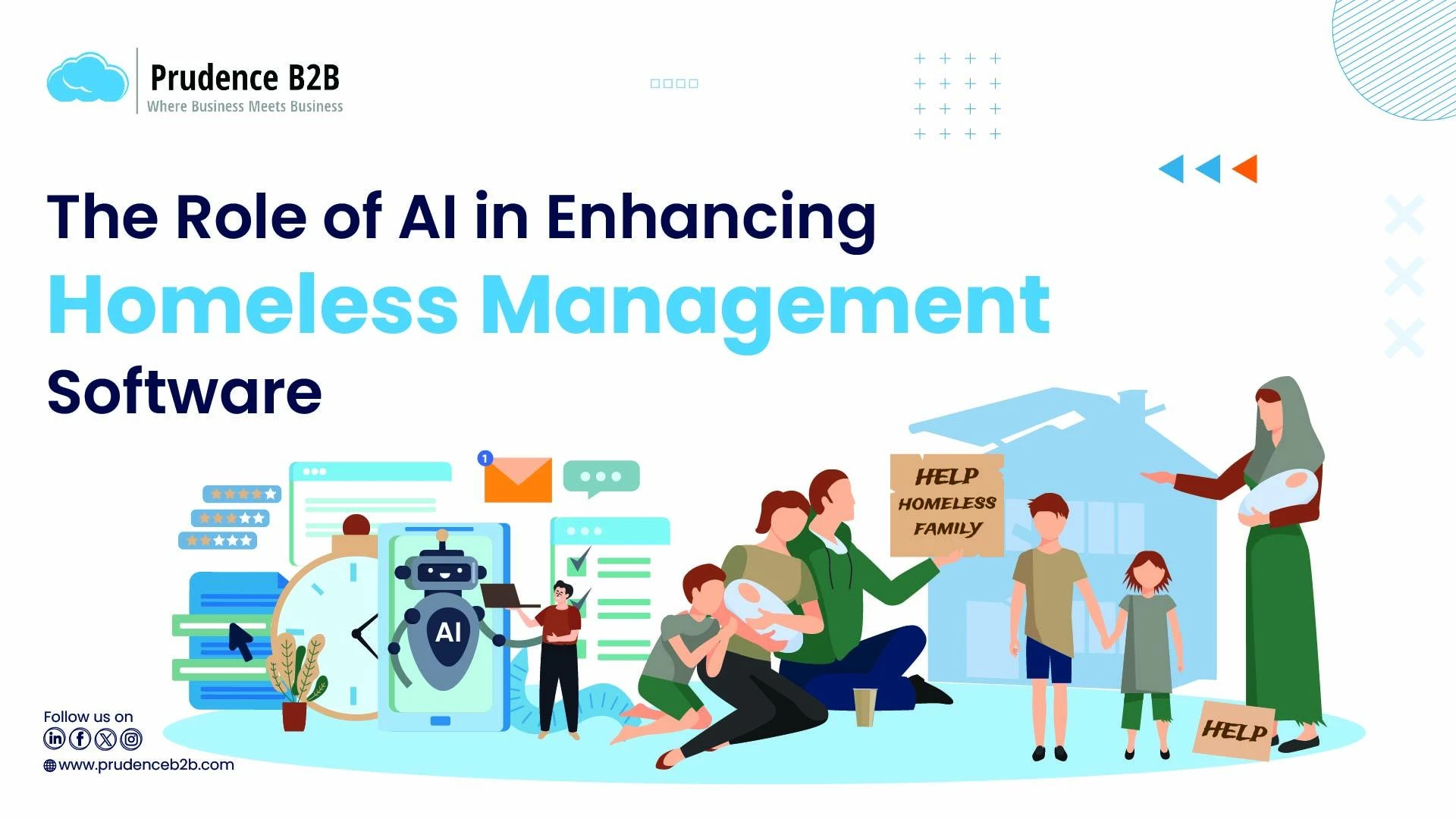

The issue of homelessness is a matter of concern for almost every city and community in the world today. The need for effective solutions is more important than ever. One of the commonly used solutions introduced by many organizations is Homeless Management Information Systems (HMIS). Such systems keep records of information on homelessness, which allows service providers to work together and better manage resources and outcomes. But the age of machines is making AI integration enhancement in HMIS, thus providing more accurate insights and efficiency as well as personalized approaches to the aspect of housing stability.
This blog post intends to concentrate on engaging with the topic of AI in homeless management software, more specifically, the emergence of AI enhanced applications such as ML, and how they revolutionize this managment systems to provide effective solutions for the problem of homelessness.
What is Homeless Management Software
Before considering the AI element, it is necessary to understand the basic principles of homeless management software. Homeless Management Information Systems (HMIS) are systems in use by organizations that provide support services to the homeless clients. They include a set of processes for recording the frequency of services, demographics and results of the clients, which help the service providers in assessing and managing the problem of homelessness in their regions.
Historically, however, HMIS has served more of a data collection role with very little functionality. Although beneficial, age-old systems are mostly reliant on manual data capturing and processing which is often laborious and error-prone. This is where the term AI comes into play as it allows incorporated software to reach higher efficiency and increase the ability to forecast and interpret the changes.
Understanding AI in Homeless Management Software
When we talk about homeless management software, AI can be viewed as a tool for more automation and enhanced analytical capabilities. With AI applications, this systems can analyze huge volumes of data within seconds and make findings that may not be possible to human analysts within the scope of the data. The purpose of implementing AI solutions is to relieve the service providers from the administrative tasks while rendering the services to the people who need them.
A significant aspect of AI in this regard is ML, which is a sub-field of AI that allows machines to improve their predictions overtime with increased exposure to data. A learning machine applies ML algorithms to historical data and estimates certain probabilities, such as the individuals who are most vulnerable to long-term homelessness. These predictions allow service providers to target interventions previously, in order to prevent homelessness from turning chronic or worse.
In addition, one of the advantages of AI solutions for homelessness is that they can also minimize record entry errors and help prevent the problem of record duplication which is often encountered in conventional HMIS. Record duplication is prevented through the use of automated data validation, smart data management technologies, and most importantly AI. As a result, records maintained by the organizations are consistent, updated, and accurate, which leads to improving the reliability of reporting and making decisions.
Key Features of AI in Homeless Management Software
To begin with, integrating AI in Homeless Management Information Systems provides a number of important aspects that improve the usability of the system:
Predictive Analytics for Homelessness Prevention
One incredibly important component that AI brings to any homeless management system is the possible use of *machine learning* to forecast any future tendencies. Based on drawn historical data, it becomes possible for the AI to look for some existing connections and changes and assist the agencies in figuring out which persons or aggregates are most likely to be at risk of homelessness. This becomes extremely helpful in deciding how best to assist various individuals or families at risk of homelessness before they actually become homeless.
Automated Case Management
Case management of homeless individuals has always been predominantly administrative, involving extensive data entry and updating, arranging services and monitoring results. AI solves the problem and mitigates the burden on case managers. For example, if an AI is able to know with specificity that certain changes are going to happen in an individual’s situation, it can raise alerts for the case workers ensuring no timely interventions are missed. This not only improves effectiveness but also enhances service delivery in that providers concentrate on attending to clients as opposed to filling forms.
Service Customization
With the power of AI and Health Management Information System (HMIS), service delivery can be enhanced and modified to meet the needs, expectations, and past experiences of the individual user. For instance, AI applications for the homeless, could be able to determine the most appropriate housing, jobs, or medical care interventions for a person. This aspect of service delivery aims at ensuring that the homeless population receives the most appropriate services regarding their situations increasing the chances of achieving positive results.
Improved Data Quality
The issues of data quality and precision are imperative in the context of homeless management information systems. AI assists in this factor by ensuring that every data put into the system is whole, uniform, and true. In the present case picture, machine learning may identify records that are either incomplete or do not match the previous pattern and then ask the case manager to correct them After entering their information, this helps avoid the issue of duplication and makes sure that the right quality of data is available for the decision makers when resources are being planned and distributed for use.
Resource Optimization
AI systems can also play a significant role in optimizing resources, a key challenge in preventive housing support. By analyzing trends and resource usage patterns, AI can help agencies allocate their limited resources—such as shelter beds, food, and healthcare services—more effectively. This ensures that resources are directed to where they are needed most, reducing wastage and improving service delivery across the board.
Benefits of AI in Homeless Management Software
The use of AI in homeless management information systems is beneficial in many ways considering these advancements shall help in addressing issues that are related to homelessness more effectively:
Enhanced Efficiency and Precision
HMIS systems that incorporate AI can accommodate extensive information within shorter periods and with minimum human involvement. This makes it possible for service providers to run more efficiently since minimal time and resources will be spent on data entry and evaluation which can be used in providing services to clients. Moreover, the quality of data stored in the system is more precise thanks to AI systems which minimizes the chances of committing mistakes that could otherwise lead to poor decisions or resources being wasted.
Intersectional Homelessness Mitigation
AI can assist service providers in taking a proactive approach towards the mitigation of homelessness with tools such as predictive analytics. Instead of having to wait for the problem of homelessness and then, after a huge effort utilizing prevention resources on finding homes for people who have become homeless in a short space of time, instead, thanks to AI guests and the homeless asking for resources can be put in place beforehand. This reducesnot just the picture of homelessness- but also the expenses incurred from solving such issues the ‘hard’ way (i.e, through outreach, crisis interventions, and the more expensive emergency shelters).
Personalized Services for Clients
There's hardly a universal remedy to solve the problem of homelessness. Through AI, service providers can offer services with the consideration of each client’s personal qualities and situations. This tailored service delivery improves the probability of achieving the targeted goal, be it acquiring a house, a job or mental health care services. Delivering personalized services actively engages clients and contributes to retention of at-risk populations.
More Information for Leaders and Foresight
Policy decisions have no limits because even the government decision-making tariffs increases through the use of AI. This decrease helps design appropriate programs and modes of services for countries and their regions. When such insights are available, strategies aimed at alleviating the plight of homelessness are more progressive and responsive to the problem at hand, steeping both individuals as well as the problem in a structural discourse.
Conclusion
The implementation of artificial intelligence in homeless management information systems is impacting the strategies employed by organizations dealing with the problem of homelessness prevention. Due to the availability of technologies such as ML, AI can predict the onset of homelessness and case management can be somewhat automated as well as service rendered in a way that individuals needs are sorted out. These inventions streamline processes, improve the quality of the data collected and the resources used very efficiently hence AI can be said to be a key weapon in combatting homelessness.
As the issues associated with homelessness change, the use of AI solutions for homelessness will increase, allowing those providing the services to deal with the problem in a more efficient, tactical, and anticipatory manner. With upgraded HMIS systems such as HMIS systems with AI Attached Technology, we will strategically attain goals for reducing the number of homelessness cases and even ensuring that all individuals find and use the services they require for housing and well-being.











Sign in to leave a comment.