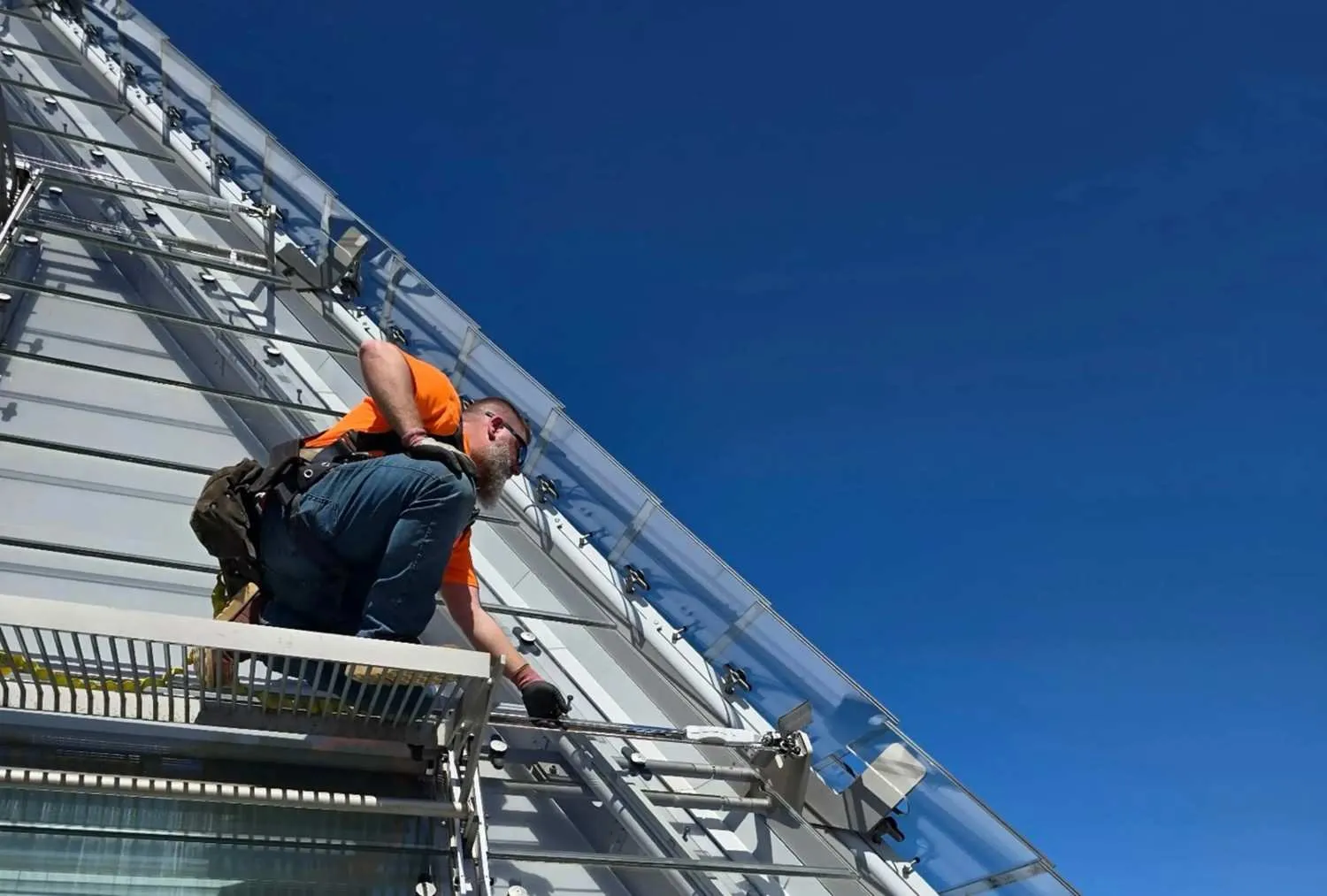

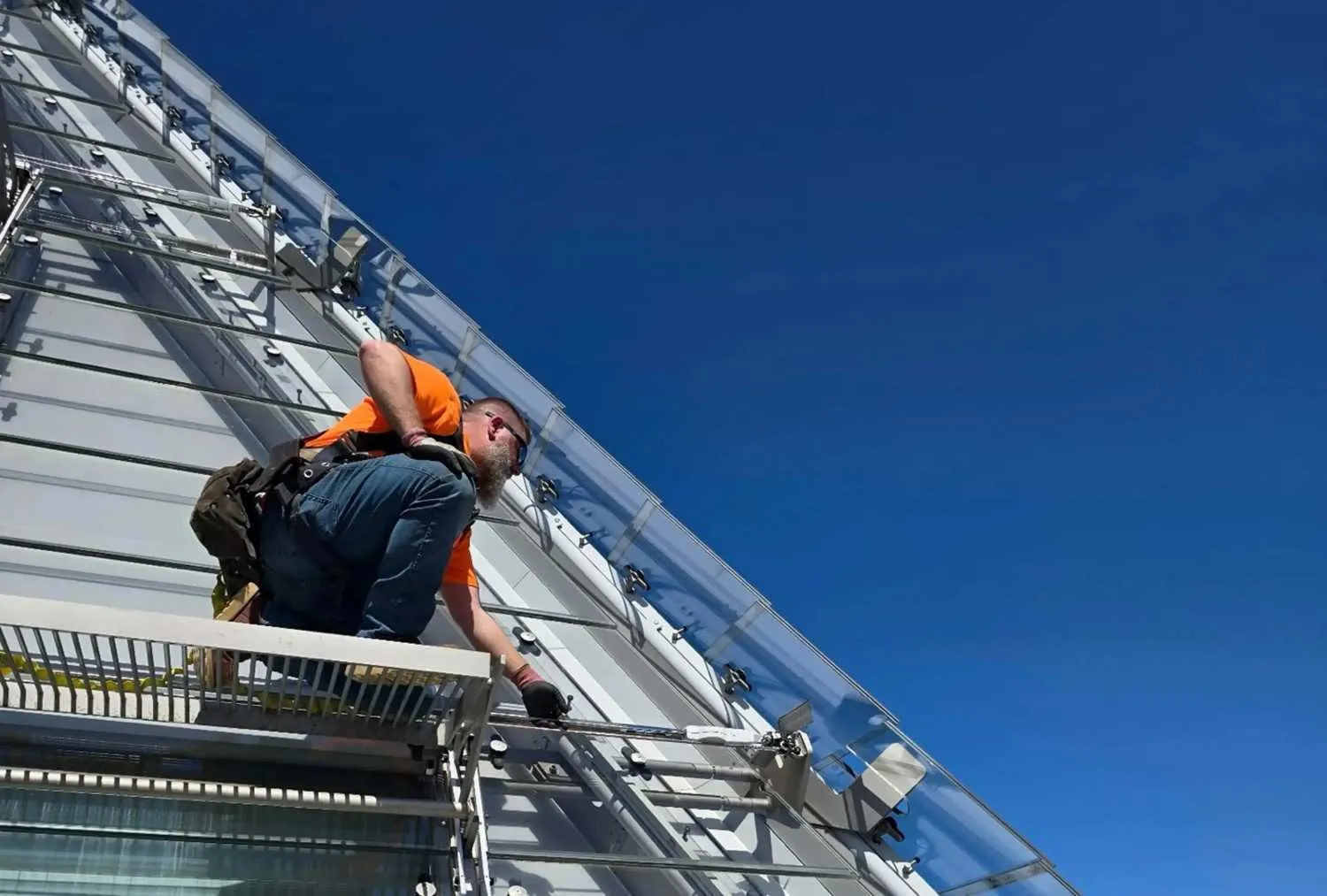
For commercial property managers, roof safety is not simply a maintenance issue. It is an important part of protecting workers, maintaining building operations, and meeting applicable fall protection requirements.
Roof anchors are particularly important on commercial buildings where workers may need regular rooftop access for window cleaning, façade maintenance, waterproofing, restoration, inspections, repairs, or other exterior services. A roof anchor that is poorly positioned, improperly installed, damaged, or inadequately documented can create serious safety and operational concerns.
For property managers, the challenge is knowing what to evaluate, when inspections are necessary, and whether an existing roof anchor system is appropriate for the work being performed.
This guide explains the fundamentals of roof anchor design, installation, inspection, testing, and certification and what commercial property teams should consider when managing these systems.
Read More – https://abovetherestbuildingservices.com/blog/roof-anchor-design-installation-and-testing-requirements/
What Are Roof Anchors?
Roof anchors are engineered attachment points used as part of fall protection or building-access systems. Depending on the application, they can support personal fall protection equipment or work with systems such as horizontal lifelines, davit arms, and other façade access equipment.
Their purpose is straightforward: provide a reliable connection point for workers operating where a fall hazard exists.
However, an anchor should never be treated as simply a metal component attached to a roof. Its suitability depends on several factors, including:
- Building structure
- Anchor location
- Roof configuration
- Intended use
- Fall protection system
- Installation method
- Structural capacity
- Environmental exposure
- Inspection history
- Testing and certification requirements
OSHA's fall protection requirements address anchorage strength and system design, but the exact requirements depend on the type of work and fall protection system being used.
Why Roof Anchor Design Matters
A roof anchor system should be designed around the building and the work that workers actually need to perform.
For example, a system intended for window washing may require different anchor locations and access considerations than a system designed primarily for rooftop fall arrest.
A proper design process should consider:
Building Structure
The anchor must connect to an appropriate structural element capable of supporting the intended loads. The roof membrane alone should not be assumed to provide adequate structural support.
Worker Access
Anchor locations should allow workers to reach the areas requiring maintenance while maintaining appropriate protection.
Work Position
The system should account for whether workers are performing window cleaning, façade repairs, waterproofing, inspections, or other high-access activities.
Fall Protection Requirements
The design should consider whether the system is being used for fall arrest, fall restraint, work positioning, or another application.
Future Maintenance
A well-designed system should consider recurring building maintenance rather than only one project.
OSHA guidance emphasizes planning suitable anchorage points in advance and recommends that a registered professional engineer experienced in fall protection systems or another appropriately qualified person design anchor points when necessary.
Roof Anchor Installation Is More Than Attaching Hardware
Installation quality can directly affect the performance of an anchor system.
Before installation, the project should establish:
- Correct anchor type
- Correct location
- Structural attachment method
- Required hardware
- Roof and façade conditions
- Engineering requirements
- Manufacturer specifications
- Applicable fall protection requirements
Installation should then be completed according to the approved design and applicable specifications.
This is particularly important on existing buildings, where drawings may be incomplete or conditions may differ from the original construction documents.
A qualified professional may need to evaluate the existing structure before an anchor location is selected.
Common Types of Permanent Roof Anchors
Commercial buildings may use different anchor configurations depending on their structure and maintenance requirements.
Vertical Steel Pier Anchors
Vertical steel pier anchors can be designed with base plates configured for the building's structural conditions.
They may be appropriate for applications such as:
- Window washing
- Suspended maintenance
- Rooftop tie-back systems
- Fall protection applications
U-Bar Anchors
U-bar anchors provide another configuration for permanent attachment points. Depending on the design, they may be fixed or swivel-mounted.
They can be useful where compact attachment points are required or where the building's configuration makes other anchor designs less practical.
The appropriate anchor type should be determined by the building structure, intended use, engineering requirements, and applicable system specifications.
OSHA Roof Anchor Requirements
One of the most important considerations for property managers is understanding which OSHA requirement applies to the anchor system.
For rope descent systems, OSHA 29 CFR 1910.27(b)(1) states that the building owner must provide written information confirming that each anchorage has been identified, tested, certified, and maintained so it can support at least 5,000 pounds in any direction for each employee attached. The information must be based on an annual inspection by a qualified person and certification by a qualified person as necessary and at least every 10 years.
For personal fall arrest systems under OSHA 29 CFR 1926.502, anchorages must generally be capable of supporting at least 5,000 pounds per employee attached, or be designed, installed, and used as part of a complete system with a safety factor of at least two under the supervision of a qualified person.
This distinction matters.
A property manager should not assume that one testing schedule or one standard applies to every roof anchor on every building.
The applicable requirements depend on the system, work activity, jurisdiction, engineering design, manufacturer requirements, and other applicable standards.
Annual Roof Anchor Inspections
Routine inspection is an important part of maintaining rooftop safety.
An inspection should look for conditions that could affect the anchor or its connection to the building, including:
- Corrosion
- Cracking
- Deformation
- Loose or missing hardware
- Damaged welds
- Deterioration around attachment points
- Evidence of movement
- Structural concerns
- Changes to surrounding roof conditions
- Unauthorized modifications
For rope descent system anchorages, OSHA specifically requires information to be based on an annual inspection by a qualified person.
Inspections should also be documented so property managers can maintain a clear record of the system's condition.
Roof Anchor Testing and Certification
Testing provides information about whether an anchorage meets the applicable strength requirements.
However, testing should not be reduced to simply applying a particular load because a generic checklist says so.
OSHA explains that its rope descent system anchorage standard does not specify a single testing procedure. A qualified person may use scientifically valid testing criteria accepted by an industry consensus organization or established by a registered professional engineer.
That means the testing methodology should be appropriate to the anchor, structure, intended use, and governing requirements.
Certification should document the relevant findings and establish whether the anchor is suitable for its intended application.
What Is a Qualified Person?
OSHA defines a qualified person as someone who, through a recognized degree, certificate, professional standing, or extensive knowledge, training, and experience, has demonstrated the ability to resolve problems related to the work, project, or equipment.
For property managers, this distinction is important.
Roof anchor inspections and certifications should not simply be assigned to anyone who can visually examine the hardware. The person performing the work should have the appropriate qualifications and experience for the specific system being evaluated.
When Should Property Managers Schedule an Evaluation?
A roof anchor evaluation may be appropriate when:
- A building has aging anchor systems
- Inspection records are missing
- Certification documentation is outdated
- The building is changing maintenance contractors
- New façade work is planned
- Existing anchors show corrosion or damage
- The roof has undergone modifications
- The intended use of the anchors has changed
- New fall protection requirements apply
- Workers need access to areas not adequately covered by existing anchors
If documentation is incomplete, it may be better to evaluate the existing system rather than assume that previously installed anchors remain suitable.
What Property Managers Should Keep in Their Records
A strong roof anchor management program should maintain documentation such as:
- Anchor locations
- System drawings
- Installation records
- Engineering documentation
- Inspection reports
- Testing records
- Certification documentation
- Identified deficiencies
- Corrective actions
- Future inspection dates
- Applicable manufacturer information
Good documentation makes it easier for property managers to demonstrate that rooftop safety systems are being actively managed.
Roof Anchor Design, Installation and Testing in New England
Commercial properties throughout Massachusetts and New England face demanding environmental conditions, including moisture, snow, ice, freeze-thaw cycles, and corrosion risks.
These conditions make regular inspection particularly important for exterior safety equipment.
Property managers in Boston, Cambridge, Massachusetts, Rhode Island, Connecticut, New Hampshire, Maine, and Vermont should consider roof anchor condition as part of their broader exterior building maintenance program.
A roof anchor system is not an isolated piece of equipment. It is part of the building's overall approach to safe access and exterior maintenance.
Why an Integrated Roof Anchor Service Matters
Managing design, installation, inspections, testing, and documentation through disconnected vendors can create communication gaps.
An integrated approach can provide greater continuity between the original design and ongoing maintenance.
Above The Rest Building Services provides roof anchor design, installation, testing, and related commercial building services throughout New England. Its roof anchor services begin with evaluating the property's layout and structural conditions before developing an appropriate system design and installation approach.
Frequently Asked Questions
How often should roof anchors be inspected?
For rope descent system anchorages, OSHA requires information based on an annual inspection by a qualified person. Certification is required as necessary and at least every 10 years. Other systems may have different inspection or testing requirements based on applicable standards, engineering specifications, and manufacturer instructions.
Does OSHA require every roof anchor to be tested to 5,000 pounds?
Not necessarily in the same manner. OSHA establishes a 5,000-pound-per-employee anchorage capacity requirement for certain systems, but the testing method is not universally prescribed by OSHA. A qualified person may use scientifically valid testing criteria appropriate to the system.
Who should inspect roof anchors?
The inspection should be performed by a qualified person with the appropriate knowledge, training, experience, and professional qualifications for the work involved.
What happens if roof anchor documentation is missing?
Missing documentation should not automatically be interpreted as proof that an anchor is unsafe, but it does create uncertainty. A qualified professional can evaluate the existing system and determine what inspection, testing, engineering review, or documentation is necessary.
Can existing roof anchors be reused?
Potentially, but their condition, structural attachment, intended use, history, and applicable requirements should be evaluated before reuse.
Conclusion
Roof anchor systems deserve the same level of attention as other critical building safety systems. For property managers, the objective is not simply to have anchors on a roof. The objective is to ensure that the right system is properly designed, installed, inspected, tested, documented, and maintained for its intended use.
A proactive roof anchor program can give building owners and property teams greater confidence when workers need to perform maintenance at height.
For commercial properties throughout New England, Above The Rest Building Services provides roof anchor design, installation, inspection, and testing services as part of its specialty building maintenance capabilities.
























Sign in to leave a comment.