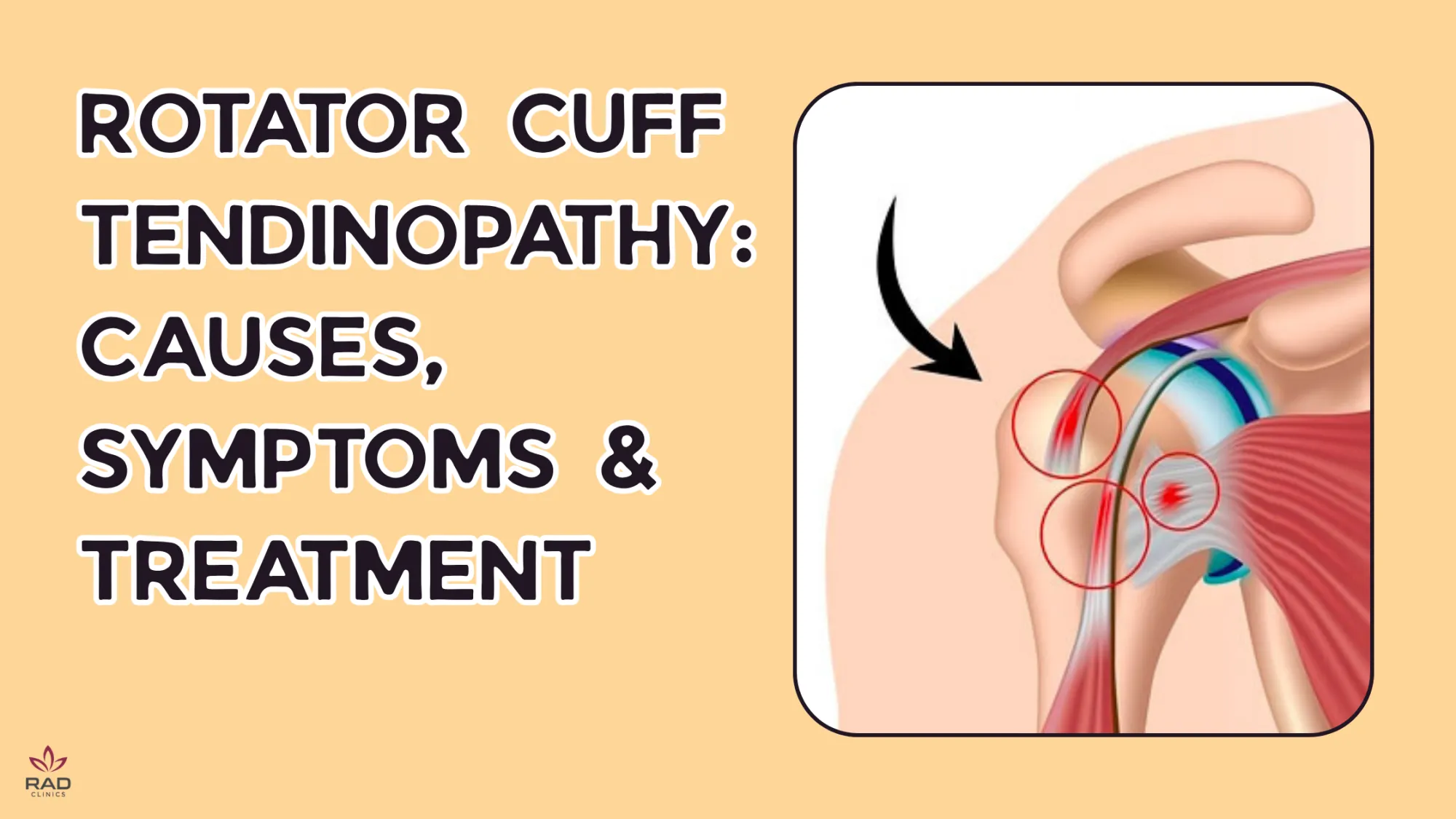

Shoulder pain that builds gradually, worsens when you lift your arm above your head, and lingers even at rest is one of the most common musculoskeletal complaints seen in UK primary care. In many cases, the source of that pain is the rotator cuff — a group of four muscles and their tendons that stabilise and move the shoulder joint. When these tendons become irritated, degenerated, or overloaded, the resulting condition is known as rotator cuff tendinopathy.
Rotator cuff disorders account for over 70% of all shoulder pain presentations in primary care in the UK, according to published musculoskeletal research. Understanding what is happening in your shoulder — and what treatment options exist — is the first step towards getting back to the activities that matter to you.
What Exactly Is Rotator Cuff Tendinopathy?
The rotator cuff is made up of four rotator cuff muscles and their attached tendons: the supraspinatus, infraspinatus, subscapularis, and teres minor. Together they wrap around the head of the humerus — the upper arm bone — holding it firmly within the shallow socket of the shoulder blade (the glenoid) whilst allowing a remarkable range of movement.
Rotator cuff tendinopathy is a degenerative and often painful condition of one or more of these tendons, typically the supraspinatus. Unlike an acute rotator cuff tear, tendinopathy develops when the tendon tissue becomes structurally disrupted at a cellular level — often through a combination of overuse, repetitive loading, and inadequate recovery. The tendon changes in composition, losing its normal collagen organisation and becoming thickened, disorganised, and pain-sensitive.
It is worth distinguishing tendinopathy from rotator cuff tendinitis, a term still used in everyday language. Tendinitis implies acute inflammation, whereas tendinopathy more accurately describes the chronic degenerative process that most patients are actually experiencing. The distinction matters because treatment strategies differ.
Where Does the Pain Come From — and Why Does It Hurt Lifting Your Arm?
Rotator cuff pain is typically felt at the front or outer side of the shoulder and can radiate down into the upper arm. It is often described as a deep aching sensation that sharpens with specific movements — particularly when raising the arm out to the side or reaching overhead.
The characteristic aggravation during arm elevation is largely explained by what happens in the subacromial space — the narrow passage beneath the acromion (the bony roof of the shoulder). The supraspinatus tendon runs through this space, and when the arm is lifted, the tendon and the subacromial bursa (a fluid-filled cushioning sac) can be compressed between the humeral head and the acromion. When the bursa is inflamed and the tendon is thickened due to tendinopathy, this compression is painful. This overlap of tendinopathy and bursitis is very commonly seen together.
Other typical features of rotator cuff tendinopathy include:
- Pain at night, especially when lying on the affected side
- Weakness in the shoulder when lowering the arm against resistance
- Difficulty with everyday tasks such as reaching into a cupboard, fastening clothing, or carrying bags
- A dull background ache that is present much of the time, even at rest
Who Is Most Likely to Develop a Rotator Cuff Injury?
Rotator cuff injury and tendinopathy affect a wide range of people, though certain groups are at greater risk. Age is a significant factor — tendon quality naturally declines with time, and the prevalence of both symptomatic and asymptomatic tendon changes rises markedly from middle age onwards. Occupational and sporting demands also play a central role.
People at higher risk include:
- Overhead workers — painters, plasterers, electricians, and those who regularly work with raised arms
- Racquet sport players, swimmers, and throwing athletes where repetitive shoulder loading is high
- Gym-goers and weightlifters performing heavy pressing or pulling movements without adequate programming
- Those who have experienced a previous rotator cuff injury, even if it appeared to resolve fully
- People over 40, in whom tendon degeneration is more prevalent even without specific trauma
A rotator cuff tear — either partial or full thickness — can also present similarly to tendinopathy, which is one reason accurate diagnosis matters before committing to a treatment plan.
How Is Rotator Cuff Tendinopathy Diagnosed?
What Physical Tests Are Used for a Rotator Cuff Injury Test?
A clinical assessment of rotator cuff tendinopathy typically begins with a detailed history of your symptoms — when they started, what makes them better or worse, and how they affect your daily life. Your clinician will then carry out a physical examination including range-of-movement testing and specific rotator cuff injury tests designed to load or stress the affected tendon.
Common clinical tests include the Hawkins-Kennedy test (which reproduces impingement-type pain by rotating the arm inward with the elbow raised), the Jobe or empty-can test (which assesses supraspinatus strength and pain), and the Neer impingement sign. No single test is definitive, but a pattern of findings across several tests gives a reliable clinical picture.
Is Imaging Necessary to Confirm the Diagnosis?
Imaging is not always required for straightforward presentations, but it plays an important role when the diagnosis is uncertain, when a rotator cuff tear is suspected, or when treatment planning needs to be precise.
Musculoskeletal ultrasound scanning is the first-choice imaging modality for rotator cuff assessment in UK private practice. It allows real-time visualisation of the tendons, the subacromial bursa, and the rotator cuff muscles whilst the shoulder is being moved — a significant advantage over static imaging. Ultrasound can identify tendinopathy, partial tears, full-thickness tears, and bursitis, and it can be performed in the same appointment as any injection treatment if one is indicated.
MRI may be used for complex cases, particularly when surgical planning is under consideration.
What Are the Treatment Options for Rotator Cuff Tendinopathy?
The good news is that the majority of people with rotator cuff tendinopathy respond well to non-surgical treatment. The appropriate pathway depends on the severity of symptoms, how long they have been present, whether bursitis is co-existing, and how much the condition is affecting daily life and function.
| Treatment Approach | Available via NHS | Available via Private Clinic |
| Exercise rehabilitation & physiotherapy | Yes — with referral; typical wait 8–13 weeks | Yes — often within days |
| Corticosteroid (steroid) injection | Yes — via GP or MSK service; wait varies | Yes — same-week appointment common |
| Ultrasound-guided subacromial injection | Variable — guidance not always available | Yes — ultrasound guidance standard |
| Musculoskeletal ultrasound diagnosis | Via radiology referral; wait often 6–18 weeks | Yes — same or next-day appointment |
| PRP (Platelet-Rich Plasma) injection | Not routinely commissioned | Yes — available at specialist clinics |
| Pain management physiotherapy | Via GP referral to MSK or pain service | Yes — direct access, no referral needed |
NHS waiting times are approximate and vary significantly by integrated care board and locality.
What Role Does Physiotherapy Play in Recovery?
Exercise-based rehabilitation is the cornerstone of rotator cuff tendinopathy management, recommended as first-line treatment by the British Elbow and Shoulder Society (BESS) and consistent with NICE musculoskeletal guidelines. The aim is to progressively load the rotator cuff muscles and tendons in a structured way, improving their capacity to tolerate the demands being placed upon them.
A structured programme will typically include specific rotator cuff exercises targeting the supraspinatus, infraspinatus, and subscapularis, alongside scapular control work and postural correction. Exercises are progressed gradually — beginning with low-load, high-repetition movements and advancing towards more demanding functional tasks as pain and strength improve.
The NHS MSK physiotherapy waiting list currently stands at over 372,000 people across England, meaning that for many patients, accessing NHS physiotherapy quickly enough to prevent further deterioration is a significant challenge. Many patients choose to begin private physiotherapy promptly and use that window to start recovery before any NHS appointment becomes available.
When Are Injections Recommended?
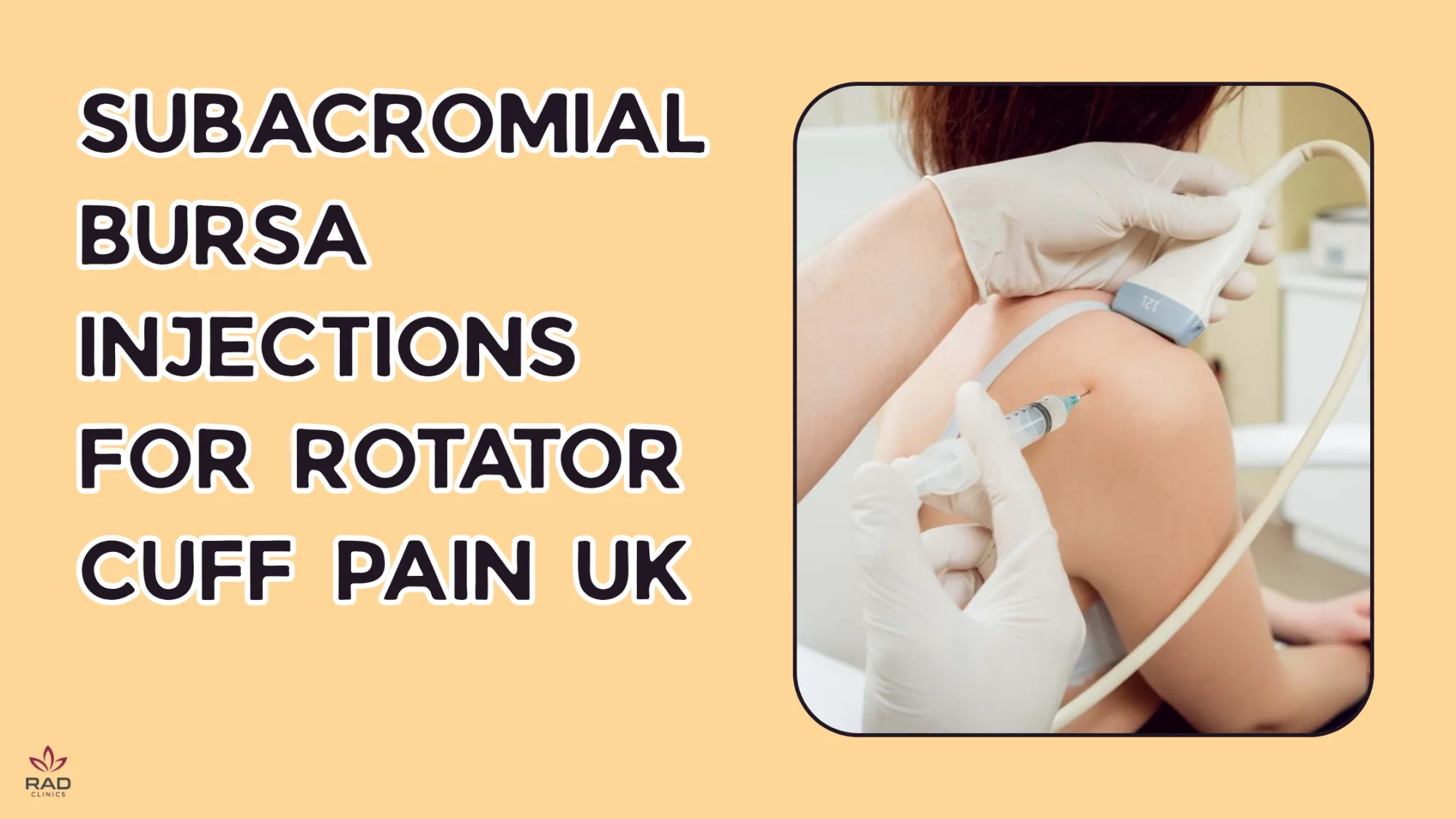
For patients who have not responded adequately to initial exercise therapy, or where pain levels are too high to engage meaningfully with rehabilitation, a subacromial injection is often the next step. Corticosteroid injections into the subacromial bursa are widely used and supported by good clinical evidence for providing short-term pain relief in rotator cuff tendinopathy and subacromial impingement.
The key advantage of reducing pain through injection is that it creates a therapeutic window — a period during which the shoulder is comfortable enough for the patient to engage fully with physiotherapy and rebuild strength. In many cases, this combination of injection followed by structured rehabilitation produces better outcomes than either treatment alone.
Ultrasound guidance significantly improves injection accuracy. The subacromial bursa is a thin structure — often only a few millimetres in depth — and blind injection techniques carry a meaningful risk of missing the target. Ultrasound-guided subacromial bursa injections ensure the medication is placed precisely where it is needed, reducing the risk of inadvertent tendon injection or inadequate drug delivery.
Are There Other Injection Options Beyond Corticosteroid?
For patients who cannot receive corticosteroid (due to prior exposure limits, diabetes concerns, or personal preference), alternative injectable treatments are available. Platelet-Rich Plasma (PRP) therapy uses a concentrated preparation of the patient's own blood platelets, which release growth factors thought to support tendon healing. High-volume tendon injection uses a large volume of saline to mechanically disrupt abnormal blood vessel ingrowth associated with tendinopathy pain. These options may be considered when conventional steroid injection is not appropriate or has not provided sufficient benefit.
How Long Does Recovery from Rotator Cuff Tendinopathy Take?
Recovery timelines vary considerably depending on how long symptoms have been present, whether there is an associated partial rotator cuff tear or bursitis, and how consistently the patient engages with their rehabilitation programme. As a general guide:
| Stage | Typical Timeframe | Focus |
| Pain relief phase | Weeks 1–4 | Reduce inflammation; gentle range of movement; injection if indicated |
| Loading phase | Weeks 4–10 | Progressive rotator cuff exercises; scapular stabilisation |
| Strengthening phase | Weeks 10–16 | Functional strength; sport or occupation-specific loading |
| Return to full activity | 4–6 months (variable) | Gradual return to overhead activity, sport, or heavy work |
Many patients report meaningful improvement within four to six weeks of starting treatment, particularly when a subacromial injection has been combined with a supervised exercise programme. Full recovery — especially for those returning to demanding overhead sport or manual work — often takes several months and requires consistent effort with home exercises between sessions.
Should I Use the NHS or Seek Private Treatment for My Shoulder?
The NHS provides good-quality musculoskeletal care, and for patients whose symptoms are mild and not urgently limiting, the NHS pathway is a reasonable choice. However, waiting times for NHS MSK physiotherapy and specialist appointments can be significant — often stretching to three months or more in many parts of England.
For people whose shoulder pain is affecting their sleep, their work, or their ability to care for themselves or others, accessing private assessment and treatment promptly is often the more practical path. Private physiotherapy does not require a GP referral, and private MSK clinics offering diagnostic ultrasound alongside injection treatment can provide a complete assessment and, where appropriate, treatment in a single appointment.
If you are uncertain whether your shoulder pain is due to rotator cuff tendinopathy, a partial tear, bursitis, or something else entirely, early accurate diagnosis is valuable regardless of which pathway you choose — it avoids weeks of treating the wrong condition.
Is What You've Been Told About Rotator Cuff Tendinopathy Actually True?
| Common Belief | What the Evidence Shows |
| "Rest is the best treatment for shoulder tendinopathy" | Prolonged rest is generally unhelpful. Tendons respond to graduated loading. Structured exercise is first-line treatment. |
| "If the scan shows nothing, nothing is wrong" | Early-stage tendinopathy may not be visible on MRI. Ultrasound scanning is more sensitive for tendon pathology in real-time movement. |
| "A rotator cuff tear means I need surgery" | Many partial tears respond well to non-surgical management including physiotherapy and injection. Surgery is reserved for specific full-thickness tears. |
| "Injections damage the tendon" | Accurately placed subacromial bursa injections carry a low risk of tendon damage. Corticosteroid injected directly into a tendon is risky — which is why ultrasound guidance matters. |
| "Shoulder pain always gets better on its own" | Rotator cuff tendinopathy can persist for months or years without appropriate treatment. Early intervention generally leads to better outcomes. |
What Should You Do Next?
If you are experiencing persistent shoulder pain that is limiting your daily life, getting an accurate diagnosis is the most important first step. RAD Clinics offers musculoskeletal ultrasound scanning, specialist clinical assessment, and a range of evidence-based treatment options — including physiotherapy and injection therapy — from clinicians registered with the Health and Care Professions Council (HCPC) and affiliated with the Chartered Society of Physiotherapy (CSP).
For more information about the diagnosis and treatment of shoulder pain, including the full range of treatments available, visit the RAD Clinics.


























Sign in to leave a comment.