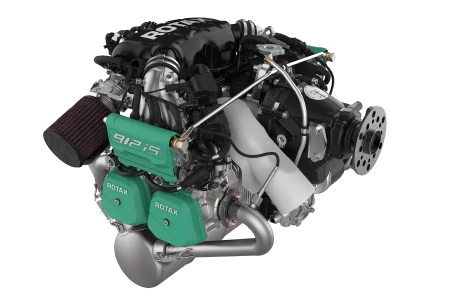

At BeachRay Asia, we understand that a reliable engine is the heart of any aircraft. That’s why we proudly offer the world-renowned Rotax engine range to meet the growing demands of pilots, aviation hobbyists, and manufacturers across Asia. With a proven history of performance, fuel efficiency, and innovation, Rotax engines have become the top choice for light sport aircraft, ultralights, amphibians, and experimental planes.
Whether you are looking to power a new build or replace an aging engine, Rotax delivers unmatched value and versatility.
What Makes the Rotax Engine Stand Out?
The Rotax engine, produced by BRP-Rotax in Austria, is best known for its lightweight, four-stroke design and excellent fuel economy. These engines are specifically engineered for light aircraft, offering power outputs ranging from 80 hp to over 140 hp across different models like the Rotax 912, 914, and 915 iS.
Rotax engines feature a dual ignition system, air- and liquid-cooling, and integrated gearboxes. This combination provides smoother operation, better cooling performance, and higher safety margins—ideal for both new and experienced pilots.
Fuel Efficiency That Saves You Money
A major advantage of the Rotax engine is its low fuel consumption. Compared to traditional aviation engines, Rotax models burn significantly less fuel, with average usage as low as 15 liters per hour. That adds up to substantial savings over time, especially for frequent flyers or flight training operators.
Rotax engines also support the use of both Avgas and automotive unleaded gasoline, giving pilots more flexibility and cost control depending on regional fuel availability.
Lightweight Design, Heavy-Duty Performance
Weight is a crucial factor in aircraft performance, and the Rotax engine excels in this area. Weighing around 60–70 kg (dry weight), these engines offer one of the best power-to-weight ratios in the market. This allows for greater payload capacity, improved fuel economy, and smoother overall handling in flight.
Despite their lightweight build, Rotax engines are built to be tough. They are capable of handling varied altitudes, temperatures, and flying conditions—whether you're operating in tropical climates, mountain regions, or coastal zones.
Easy Maintenance and Long Service Life
Rotax engines are designed with modular components and simplified maintenance in mind. This makes inspections, repairs, and overhauls quicker and easier—reducing aircraft downtime and labor costs.
With a Time Between Overhauls (TBO) of up to 2,000 hours, a Rotax engine can serve your aircraft reliably for many years with routine care. Additionally, their global popularity ensures that parts, support, and service expertise are widely available.
Versatile Applications
Rotax engines are incredibly versatile. They are commonly used in:
- Light sport aircraft (LSA)
- Ultralights and microlights
- Amphibious and floatplanes
- Gyrocopters
- UAVs and drones
- Experimental and kit aircraft
Their adaptability across these platforms speaks volumes about their design, efficiency, and engineering quality. Whether you're a recreational flyer or running an aviation business, Rotax has a model to suit your exact needs.
Why Choose BeachRay Asia for Your Rotax Engine?
At BeachRay Asia, we’re more than just a supplier—we’re your aviation partner. We provide:
- Genuine Rotax engines and accessories
- Expert consultation for engine selection and installation
- Ongoing technical support and servicing
- Competitive pricing and fast delivery across Asia
With a team of aviation professionals and technicians ready to assist you, we ensure your engine purchase and integration process is seamless from start to finish.

























Sign in to leave a comment.