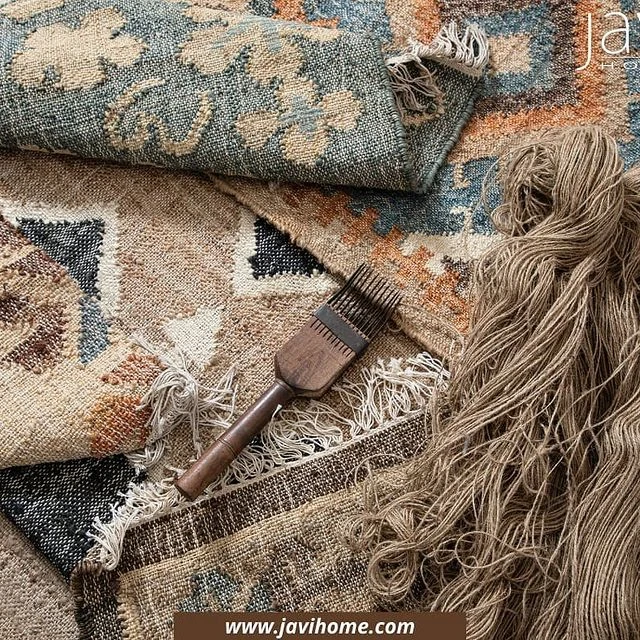

Various rug making techniques
The only item of art you are allowed to eat, sleep, or step on is a rug. A rug takes up the most space on your floor and is a little mysterious. For instance, how was the rug made? What is the distinction between knotted, loomed, and tufted fabrics? Javi home will take a look at the many sorts of weaving and the rugs technique used to manufacture them in this article.
Rug construction specifies how the rug is constructed, which makes a significant difference. Whether it’s a hand-knotted or a hand-woven rug, the development is important because it determines the look, surface, quality, and durability of your floor covering.
Here are various types of rug weaving techniques by Javi that artisans use to create rugs with various rug materials, colors, and textures, resulting in several kinds of rug developments and then utilizing the rug completing cycles.
Here are some major types of rug weaving techniques –
Hand Tufted Rugs
Hand-tufted rug weaving is less difficult than hand-knotted rug weaving. A hand-tufted rug is made partially by hand and partially by a mechanized tufting tool. Wool is commonly used to make tufted floor coverings. A hand-tufted rug is created in a completely different way than a hand-knotted area rug. A hand-tufted area rug is made by punching wool fibers into a canvas that is stretched over a casing with the help of a hand-operated tufting tool. To expedite the rug-making process the tufting gun has a needle on its front. Tufting takes less time and does not require the same level of expertise as hand-knotting rugs.
The rug is removed from the frame after the wool has been drilled. A hand-tufted floor covering requires backing to keep the tufts in place. A fringe is added to the rug to finish it off, either patching or sticking it on.
Hand-Knotted Rug
Hand-knotted rugs are made using one of the most traditional and captivating weaving techniques for area rugs. The hand-knotted weaving style is primarily found in oriental countries and has been imitated by Europeans. Hand-knotted rugs are created in a rug factory on a special type of loom. The specific design of the area rug is already known in this weaving method, so the stands can be placed on the loom to create the entire rug. On the loom, the rug material is wrapped vertically. The craftsman knows the wrapped strands and then cuts them before proceeding to the final knot. The artisan then weaves horizontal rows of wefts across the knots to create a pile impact. The majority of these wefts are made of silk, wool, or cotton. Following that, artisans begin knotting the material strands to create a sophisticated rug design.
HAND LOOMED AND FLAT WEAVE
The technique requires 1–4 persons depending on the size of the rug and is done on a loom. The yarn or weft is flung through the center of the bottom and the top warps on the loom. The beater is then used to condense the rug, and the weft and warp are woven together. This is considered a flatweave on its own. The difference between a flatweave and a loomed rug is the pile. The weaver creates the pile using the same procedure as before, but instead of yarn, the weaver inserts a rod or pipe into the warp’s midsection. This raises the yarn and causes a pile to form. Throughout the rug, the weaver will use both techniques (yarn and pipe) interchangeably. To finish, the pipe loops are either left or cut to create a fuller finish.
Javi Home uses a variety of rug techniques and materials to create its carpets and rugs. Carpets and rugs are works of art to us, and we ensure that we produce them using the best ways possible for you and your customers. Each collection has a unique backstory, and we strive to combine old and modern processes to create high-quality items.








Sign in to leave a comment.