
You know what's wild?
The moment you hold your baby for the first time, everything shifts. Suddenly you're that person reading every single label at the store.
You're looking for the safest wet wipes for newborn baby. The gentlest soap. Anything that won't mess with your little one's skin.
But here's the thing. Walk into any baby store and you'll see a hundred products screaming "gentle!" and "safe!"
How do you actually know what's real and what's just clever marketing?
That's exactly what we're going to talk about today. No boring medical jargon. Just straight talk about keeping your baby safe.
Why Your Baby's Skin Needs Special Care
Okay, so here's something most people don't realize.
Your baby's skin? It's completely different from yours.
It's way thinner. More delicate. And it soaks up stuff like a sponge.
Anything you put on their skin gets absorbed faster and deeper.
So when you use the wrong product, here's what happens:
• Rashes pop up overnight
• Chemicals sneak into their system
• Allergies start showing up
• And long-term? Could affect how they develop
Pretty scary when you think about it, right?
What Actually Makes Baby Products Safe
Companies slap "natural" and "gentle" on everything these days. Doesn't mean much.
In India, those words aren't even regulated. Anyone can use them.
Real safety? That's in the ingredients. Not the pretty packaging.
The Stuff You Should Never Let Near Your Baby
Flip that bottle around. Check what's actually inside.
Here's your "absolutely not" list:
Parabens - These mess with hormones. Seriously. The Environmental Working Group says they can mess up your baby's endocrine system.
Not worth the risk.
Phthalates - Sneaky little things. They hide under "fragrance" on labels. The Indian Journal of Pediatrics says avoid them completely.
Sulfates - You know, SLS and SLES? They make things foamy. Look cool. But they strip your baby's skin dry.
Synthetic Fragrances - One word. Could mean 50 different chemicals. And get this – fragrance causes 30% of all baby skin reactions.
Pediatric dermatologists see it every day.
Formaldehyde Releasers - Fancy name for something nasty. Ingredients like DMDM hydantoin release actual formaldehyde over time.
Yeah, the same stuff used in embalming. Not kidding.
What Should Actually Be in There
Keep it simple. That's the secret.
Look for these instead:
• Plant-based cleaners (coconut-based stuff works great)
• Natural preservatives (vitamin E does the job)
• Moisturizing ingredients (aloe vera, shea butter)
• pH-balanced formulas (baby skin sits at 5.5 pH)
• Real hypoallergenic certification
Let Us Walk You Through Choosing Products
Step 1: Ignore the Front, Read the Back
Seriously. The front label is marketing.
The ingredient list? That's the truth.
Can't pronounce the first five ingredients? Put it back on the shelf.
We use this rule all the time. Works like a charm.
Step 2: Hunt for Real Certifications
Look for actual stamps:
• Dermatologically tested
• Pediatrician approved
• Hypoallergenic certified
• Specific "free from" claims (paraben-free, sulfate-free)
In India, FSSAI certification matters too.
Step 3: Always Do the Patch Test
Before you go all in with a new product, test it first.
Tiny bit on your baby's inner arm. Wait a whole day.
No redness? You're golden.
Step 4: Start Small
You don't need twenty different products. Trust me.
Get the basics first:
• One good cleanser
• Quality wet wipes
• Simple moisturizer
• Diaper cream
• Shampoo (wait till they're 6 months old)
Add more only if you actually need it. Not because Instagram told you to.
Stuff We Wish Someone Told Us Earlier
The Water Thing
Before you put anything on your baby, wet their skin with lukewarm water first.
Products spread way better. You use less. Less product means fewer chemicals.
Makes sense, right?
Here's the Deal with Wipes
Thin wipes? They're the worst. They tear and you end up using three or four at once.
You want thick ones that actually work.
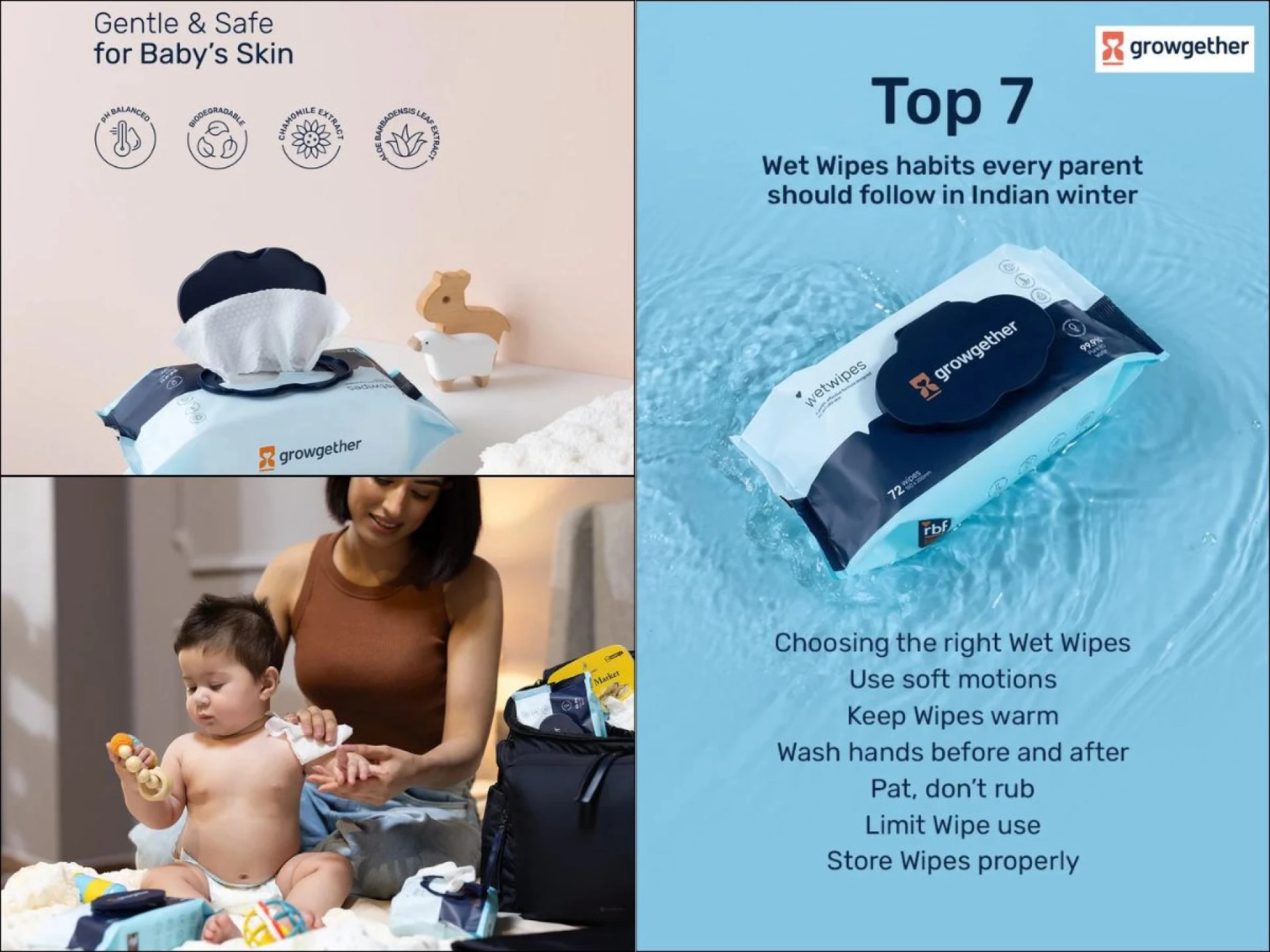
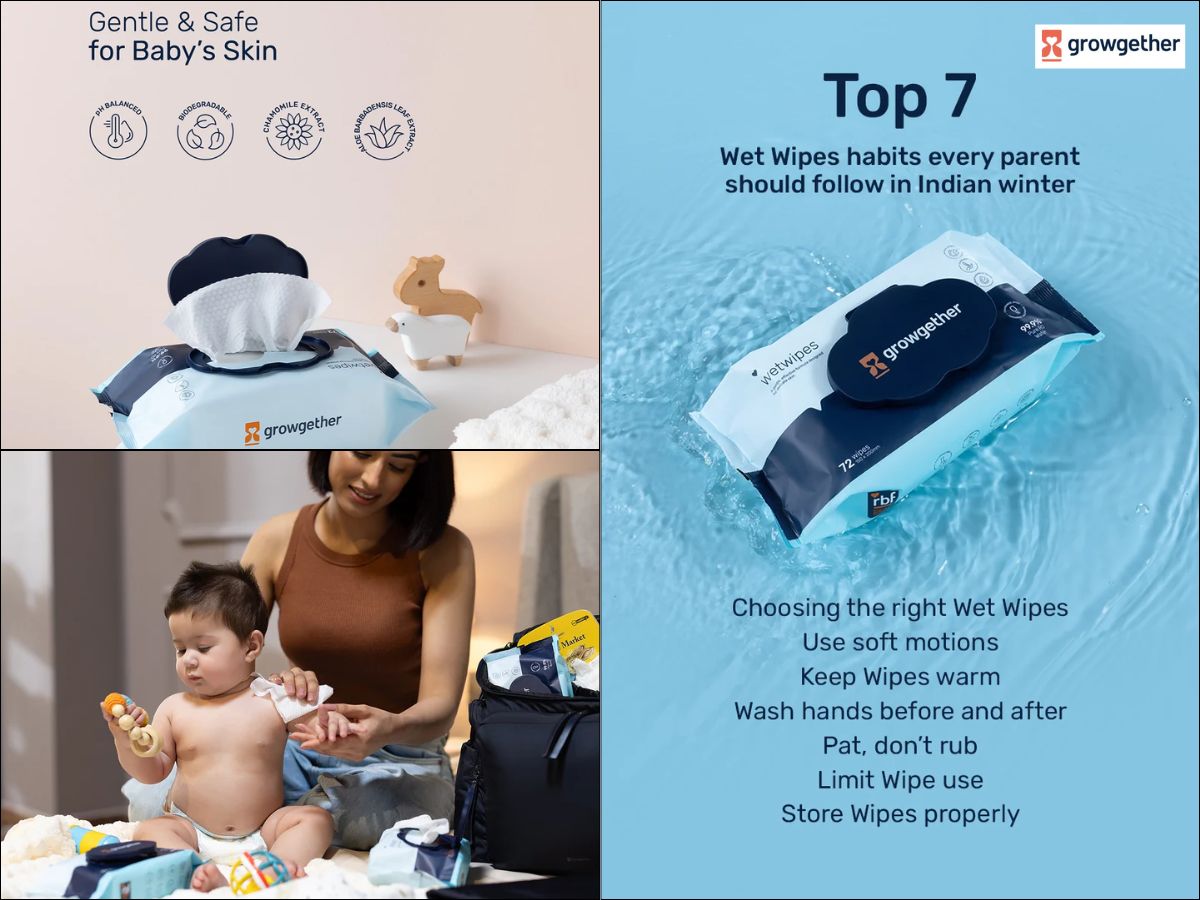
Growgether makes these wet wipes specifically for newborns. They're made with 99% purified water. Plant-based ingredients. No harsh chemicals.
They're thick enough to handle business. Gentle enough for everyday use. And they're pH-balanced for sensitive skin.
Pro tip: If you're dealing with winter dryness right now, check out these winter wet wipe tips. Season matters more than you think.
Honestly? They've been a game-changer for a lot of parents.
Where You Store Stuff Matters
Don't keep products in hot, humid places. Heat changes the chemicals inside.
Your bathroom? Probably the worst spot. Store them somewhere cool and dry instead.
How Often Should You Really Use This Stuff?
Here's where most of us mess up. We use way too much, way too often.
Newborns don't need baths every single day. The American Academy of Pediatrics says 2-3 times a week is enough.
Until they start crawling and getting actually dirty.
Between baths:
• Wet wipes for diaper changes
• Quick wipe-downs with damp cloths
• Clean the creases where dirt hides
Over-washing strips away the natural oils their skin needs. Let their skin do its thing.
Switching to Safer Products
Already using sketchy products? Don't freak out.
Just switch gradually. One product at a time.
Start with whatever touches your baby's skin the most. For most of us, that's wet wipes.
You use them what, five times a day? Ten times?
Upgrading there makes the biggest difference right away.
Within a month, you'll have switched everything. Easy.
Questions Parents Always Ask Me
Q1: When can I start using wet wipes on my newborn?
Day one, honestly. Just pick good ones. Look for 99% water content. No alcohol. No parabens. No fragrance. And always pat the area dry after wiping. Prevents rashes.
Q2: Are natural baby products always safer than regular ones?
Not always. Hate to break it to you. "Natural" isn't regulated here in India. Companies can slap it on anything. Even natural stuff can cause allergies. Check the actual ingredients instead. Look for dermatologist-tested labels.
Q3: How do I know if my baby is reacting to a hygiene product?
Watch for redness. Rashes. Dry patches. Little bumps. Or if they get fussy during or after you use something. See any of that? Stop using it immediately. Call your pediatrician. Write down which product it was so you remember.
Q4: What's the difference between hypoallergenic and dermatologically tested?
Hypoallergenic means they tried to make it less likely to cause allergies. Not a guarantee though. Dermatologically tested means an actual dermatologist tested it on real skin. Look for both claims together. Better protection that way.
























Sign in to leave a comment.