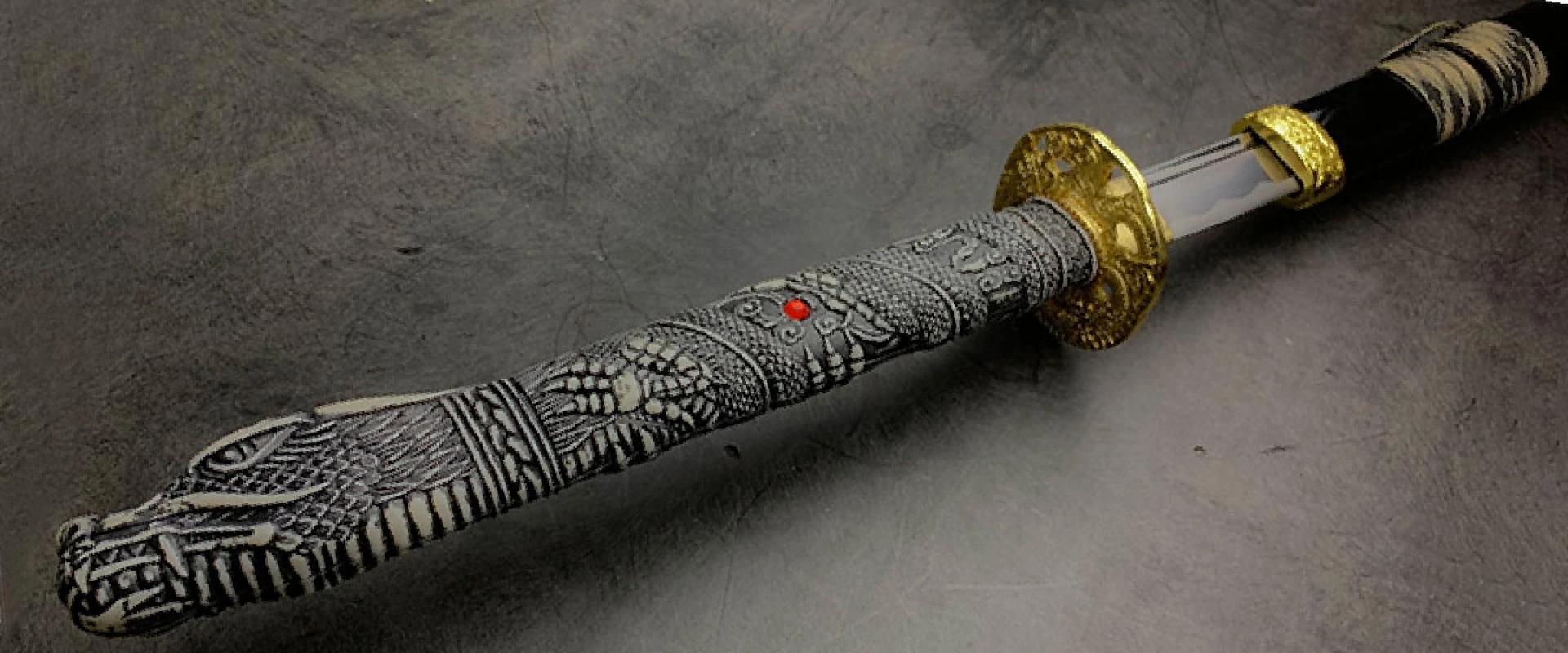

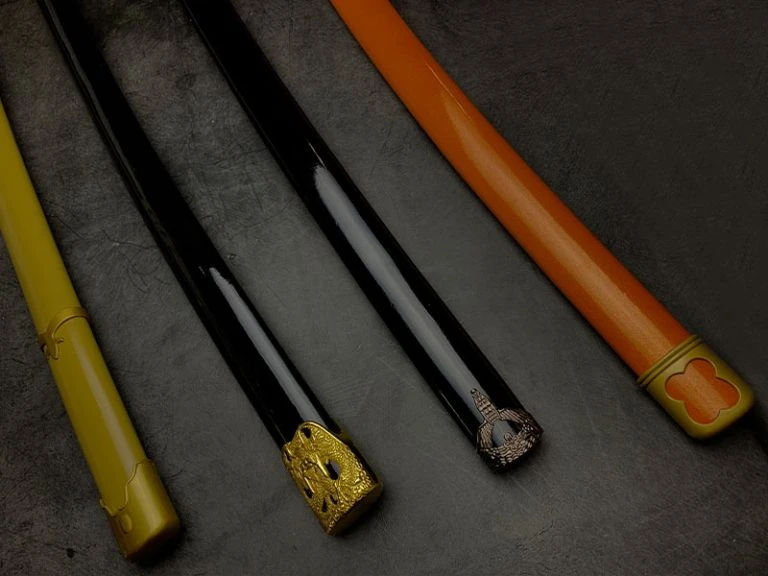
 Samurai swords, specifically the katana, wakizashi, and tanto, are famous icons of feudal Japan\'s samurai warrior class. The katana, with its unique curved, slender blade and single cutting edge, is possibly the most well-known among them. The katana, which is typically 60 to 80 centimeters (24 to 31 inches) long, is known not just for its excellent cutting abilities, but also for its balance and agility in combat. These swords, together with the wakizashi, a shorter blade spanning from 30 to 60 cm (12 to 24 inches), comprised the daisho, the customary pairing worn by samurai to indicate their social rank and readiness for fight.
The tanto, a dagger-like blade measuring less than 30 centimeters (12 inches), served a variety of purposes, including warfare and daily utility duties. Samurai swords, created through a laborious process of forging and tempering, embody both functional perfection and artistic brilliance, reflecting the samurai spirit of heroism, honor, and disciplined skill in warfare. Aside from their combat proficiency, these swords have deep cultural value, representing the warrior spirit and lasting heritage of Japan\'s feudal past.
Historical Evolution of Samurai Swordmaking
Samurai swordmaking in feudal Japan has evolved over generations, with technological refinement and cultural significance. Beginning with influences from nearby regions during the Heian period, Japanese swordsmiths eventually developed unique techniques to meet the needs of the developing samurai class. As samurai fighting progressed, so did sword craftsmanship, resulting in the emergence of the iconic katana during the Muromachi period.
This era saw advancements such as differential hardening procedures to generate a sharp edge (hamon) and folding ways to strengthen the blade (hizukuri or Kobus), which distinguished the katana as a symbol of both martial skill and spiritual discipline. The Momoyama and early Edo periods were the pinnacles of samurai swordsmithing, with venerated artists.
These swords were not only dangerous weapons but also symbols of the samurai code of honor and aesthetic beauty. Despite societal changes and the demise of the samurai class in the late 1800s, efforts to maintain traditional sword-making processes have led to a rebirth of interest in samurai swords as cultural objects and emblems of Japan\'s rich martial past.
Traditional Craftsmanship Techniques
Traditional ninja sword-making skills exemplify ninjutsu\'s inherent practicality and subtlety. These swords are made utilizing traditional Japanese swordsmithing techniques that prioritize utility and effectiveness in close combat. The forging process involves heating and folding layers of steel to create a blade that balances strength and flexibility, which is essential for making quick and precise blows. Samurai swords have a straight blade design, unlike the curved katanas used by samurai, which allows for swift draws from cover and supports the nimble, stealth-based tactics required for ninja warfare.
Differential hardening procedures are frequently used to create a hamon, a distinct line near the blade edge that improves sharpness while preserving blade durability. This sword guard (tsuba) is designed to be lightweight and unobtrusive during fast deployment. The handle (tsuka) is delicately wrapped in the same (ray skin) and firmly bound with silk cord (ito), resulting in a secure grip that allows for precise movements and control.
Overall, sword workmanship exhibits a combination of practical design and specific utility geared to ninjas\' clandestine activities and close-quarters combat tactics. These samurai swords were not just weapons, but also survival and stealth tools, representing the resourcefulness and strategic cunning of feudal Japan\'s ninja warriors.
Modern Perspectives on Samurai Sword Preservation
Modern opinions on samurai sword preservation emphasize the historical and artistic significance of these cherished weapons. Samurai swords are cultural objects of tremendous historical value, symbolizing centuries of workmanship and embodying the virtues of honor and martial prowess. Today\'s preservation efforts are focused on several critical aspects:
1. Conservation Techniques:
Advanced conservation methods are used to maintain the structural integrity and aesthetic appeal of samurai swords. This includes thorough cleaning, restoration of worn or broken parts and climate-controlled storage to avoid corrosion and deterioration.
2. Documentation and Research:
Scholars and historians do in-depth research and documentation on specific swords and their historical context. This includes examining blade signatures (mei), historical records, and provenance to authenticate and maintain the swords\' lineage and significance.
- Education and Outreach:
Educational programs and public exhibitions are intended to increase knowledge of sword craftsmanship and its cultural value. These programs promote appreciation and understanding among fans and the general public.
4. Legal and Ethical Considerations:
Because of their cultural and historical significance, these swords are subject to stringent rules regulating ownership, export, and sale in many countries. Ethical considerations also help to ensure proper stewardship and preservation procedures.
5. Technological Advances:
Modern technology, such as non-invasive imaging techniques and metallurgical analysis, aids in the study and preservation of samurai swords without destroying or altering their original condition.
6. Community Engagement:
Preservation initiatives frequently entail collaboration with collectors, museums, and cultural organizations around the world to share information and resources for the sake of conserving the samurai sword legacy.
Finally, modern viewpoints on this sword preservation incorporate traditional conservation practices as well as cutting-edge research and technologies. By preserving these iconic emblems of Japanese history and culture, we ensure that future generations can enjoy and learn from the legacy of samurai sword crafting.
Cultural Significance of Samurai Swords!
The preservation and appreciation of samurai swords continue to bridge the gap between the past and the present, demonstrating the unique junction of tradition and modern innovation. These swords, known for their great craftsmanship and cultural significance, are powerful emblems of the samurai ethos, symbolizing qualities like honor, discipline, and martial excellence.
Through painstaking conservation efforts, scientific research, and public education, we ensure that the heritage of these legendary swords lives on, allowing future generations to marvel at their beauty and historical significance. By appreciating and maintaining samurai swords, we not only conserve tangible objects from Japan\'s feudal past but also uphold the intangible history and timeless values they symbolize.

























Sign in to leave a comment.