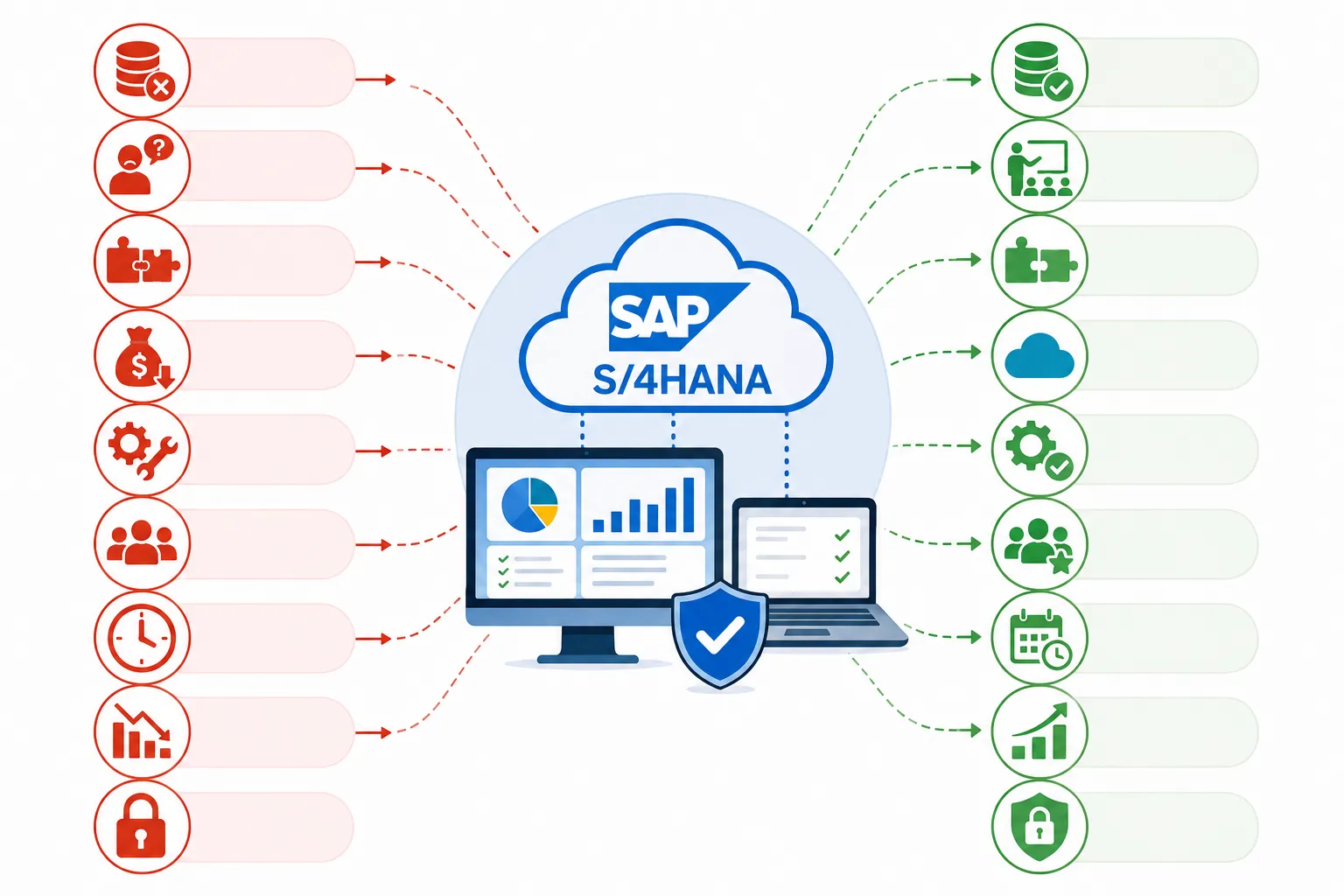

Implementing a modern ERP platform is a major step for businesses aiming to improve operational efficiency, automation, and digital transformation. SAP S/4HANA is one of the most advanced enterprise resource planning systems designed to help organizations streamline workflows, improve decision-making, and support intelligent business operations.
While SAP S/4HANA offers significant long-term benefits, the implementation process can also present several challenges. Businesses often face difficulties related to data migration, system integration, employee training, customization, and project management during ERP deployment.
Understanding these challenges and their solutions helps organizations achieve smoother implementation and maximize ERP performance.
Understanding SAP S/4HANA
SAP S/4HANA is a next-generation ERP platform built on the SAP HANA in-memory database. The platform provides real-time analytics, automation, cloud integration, artificial intelligence, and advanced business process management.
It helps organizations manage:
- Finance
- Procurement
- Manufacturing
- Supply chain
- Inventory
- Sales
- Customer operations
- Reporting and analytics
The platform supports businesses seeking operational modernization and long-term digital transformation.
Challenge 1: Complex Data Migration
One of the most common implementation challenges is migrating data from legacy systems to SAP S/4HANA. Businesses often have large volumes of historical data stored across multiple systems and databases.
Poor data quality or incomplete migration planning can lead to operational disruptions and reporting inaccuracies.
Common Migration Issues:
- Duplicate records
- Inconsistent data formats
- Missing information
- Data compatibility problems
- System downtime risks
Solution:
Businesses should conduct detailed data assessments before migration begins. Cleaning outdated or duplicate records improves migration accuracy.
Best practices include:
- Data validation
- Structured migration planning
- Backup creation
- Testing migrated data
- Using automated migration tools
Careful migration planning helps reduce operational risks during implementation.
Challenge 2: Resistance to Change
Employees often resist adopting new ERP systems because they are unfamiliar with updated workflows and technologies. Resistance to change can slow implementation and reduce system adoption.
Common Employee Concerns:
- Fear of workflow disruption
- Lack of technical confidence
- Increased workload during transition
- Uncertainty about new processes
Solution:
Organizations should focus on change management and employee engagement from the beginning of the project.
Important strategies include:
- Clear communication
- Employee involvement
- Training programs
- Demonstrating system benefits
- Ongoing support
When employees understand how SAP S/4HANA improves daily operations, adoption becomes easier.
Challenge 3: Integration with Existing Systems
Many businesses already use multiple software applications for finance, inventory, CRM, manufacturing, or reporting. Integrating these systems with SAP S/4HANA can become technically challenging.
Integration Problems:
- System compatibility issues
- Inconsistent workflows
- Data synchronization delays
- API limitations
Solution:
Businesses should evaluate existing IT infrastructure before implementation. Proper integration planning helps ensure smooth communication between systems.
Recommended approaches include:
- API-based integration
- Middleware solutions
- System compatibility testing
- Real-time synchronization planning
A well-planned integration strategy improves operational continuity.
Challenge 4: High Implementation Costs
ERP implementation often requires investment in software, infrastructure, consulting, training, and system customization. Businesses may struggle with budgeting and resource allocation.
Common Cost Factors:
- Software licensing
- Infrastructure upgrades
- Employee training
- Implementation consulting
- Ongoing maintenance
Solution:
Organizations should create realistic implementation budgets and phased deployment strategies.
Cost optimization methods include:
- Cloud-based deployment
- Prioritizing critical modules
- Reducing unnecessary customizations
- Careful project planning
Long-term operational efficiency often outweighs initial implementation costs.
Challenge 5: Customization Complexity
Every business has unique operational workflows, and excessive customization can complicate ERP implementation.
Too many modifications may:
- Increase project delays
- Raise maintenance costs
- Create upgrade difficulties
- Reduce system stability
Solution:
Businesses should focus on adopting standard SAP S/4HANA best practices wherever possible.
Customization should only be applied when:
- Operationally necessary
- Industry-specific requirements exist
- Business-critical workflows require adjustment
Maintaining a balance between customization and standardization improves long-term ERP performance.
Challenge 6: Lack of Skilled Resources
Successful SAP S/4HANA implementation requires experienced consultants, technical specialists, and trained employees.
Many organizations struggle with:
- Limited internal expertise
- Resource shortages
- Technical knowledge gaps
Solution:
Working with experienced ERP consultants and implementation experts helps businesses reduce technical risks.
Businesses should also:
- Invest in employee training
- Build internal ERP teams
- Provide ongoing technical support
Skilled resources improve implementation efficiency and system adoption.
Challenge 7: Project Delays
ERP implementation projects may face delays due to poor planning, unclear requirements, or communication gaps.
Common Causes of Delays:
- Changing project scope
- Insufficient testing
- Resource limitations
- Incomplete planning
Solution:
Strong project management is essential for successful ERP implementation.
Best practices include:
- Defining clear objectives
- Setting realistic timelines
- Conducting regular progress reviews
- Assigning dedicated project teams
Structured project management helps businesses complete implementation more efficiently.
Challenge 8: Business Process Disruption
During implementation, businesses may experience temporary workflow disruptions that affect productivity and operations.
Operational Risks:
- Downtime during migration
- Temporary reporting delays
- Workflow interruptions
- Employee confusion
Solution:
Businesses should implement phased deployment strategies and extensive system testing before full rollout.
Important steps include:
- Pilot testing
- Parallel system operations
- Backup systems
- User acceptance testing
Careful planning minimizes operational disruptions during ERP deployment.
Challenge 9: Security and Compliance Concerns
ERP systems handle sensitive business and financial data that must remain secure during and after implementation.
Security Challenges:
- Data protection risks
- Unauthorized access
- Compliance requirements
- Cybersecurity concerns
Solution:
Businesses should implement strong security frameworks during deployment.
Security best practices include:
- Role-based access controls
- Data encryption
- Compliance monitoring
- Automated backups
- Security audits
Improved security protects operational integrity and business continuity.
Importance of Cloud Deployment
Many organizations now prefer cloud-based SAP S/4HANA deployment because it offers greater flexibility and reduced infrastructure complexity.
Cloud Benefits:
- Remote accessibility
- Lower infrastructure costs
- Faster scalability
- Automatic updates
- Improved collaboration
Cloud deployment helps businesses modernize operations more efficiently.
Role of Employee Training
Training plays a critical role in successful ERP adoption. Without proper training, employees may struggle to use the new system effectively.
Training Benefits:
- Faster system adoption
- Reduced user errors
- Improved productivity
- Better workflow understanding
Organizations should provide ongoing training programs and technical support throughout implementation.
Future of SAP S/4HANA Implementation
As digital transformation continues growing, ERP implementations will increasingly focus on:
- Artificial intelligence
- Intelligent automation
- Predictive analytics
- Cloud infrastructure
- Real-time business intelligence
Businesses adopting modern ERP systems today will be better prepared for future operational demands.
Importance of Choosing the Right ERP Partner
Successful implementation depends heavily on choosing experienced ERP professionals who understand business operations and technical deployment requirements.
An experienced SAP S/4HANA solution provider helps businesses:
- Plan implementation strategies
- Manage data migration
- Customize workflows
- Train employees
- Optimize ERP performance
Professional implementation support significantly improves project success rates and long-term operational efficiency.
Final Thoughts
SAP S/4HANA implementation offers businesses major advantages in automation, operational visibility, scalability, and digital transformation. However, successful deployment requires careful planning, employee training, proper integration, and strong project management.
By understanding common implementation challenges and applying effective solutions, organizations can reduce operational risks and maximize ERP benefits.
As businesses continue modernizing operations, SAP S/4HANA will remain a critical platform for improving efficiency, innovation, and long-term business growth.



















Sign in to leave a comment.