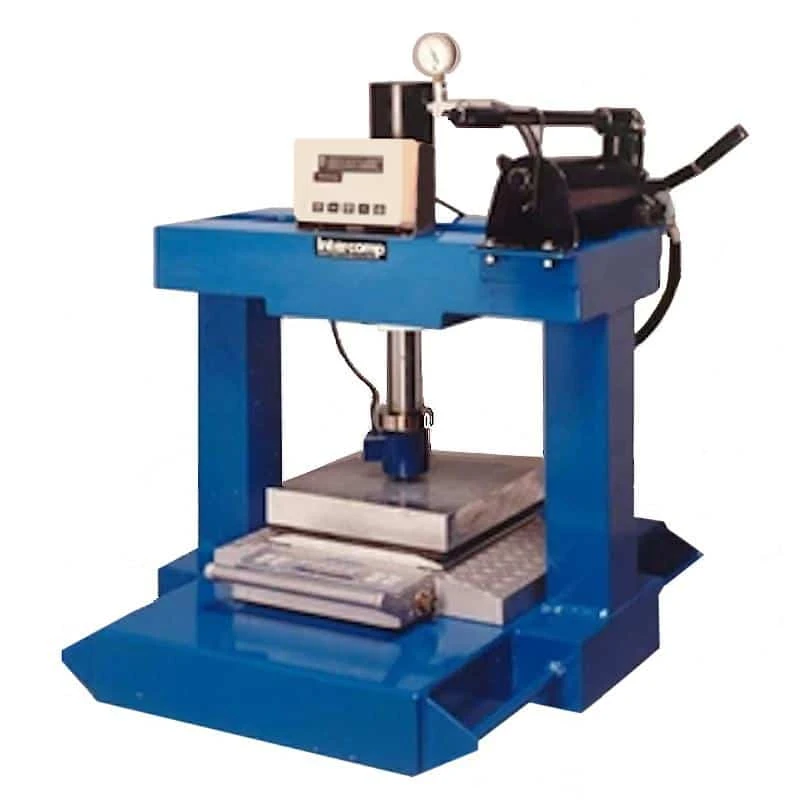

When weighing things for business, a standard scale doesn't always do the job. In many cases, parts of the application need specialized parts to handle things like extreme size or weight, limited space, location/distance, data processing needs, safety requirements, integrating data into a larger, more complex process, and much more.
In these situations, you can make a multi-part load cell system to meet the needs of your application. Individual parts can be chosen and put together to make a custom solution to a process problem that would otherwise be suboptimal or complicated.
Parts of a system for weighing
Load cell: The load cell calibration equipment is the part of a scale that actually does the weighing. Strain gauges are attached to a solid metal body. This would be a simple way to describe it. When force is put on the body of the load cell, the strain gauge's resistance changes. The change in resistance can be used to figure out how much force is being used.
Switch box: In a system with more than one load cell, the signals go through a junction box because each load cell has a slightly different mV/V output. When the system is calibrated, each signal is "trimmed" in the junction box so that when a known force is applied, it gives the same mV/V output. This process makes sure that the same load will read the same no matter where or how it is placed. Junction boxes also have a function called "summing," which adds up the outputs of the different load cells so that the digital indicator sees only one load cell carrying the load.
Indicator: At its most basic, a digital indicator is a device that amplifies and digitizes the signal from the load cell and shows the operator on a digital display how much force is being applied to the load cell. This information can also be sent to another machine or a PC to make it do something as part of a bigger process. Some of these basic steps are simple batching, checking the weight, and turning off the power in an emergency. At a higher level, there are programmable indicators that can control more complex processes that require custom programming, a lot of data points, and additional internal signal conditioning.
Load cell mount: Load cell mounts and mounting assemblies hold the load cell in place and make sure it is loaded the right way, which is important for accurate weighing.
Signal conditioner/amplifier: A signal conditioner can be a separate device or, in some cases, a part of the digital display itself. A signal conditioner changes the signal from the load cell into a signal that the indicator, display, PC, or some other device can use. Load cell signal conditioning can include amplifying, decreasing, exciting, filtering, and isolating the signal.
Wireless: Logistics and safety often require a wireless system. With wireless-enabled load cells, you can make a system that fits your needs by putting together parts like hand-held indicators, wireless base stations, printers, relays, displays, and more.










Sign in to leave a comment.