

The digital revolution has fundamentally altered how people handle financial transactions, and real estate is no exception. While the traditional image of selling a home involves yard signs, open houses, and stacks of paperwork, a growing number of homeowners are turning to online platforms to facilitate direct sales. This method offers a streamlined alternative to the open market, prioritizing speed and certainty over public exposure.
For sellers, the ability to initiate a sale from a computer or smartphone removes many of the logistical hurdles associated with listing a property. Instead of preparing a home for public viewing, the process focuses on data and asset valuation. This shift appeals to those who need to liquidate property assets efficiently without the friction of managing contractors, agents, and potential buyers walking through their private space.
How the Online Selling Model Works
The mechanism behind selling a house online is relatively straightforward, designed to minimize the steps between the decision to sell and the final closing. Unlike listing portals that simply advertise a home to the public, direct online buyers are often the end purchasers themselves. They use local market data and the seller's property details to generate an offer.
This process typically bypasses the need for a mortgage lender on the buyer's side. Because these transactions are funded with available capital or private equity, the timeline is not dictated by bank underwriting or appraisal contingencies. The seller submits information, receives an evaluation, and can often close on the property in a matter of weeks.
The Digital Process Breakdown
The workflow generally follows a linear path, keeping the seller in control of the timeline. It starts with data submission and ends with a wire transfer.
- Information Submission: The seller enters property details, including address, square footage, and condition, into a secure online form.
- Preliminary Review: The buying entity reviews the submission against local market values and recent sales data.
- Verification Visit: A representative conducts a brief on-site assessment to verify that the condition matches the online description.
- Final Offer: A purchase agreement is presented, typically with no obligation attached.
- Closing: If accepted, the transaction moves to a reputable title company for final processing.
From Data Entry to Cash Offer
The speed of this model is its defining feature. In a traditional setting, receiving an offer can take months. In the digital direct-to-buyer model, the time from submission to offer is often less than 48 hours. This efficiency is possible because the buyer is evaluating the asset's investment potential rather than seeking a place to call home, thereby removing the emotional variables that slow down retail transactions.
Why Sellers Choose the Digital Route
Homeowners opt for online sales for various reasons, often driven by life circumstances that make the traditional market impractical. Situations such as job relocation, divorce, or the inheritance of a distant property require solutions that are faster than the 60 to 90 days it can take for a standard listing.
Furthermore, the certainty of the transaction is significant. In the open market, roughly 5% to 10% of pending sales fall through due to financing issues or inspection disputes. Online cash buyers eliminate the financing contingency, giving sellers high confidence that the deal will close once the contract is signed.
Comparing Traditional Markets vs. Online Sales
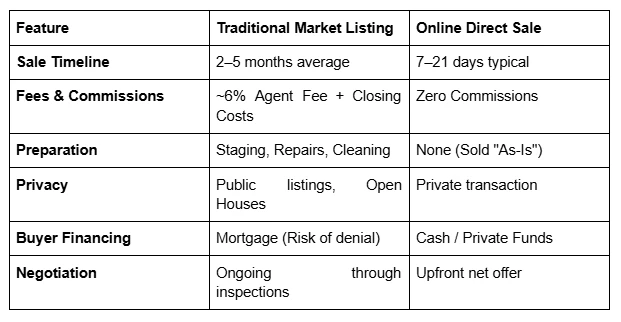
To understand the differences in logistics and costs, it is helpful to view the two methods side by side. The following table illustrates the operational differences.
Situational Relevance for Sellers
Specific scenarios make the online route particularly attractive. For example, owners facing pre-foreclosure often have a strict deadline to settle debts. The speed of an online sale can resolve the balance before legal action escalates. Similarly, landlords looking to offload rental properties with tenants in place often prefer the discretion of a direct sale over public listings that might disturb residents.

Things to Consider Before Making a Decision
While the speed and convenience of selling online are clear, homeowners should weigh these benefits against their financial goals. A direct buyer usually purchases the property at a price below full retail value. This discount accounts for the buyer's assumption of risk, repair costs, and future holding costs.
Sellers must calculate the "net" outcome. A higher retail price on the open market is often reduced by agent commissions, closing fees, and the carrying costs (mortgage, taxes, insurance) paid while the house sits on the market. In some cases, the difference between the net cash offer and the final retail profit is smaller than expected once all expenses are deducted.
Evaluating the Trade-offs
- Financial Urgency: Does the seller need cash immediately?
- Property Condition: Is the home in need of $15,000 or more in repairs?
- Stress Tolerance: Does the seller want to manage open houses and negotiations?
Bonus Tips for Online Sellers
- Verify Local Presence: Even if the process starts online, ensure the buyer has a local representative or office. This confirms they understand the specific market.
- Check the Contract: Ensure the purchase agreement is a standard real estate contract and read the cancellation terms carefully.
- Request Proof of Funds: Ask the buyer's bank or financial institution for a letter confirming they have the funds to close the purchase.
Regional Context as a Digital Shift
The trend toward online selling is powerful in Texas markets like Dallas. The region faces specific environmental challenges, such as clay soil that shifts with the weather, which can lead to common foundation issues. In the retail market, foundation problems can scare away individual buyers or disqualify properties for FHA loans.
Online buyers in this region are accustomed to these structural issues. They factor the repair costs into their offer, allowing the seller to offload the property "as-is" without managing complex construction projects. This capability makes the online option highly viable for owners of older homes in North Texas.
Summary of Safety Measures
To ensure a confident experience, always communicate through official channels and verify the identity of the buying entity before signing documents.
Start Selling Directly for Cash
Readers interested in understanding more about direct home selling can contact OT Home Buyers for educational guidance. The company helps property owners learn about fair cash options, paperwork steps, and closing timelines without pressure or agent fees.
For those in the Dallas area seeking specific details on how to sell a house online or by phone, inquiries can be directed to 682-267-7741. They provide resources to help sellers make informed decisions about their property assets.
Questions People Ask
As with any financial transaction, homeowners have valid questions about safety and logistics.
How fast is the process?
The timeline is flexible but generally fast. Once the title work is clear, closing can happen in as little as 7 to 10 days. However, sellers can usually request a longer period if they need time to coordinate a move.
What does "as-is" mean?
Selling "as-is" means the seller is not responsible for any repairs, cleaning, or improvements. The buyer accepts the property in its current state, including any faults, and the price reflects this condition.
Is the online offer safe?
Yes, provided the transaction is handled through a licensed title company. The title company acts as a neutral third party, ensuring that funds are verified and documents are recorded legally before disbursing funds to the seller.
What paperwork is needed?
The paperwork is significantly less than a bank-financed sale. Sellers typically need to sign a purchase agreement, property disclosures, and the final closing documents at the title office.
Are there hidden fees?
Reputable direct buyers do not charge service, application, or commission fees. The offer presented is usually the amount the seller receives, minus any mortgage payoff or property taxes owed.
Reviewer: With 6+ years in real estate, Fenwick Thorne builds trust through clear communication and expert guidance, helping clients make confident home-buying and selling decisions.































Sign in to leave a comment.