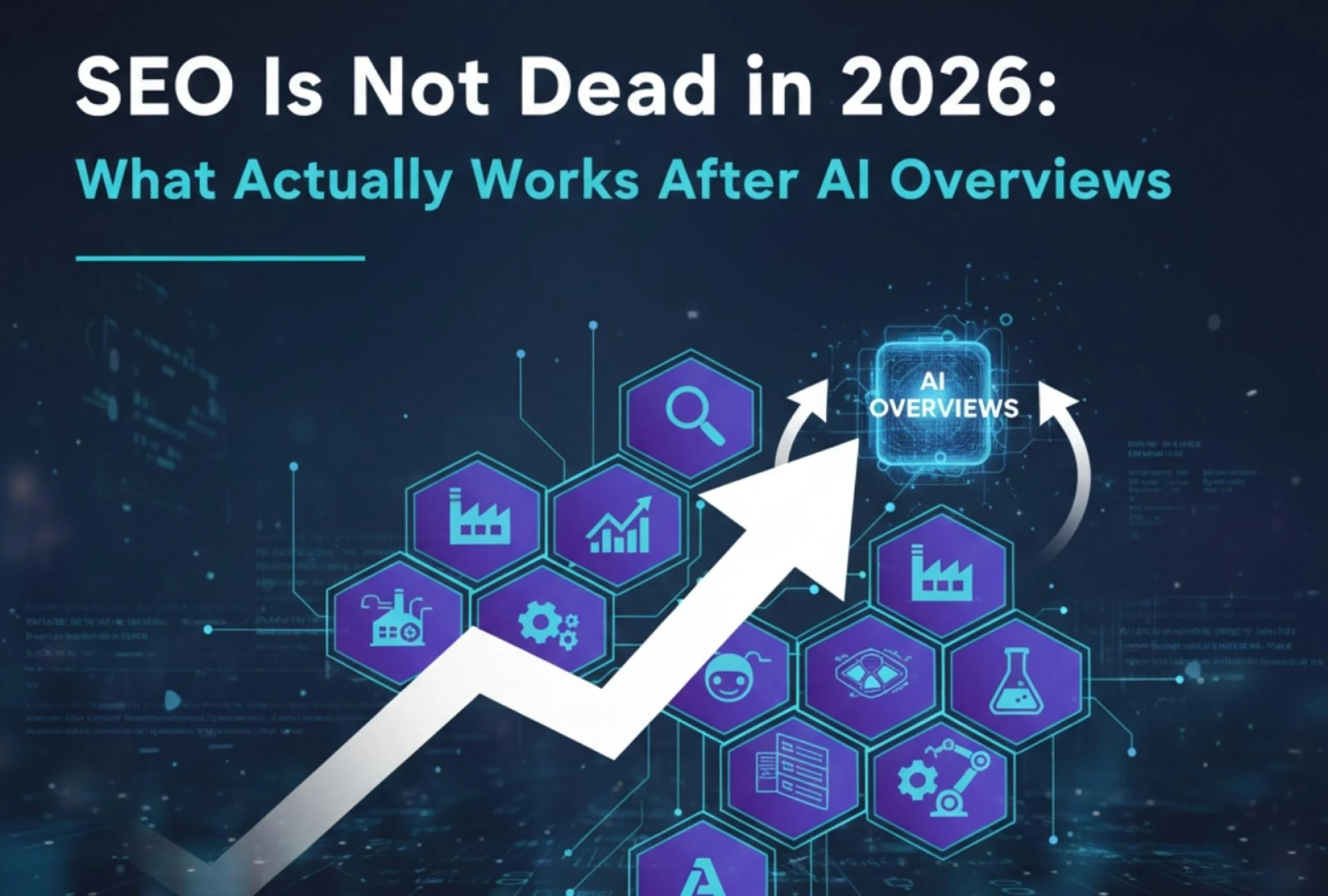

SEO is not dead in 2026—it has evolved. Search engine optimization still plays a critical role because search engines, including AI-driven experiences, continue to rely on structured signals, authoritative content, and genuine user value to decide what information surfaces in results. What has changed is how SEO works. Today, success depends less on tactical tricks and more on trust, clarity, and intent satisfaction across both human and AI-powered search environments.
What SEO Means Today
Search engine optimization is the practice of improving a website’s visibility in organic search by aligning content, technical structure, and authority with how search engines evaluate relevance and quality. In 2026, SEO goes beyond traditional blue links. It now directly influences visibility in AI Overviews, featured snippets, and conversational search results.
While search interfaces have changed, the purpose of SEO remains the same: helping search engines understand what a page is about, whether it is trustworthy, and how well it answers a specific user query.
Why SEO Still Exists in the AI Era
SEO began in the mid-1990s when early search engines relied on simple signals to rank pages. Although algorithms are now far more advanced, search engines—including AI-driven ones—still need reliable signals to determine relevance and authority.
AI Overviews did not eliminate SEO. Instead, they raised the bar. Only content that is clear, accurate, and authoritative is likely to be extracted and summarized. SEO is what ensures that content meets those standards.
How SEO Works After AI Overviews
Modern SEO is built on a combination of key principles:
- Semantic understanding, where engines interpret meaning rather than exact keyword matches
- Entity relationships, which connect topics, brands, and concepts
- User intent alignment, ensuring content satisfies what the searcher is actually looking for
- Experience and credibility signals, such as depth, clarity, and demonstrated expertise
AI Overviews typically pull from pages that already perform well across these dimensions. SEO is the system that enables that performance.
How SEO Has Structurally Changed
SEO in 2026 is best understood as a layered system rather than a checklist.
The first layer is intent-first content. Pages that clearly answer a specific question or solve a defined problem are more likely to appear in AI summaries and featured results.
The second layer is topical authority. Instead of ranking based on isolated keywords, search engines favor websites that demonstrate depth and consistency across an entire topic through interconnected content.
The third layer is technical SEO. Crawlability, page speed, mobile usability, and structured data remain essential. AI systems cannot summarize or reference content they cannot properly access or interpret.
The fourth layer is AI extractability. Content must be structured so it can stand alone when pulled into AI-generated answers, using clear headings, concise explanations, and unambiguous definitions.
The Value of SEO in 2026
For startups and small businesses, SEO offers long-term, compounding visibility without paying for every click. Clear, well-optimized content can surface in AI Overviews, allowing smaller brands to compete with larger ones.
For enterprises, SEO helps control brand narratives, reduce dependence on paid media, and support complex buyer journeys by ensuring authoritative sources are referenced.
For niche and service-based industries, SEO is especially powerful because AI systems favor accurate, expert explanations over generic content.
Common SEO Myths in the AI Age
A common misconception is that AI has replaced SEO. In reality, AI has changed how results are presented, not how relevance is determined.
Over-optimizing for keywords is another mistake. Keyword stuffing reduces clarity and weakens intent alignment. Semantic relevance and readability matter far more today.
Poor content structure also limits visibility. Unclear headings, mixed intent, and vague explanations make it difficult for AI systems to extract useful information.
SEO vs Paid Search in 2026
SEO and paid search serve different roles. SEO builds durable, long-term visibility and supports AI Overviews and organic trust signals. Paid search delivers immediate exposure but disappears when budgets stop. The strongest strategies treat SEO as the foundation and paid media as a supporting channel.
What SEO Looks Like Going Forward
Modern SEO requires patience and consistency. Results take time to compound, with ongoing optimization needed as search behavior and AI systems evolve. The focus has shifted from mechanical optimization to research, clarity, content systems, and continuous improvement.
SEO in 2026 is no longer about gaming algorithms—it’s about earning trust at scale.
👉 Click the link to read the full article and explore deeper insights into how SEO really works in the AI-driven search era. Read More

























Sign in to leave a comment.