Choosing the right fabric is one of the most important decisions you will make as a designer or maker. Get it right and your collection feels cohesive, intentional, and professional. Get it wrong and even the best patterns and construction cannot save it.
Silk, cotton, and linen are three of the most popular natural fabrics in fashion and home textiles. Each has a distinct personality, a set of strengths, and situations where it simply does not work. This guide breaks down the differences honestly so you can make the right call for your next collection.
A Quick Introduction to Each Fabric
Silk
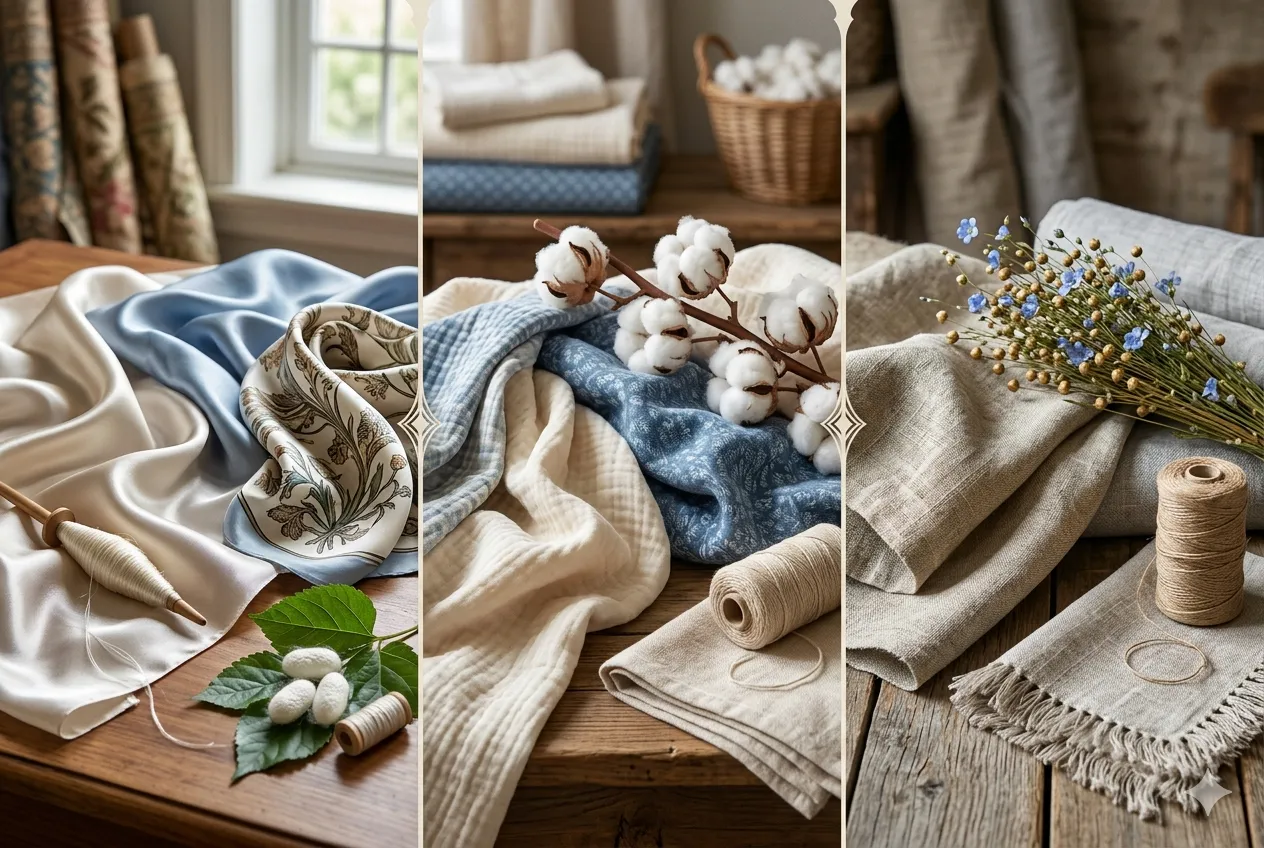
Silk is a natural protein fibre produced by silkworms. It is one of the oldest luxury textiles in the world, known for its natural sheen, incredible softness, and fluid drape. Mulberry silk is the most refined variety, while wild silks like Muga and Tussah have a more textured, earthy character.
Silk is breathable despite its lightweight feel, making it suitable for warm weather as well as layering in cooler months. It regulates body temperature naturally, which is why it has been used for centuries in clothing across very different climates.
Cotton
Cotton is the world's most widely used natural fibre and for good reason. It is affordable, durable, easy to care for, and comfortable against the skin. Cotton comes in dozens of weaves and weights, from fine voile to heavy canvas, which gives it enormous versatility across product categories.
It is the everyday workhorse of the fabric world. Most people own far more cotton garments than anything else, and that familiarity makes it a reliable choice for collections targeting a broad audience.
Linen
Linen is made from the flax plant and is one of the oldest textiles known to humanity. It is stronger than cotton, naturally moisture-wicking, and gets softer with every wash. Its characteristic texture and slight irregularity give garments made from linen an effortlessly relaxed, artisanal quality.
Linen is particularly associated with warm weather and resort wear, though heavier weights work well for structured pieces in transitional seasons too.
Silk vs Cotton vs Linen: The Key Differences
Feel and drape
Silk has the most luxurious hand feel of the three. It is smooth, cool to the touch, and drapes beautifully, making it ideal for flowing garments like dresses, blouses, and scarves. The natural sheen adds visual richness that cotton and linen simply cannot replicate.
Cotton feels soft and familiar. Depending on the weave, it can range from crisp and structured to relaxed and stretchy. It does not drape with the same fluidity as silk, but for tailored or casual pieces, that is rarely a problem.
Linen has a textured, slightly stiff feel when new, though it softens considerably over time. It has a natural body that makes it excellent for structured silhouettes. It drapes with a relaxed looseness rather than the fluid elegance of silk.
Breathability and comfort
All three are natural fibres and therefore breathable to some degree, but they perform differently in practice.
Linen is the most breathable of the three. Its open weave structure allows air to circulate freely, making it the go-to choice for summer garments in hot and humid climates. It also absorbs moisture without feeling wet, which is a major advantage in warm conditions.
Cotton is close behind and is considered the most comfortable all-rounder. It absorbs sweat, breathes well, and sits comfortably against even sensitive skin. For everyday wear across all seasons, cotton performs consistently.
Silk is breathable but in a more refined way. It regulates temperature rather than simply allowing airflow, keeping you cool in summer and warm in winter. For this reason it works well in a wider range of climates than linen.
Durability and care
This is where the differences become most practical for a collection standpoint.
Linen is the most durable of the three. It actually strengthens when wet, which means it holds up well through repeated washing. It wrinkles easily, but for many designers that is part of its charm rather than a flaw.
Cotton is highly durable and the easiest to care for. Most cotton fabrics are machine washable, colourfast, and resistant to pilling. This makes cotton-based collections low maintenance for the end customer, which adds real commercial value.
Silk requires the most care. It is sensitive to heat, sunlight, sweat, and harsh detergents. Most silk garments require hand washing or dry cleaning. For a luxury collection this is acceptable and even expected, but it is worth communicating clearly to customers.
Price point
Cotton is the most affordable of the three and the easiest to source at scale. For brands building accessible collections or working with tight margins, cotton offers the best value without sacrificing quality.
Linen sits in the mid range. It costs more than cotton but less than silk, and its durability means the cost-per-wear is actually very competitive. Premium linen has become increasingly popular in the sustainable fashion space.
Silk is the most expensive of the three, particularly high-grade Mulberry silk. However, the perceived value of silk is high, which means customers are generally willing to pay a premium for it. For luxury and occasion wear, the price is part of the positioning.
Which Fabric Works Best for Different Collections
For luxury and occasion wear
Silk is the clear choice. Its natural sheen, drape, and softness communicate quality immediately. Whether you are designing eveningwear, bridal pieces, or premium loungewear, silk elevates every garment it is used in.
If budget is a concern, silk blends or vegan silk alternatives offer a similar aesthetic at a lower price point, making them a smart option for emerging brands.
For everyday and casual wear
Cotton wins here without much competition. It is comfortable, easy to wash, affordable to produce, and instantly familiar to customers. T-shirts, casual dresses, lightweight trousers, and knitwear all perform best in cotton.
Block-printed cotton, like the natural dye block prints available from Fabriculture, is a strong choice for brands that want to add visual interest and artisanal character to everyday pieces without moving into the luxury price tier.
For resort, summer, and sustainable collections
Linen is the standout fabric for warm weather and conscious fashion. Its natural origins, durability, and breathability make it a favourite for resort wear, linen suiting, and relaxed separates. The slightly textured, lived-in aesthetic of linen also fits perfectly with the broader movement toward slow fashion and intentional dressing.
Cotton-linen blends are worth considering here too. They combine the softness and washability of cotton with the breathability and texture of linen, giving you a fabric that works harder across more contexts.
For mixed collections
Many successful collections use all three fabrics strategically. Silk for statement and occasion pieces, cotton for core everyday styles, and linen for seasonal or resort-focused lines. This approach lets you build a range with different price points and appeals without the collection feeling disjointed, as long as your colour palette and design language stay consistent.
Where to Source All Three
If you are building a collection and need access to all three fabric types from a single reliable source, Fabriculture (fabriculture.store) is worth looking at seriously.
They carry 100% silks including Mulberry and wild silk varieties, cotton and linen fabrics, silk blends, vegan silk alternatives, and block prints made with natural dyes. For brands that need custom colours, their free dyeing service from 10 yards applies across fabric types, which means you can develop a consistent palette across your entire collection without working with multiple dye houses.
Sample orders are available, bulk pricing is offered for larger orders, and they ship internationally. For a small or growing brand trying to keep sourcing simple without compromising on quality, that kind of one-stop access is genuinely useful.
The Bottom Line
There is no single best fabric. The right choice depends entirely on what you are making, who you are making it for, and what story you want your collection to tell.
Silk says luxury, refinement, and occasion. Cotton says comfort, accessibility, and everyday ease. Linen says sustainability, warmth, and relaxed sophistication.
The smartest collections use each fabric where it belongs. Know your customer, know your price point, and let the fabric do part of the storytelling for you.




















Sign in to leave a comment.