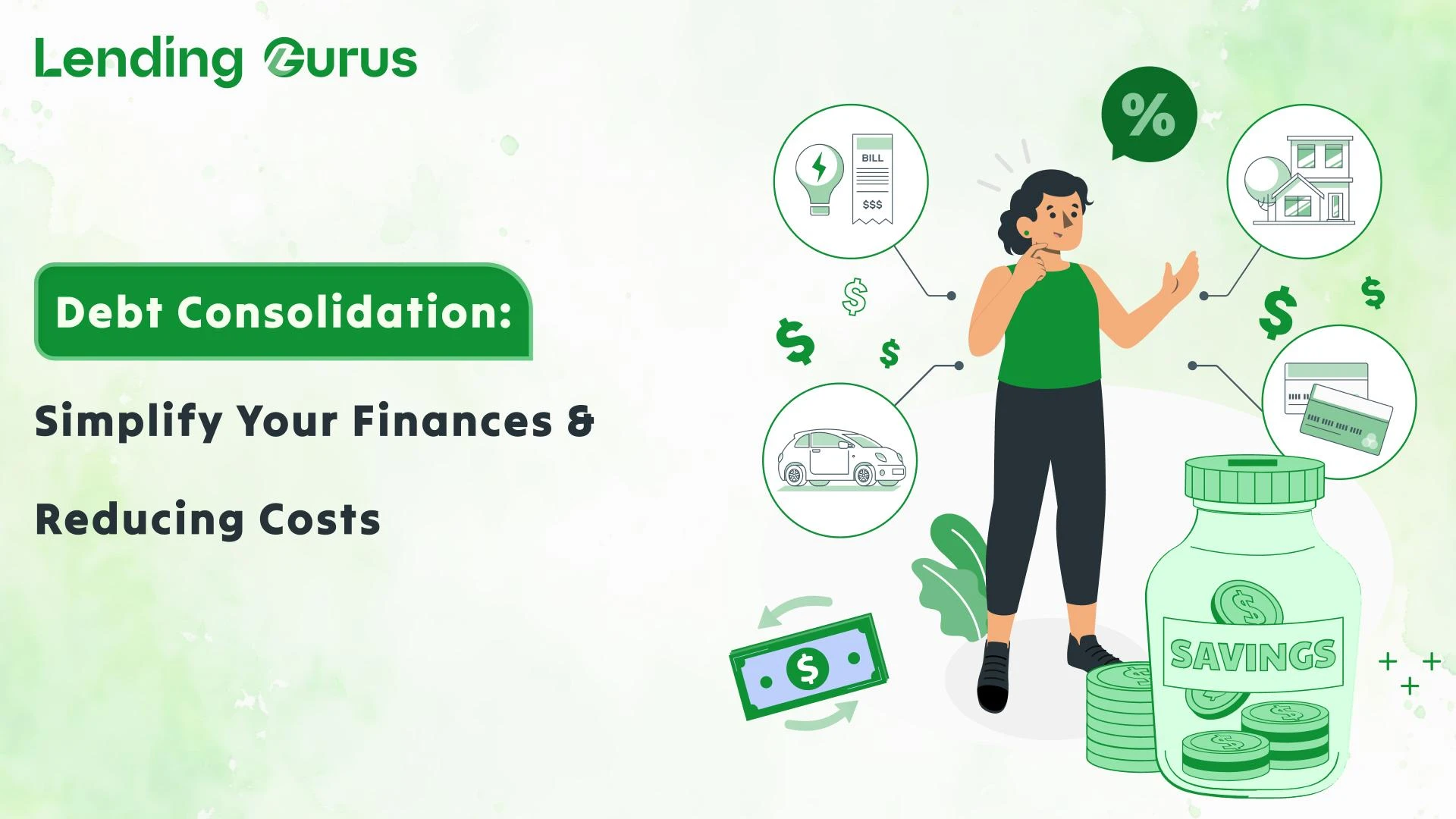

Managing multiple debts can be overwhelming especially when they come with different interest rates, due dates, and payment amounts. Debt consolidation is a strategy that combines all your debts into a single, manageable payment plan. It also offers a practical solution to streamline your finances and potentially lower your overall costs.
In this blog, we’ll discuss debt consolidation meaning and how to choose the debt consolidation loans and tips to help you decide if it’s the right strategy for your financial situation.
What is Debt Consolidation?
Debt consolidation Loan is the process of paying off all the debts with the help of one loan or payment plan. Debt consolidation assists in the reduction of several accounts that are due at different times, with different interest rates and conditions because all the debts are combined into one. It can be done through personal loans, balance transfer credit cards, home equity loans, or through debt management programs.
The primary objective is to get a lower interest rate, to reduce the monthly payments, and to make your financial plan better, so you can pay off your debts faster and with less pressure. It is a good option for those who wish to take back control of their financial situation, as long as they are disciplined enough to pay back the money on time.
Benefits of Debt Consolidation Loan
1. Simplified Payments
It can be very challenging to keep track of multiple credit cards, loan repayment and due dates. Debt consolidation eliminates these with a single monthly payment, which makes it easier to manage your money. This way, you can avoid such a situation when you miss some of the payments and your credit rating suffers from it.
2. Lower Interest Rates
The main benefit that can be derived from debt consolidation is the fact that one can get a lower interest rate. If you get a better deal on a personal loans or balance transfer, you will be saving a lot of money on the interest rate and will be able to save that money for other uses.
3. Predictable Payoff Schedule
Consolidation loans are usually of fixed term and rate, meaning that you know how long you will be paying your debts. This is useful in the long-term planning for the financial future and setting of goals. You will not be able to continue making the minimum payments that barely pay off the interest accrued on the balances.
4. Improved Credit Score Over Time
First of all, you may see your credit score drop due to the new credit account that you have opened. However, as you make regular payments on your consolidation loan and reduce your credit utilization ratio, your credit score will begin to climb. Another factor that has a positive impact on your credit profile is the number of accounts that you have with outstanding balances.
5. Reduced Financial Stress
Debt-related anxiety is real. The constant phone calls from creditors, balancing of due dates and rising balances are some of the most stressful things to deal with. Debt consolidation makes things easier for you, and it provides a feeling of movement in the right direction of being debt free. This can lead to a much better quality of life, as you no longer have to worry about these things.
6. Possibility of Avoiding Late Fees and Penalties
Debt consolidation could be useful to pay your balance before further interest or penalties are added to your account. It is easier to manage your cash flow since you only have one due date and fixed payments, meaning that you are less likely to miss a payment or be charged extra.
Tips Before Consolidating Your Debt
1. Review Your Full Financial Picture
The first step that you should take is to write down all your current debts, the balance, the interest rate, and the minimum monthly payments. This will help you determine how much you are actually owed and if consolidation is the right thing for you. It is also important to use a debt payoff calculator to compare the current repayment plan to the consolidation plan.
2. Check Your Credit Score and Report
The interest rate that you will be offered depends on your credit score in a very big way. You should request a free credit report and check for any wrong information or discrepancies. A higher score means that you will be able to get a better rate and other loan features on the market.
Read: How to Improve Your Business Credit Score
3. Compare All Consolidation Options
Do not grab the first opportunity that comes your way. Learn about line of credit, personal loans, balance transfer cards, home equity loans, and debt management plans. Each has its advantages and disadvantages based on your credit score, income, and other factors.
4. Understand the Total Cost
It is not only about reducing the monthly payment. It is also important to compare the total amount of repayment including interest and fees to your current debts. A lower monthly payment spread over a longer period may well prove to be more expensive in the long run.
Read: How to Reduce Your Total Loan Cost?
5. Read the Fine Print
Avoid any hidden costs, early repayment fees, or variable interest rates that may increase in future. It is always advisable to go through the full terms of a new loan or credit facility before taking it.
6. Avoid Accumulating More Debt
It is however important to note that debt consolidation does not entail that one can go and borrow more credit. Once you are done paying your cards, you should not use them again unless there is a need to do so. In other cases, you may be forced to pay back a lot more than the amount of money that you borrowed in the first instance.
7. Consider Working with a Financial Advisor
If you are still in a dilemma over which of the options to take, you may need to seek the services of a financial planner. Experts at Lending Gurus will explain to you the various possibilities and come up with a feasible repayment schedule that you can afford.
Is Debt Consolidation Right For You?
Debt consolidation is very useful if you have several debts with high interest rates and it is difficult for you to make the monthly payments. This is especially so if you have a good credit score since this will help you to get a low interest rate on the consolidation loan. This strategy is most appropriate when the person is ready to stop spending and incurring more bills as he pays the loan.
However, the following points need to be taken into consideration: If the total cost of a new loan is higher than before or if it falls under short term loans with a significantly shorter repayment period, then it may not be a wise decision. Some of the factors that one should consider include the stability of income, expenditure, and future financial plans before making the final choice.
Final Thoughts
Debt consolidation is a great way to manage your money, reduce your monthly payments and get out of the debt cycle. However, it is crucial to go about it with a strategy and focus on improving one’s financial management.
Ready to simplify your finances? Contact us today to explore debt consolidation options and start saving!
Originally Posted at: Debt Consolidation
























Sign in to leave a comment.