Managing payroll and employee benefits in Singapore means following strict requirements that cover timely salary payments and statutory leave entitlements, on top of providing mandatory insurance such as work injury compensation and medical coverage to protect employees. No wonder many companies — especially newer ones that are not yet familiar with Singapore’s labour laws — rely on outsourcing to make sure everything is handled correctly.
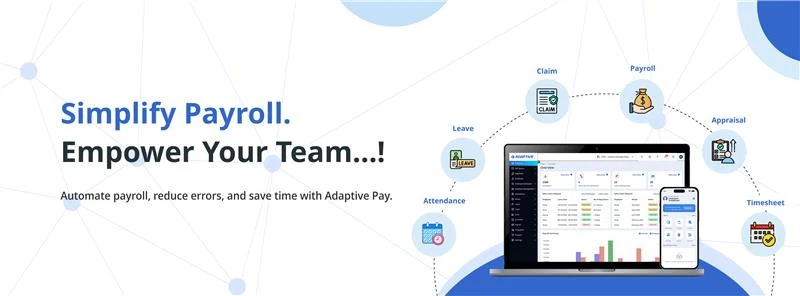
But did you know that using the best software for payroll is a more sustainable, long-term solution that can reduce your overall costs and save you time? A cloud-based system can cut down on compliance risks and simplify payroll processes. Some of the latest solutions are full HRMS platforms, helping companies manage other important HR functions like attendance and rostering, as well as claims and leave.
Still, even with the best software for payroll, employers need to understand Singapore’s pay policies. This guide explains the essentials of payroll management and the minimum wage rules that employers must know.
Understanding Singapore’s approach to minimum wage
Singapore does not have a blanket minimum wage across industries and instead follows a sector-specific approach. This means wage benchmarks are set in industries such as cleaning and security to ensure that all workers in these essential sectors receive fair compensation. Meanwhile, employees outside these regulated areas don’t have a legislated minimum wage per hour or month. In these cases, employers decide pay levels based on the role and required skills.
Understanding payroll in Singapore
Singapore’s standard payroll cycle is monthly, meaning that employers must pay employees within seven days after the end of the salary period. If the salary period ends on the last day of the month, the payment must be made by the 7th of the following month. When an employee resigns or is terminated, their final salary must be settled on their last working day and no later. By sticking to these timelines, employers can avoid legal issues down the road.
Employers are also expected to comply with payroll taxes. With the best software for payroll, it’s easier to calculate and withhold the correct amounts from wages, including CPF (Central Provident Fund) contributions and income tax. It also helps avoid missing deadlines and underpaying contributions, saving them from penalties and legal action.
Discover an easier way to manage salaries and payroll
Payroll in Singapore doesn’t have to be complex when you have the right tools in your business. Make it easier by choosing a cloud-based HRMS solution like Adaptive Pay. A solution like Adaptive Pay, a cloud-based HRMS, simplifies compliance and day-to-day operations. Beyond payroll, it simplifies compliance and day-to-day operations in other essential HR tasks, from attendance and rostering to claims and appraisals. You get a complete HR management platform at a predictable cost, without surprise fees.
Find out what makes Adaptive Pay the best software for payroll for SMEs in Singapore by requesting a demo today.
About the company:
Adaptive Pay is a groundbreaking cloud-based HRMS and payroll software that simplifies and automates HR and payroll management for Singapore businesses. The software adheres completely to Singapore's employment laws and regulations, rendering it a highly suitable option for local businesses. A notable characteristic of Adaptive Pay is its user-friendly interface. The implementation of advanced security measures by Adaptive Pay guarantees the confidentiality and security of sensitive employee data.



























Sign in to leave a comment.